Prefer audio over written content? Listen to the article here:
Picture this: It’s the middle of the night, you wake up to a strange noise from inside your house, and your mind begins to race to protect your family.
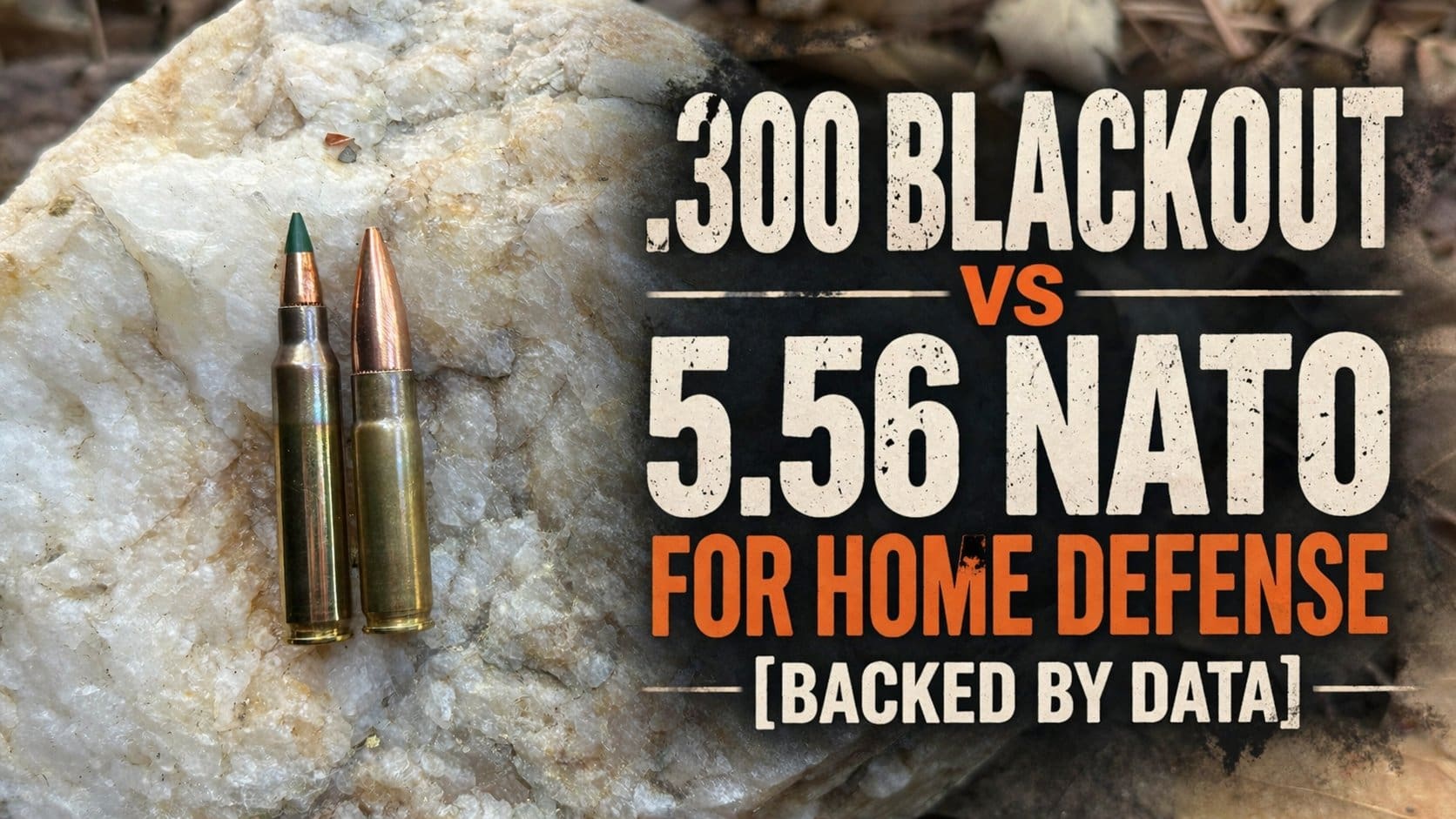
In that split-second decision, does an AR-15 platform chambered in .300 Blackout or 5.56 NATO give you the edge in the moment? Both rounds have become very popular for home defense because they are reliable, but each handle short-range encounters and barrier penetration very differently.
For most home defense situations, 5.56 NATO edges out .300 Blackout because the lighter, faster bullets tend to yaw, fragment, and dump energy quicker in soft tissue and drywall, lowering over-penetration risks.
Let’s take a deeper dive into these two home defense rounds and get to the bottom of which one would be the better fit for you and your situation.
Why These Two Calibers Keep Coming Up in Home Defense Talks
The AR-15 platform is everywhere, and swapping between 5.56 NATO and .300 Blackout is as simple as changing the upper. There is no need for multiple firearms or a whole new rifle.
That type of flexibility quickly makes both calibers super attractive for folks that want to build a dedicated home defense firearm.
The 5.56 NATO has been the go-to round for defense because it offers lighter recoil, affordable bulk ammo options, and a proven track record.
The .300 Blackout arrived later as a solution for shorter barrel setups that still hit hard at standard bedroom distances.
Most home defense fights happen well under 25 yards, so velocity at longer ranges matters way less than how the bullet behaves when it meets a threat or a wall. Knock down power and over-penetration become the biggest factors when choosing the right home defense round.
If you are just starting to compare rifle options, our guide on Internal, External & Terminal Ballistics [What Truly Matters] breaks down exactly why terminal performance is king for indoor firearm situations.
Breaking Down the Ballistics Numbers
Let’s talk friendly numbers without getting lost in a bunch of complicated math.
A standard 55-62 grain 5.56 NATO round leaves a standard 16-inch barrel around 2,900-3,100 fps and delivers roughly 1,250-1,300 ft-lbs of muzzle energy.
If the same round is dropped into a shorter 10.5-inch barrel and velocity falls off noticeably, often down to 2,400-2,600 fps with energy dropping closer to 900-1,100 ft-lbs.
The .300 Blackout supersonic loads are usually heavier between 110-150 grains and are built for shorter barrels.
Out of a 9-inch tube you still see 2,000-2,200 fps and 1,200-1,400 ft-bs. That means a compact .300 BLK pistol or SBR can match or beat the energy of a longer 5.56 setup at home defense distances.
Subsonic .300 Blackout rounds are 200-220 grains and run much slower. These rounds come out around 1,000-1,050 fps and carry 400-500 ft-lbs. This is similar to a hot .45 ACP round but with better trajectory in a rifle.
These differences come from bullet weight and powder burn. Heavier .300 BLK projectiles keep their momentum better through the air and lighter barriers, while fast 5.56 rounds rely on velocity to destabilize upon impact.
If you are curious how bullet weight changes everything, check out our article on How Does Bullet Weight Actually Affect Performance?
Over-Penetration: the Elephant in the Living Room
Over-penetration is by far the biggest worry for responsible homeowners. You want to stop the threat in your house, not send rounds into the next room or your neighbor’s house.
Independent drywall tests show big differences in how different rounds perform. Many of the 55-77 grain 5.56 NATO defensive loads (especially fragmenting designs) break apart or lose steam after passing through one or two sheets of drywall and a wall stud.
They often stop inside the second or third piece of drywall, which is exactly what most homeowners are looking for in home defense rounds.
The heavier supersonic .300 Blackout, with its heavier bullets and higher sectional density, often punches through three to five layers of drywall while still carrying enough energy to be dangerous on the other side.
Subsonic .300 Blackout can be gentler in some tests, but still tends to penetrate more than the lightweight 5.56 NATO because the bullet stays intact longer.
One gel and barrier test shows that a 5.56 NATO 55-grain round shreds inside the first gel block and barely exits.
Meanwhile, the .300 BLK 125-grain round traveled farther before dumping energy. Another drywall test showed that the 5.56 stopped after fewer panels than the .300 BLK in side-by-side runs.
So when it comes to over-penetration, the 5.56 NATO is definitely the winner because of its lightweight and fragmentation upon impact, especially in home defense rounds.
This is why the 5.56 NATO has become extremely popular in apartments, townhomes, and homes with neighboring houses close by.
Don’t count out the .300 Blackout, however. It is still popular for home defense for those looking at other performance factors outside of over-penetration.
If over-penetration is a topic that really hits home for you, read our full article on How to Avoid Over-Penetration in Home Defense Secenarios.
Terminal Performance in Ballistic Gel – What the Tests Actually Show
Ballistic gel gives us the closest look at what happens inside a bad guy when they meet a home defense round. It can really tell us how that bullet performs when it hits its intended target.
Good defensive 5.56 hollow points or soft points often expand to 0.50-0.60 inches and penetrate 12-16 inches. This is right in the sweet spot that is recommended by all the experts.
The lighter 5.56 NATO bullets yaw violently and fragment upon contact, creating wide, temporary entry wounds that transfer energy fast. In many tests, the 5.56 doesn’t even exit the back of a 16-inch gel block when fired from 25 yards out of a short barrel (much like home defense).
Supersonic .300 Blackout hollow points also expand well, sometimes creating similar or slightly larger permanent wound channels because of the bigger .30 caliber bullet. However, they frequently penetrate deeper at 18-20+ inches before stopping because they simply carry more mass.
Subsonic .300 Blackout acts more like a heavy pistol round, providing decent expansion with the right self defense bullets. The wound cavity is usually narrower and penetration can be even deeper if the bullet doesn’t deform properly upon impact.
Multiple gel tests conclude that the 5.56 generally dumps energy faster, making it slightly safer for home use when over-penetration is the top concern. The .300 Blackout still delivers plenty of stopping power, especially with modern expanding rounds.
These numbers would be very different if you fire an FMJ, and we talk about that more in our guide here: Do Hollow Points Actually Make a Difference in Self Defense?
Short Barrels: Where .300 Blackout Really Pulls Ahead
When building an AR-15 platform for home defense, most are wanting something that is super maneuverable in tight spaces around the house. Think 9 to 11.5-inch barrels that easily clear doorways and corners without snagging or losing line of sight.
This is where the .300 Blackout makes its money. It was literally designed to win the short barrel war.
It achieves near full velocity and energy from barrels as short as 9 inches because it uses faster burning powders. A 110-grain .300 BLK from a 9-inch barrel can match the muzzle energy of a 55-grain 5.56 from a 16-inch barrel.
The 5.56 loses a lot of speed in short tubes. The same 10.5-inch barrel that gives .300 BLK great performance might drop 5.56 energy by 20-30%, and the muzzle blast becomes deafening without a suppressor.
A suppressor can be a great addition to your setup, but it will also extend the length of your firearm, which is likely counter-productive to your short barrel setup.
If you are planning to build a compact AR-15 or a pistol brace setup for home defense, .300 Blackout gives you more consistent down range energy and less concussion in tight spaces.
The Suppressor Advantage – Quiet Nighttime Protection
Another one of the .300 Blackout’s biggest selling points is how beautifully it runs a suppressed setup, especially matched up with subsonic loads.
The combination can be hearing safe even without ear protection, which is huge when you don’t want to deafen yourself or wake up the whole neighborhood during a defensive encounter.
Subsonic .300 BLK is noticeably quieter than suppressed 5.56 (Which is still supersonic and cracks loudly). Many owners report the suppressed subsonic setup sounds like a quiet .22 rifle with a heavy thump.
The trade-off is more recoil, an effectively longer firearm, higher ammo cost, and you need to make sure your bolt cycles reliably with lighter subsonic rounds. Supersonic .300 BLK can also be suppressed effectively but loses some of that whisper-like quietness.
If you love running suppressors on pistols too, check out our picks for Best 9mm Subsonic Ammo: Top Picks & Uses.
Recoil, Follow-Up Shots, and Real Training Realities
The 5.56 NATO has a very soft recoil and a flat trajectory, letting you get back on target faster for the follow up shots that you will want. That speed can be a lifesaver when adrenaline is pumping and your hands are shaking.
The .300 Blackout, especially subsonic or out of a short barrel, has a noticeably heavier recoil. It’s still very manageable, but most shooters will need a few range sessions to get comfortable with fast and accurate follow up shots.
The best advice? Regardless of which round you pick, train with the exact defensive round that you plan to keep in the rifle and use for home defense. Practice shooting from awkward positions, in low light, and while moving.
The more comfortable you are and the more muscle memory you create, the better you will perform when it really matters.
Cost, Availability, and Smart Bulk Buying Strategies
When it comes to price and shelf presence, the 5.56 NATO wins hands down. You can buy quality bulk cases for range training and still afford to stock the more expensive defensive hollow points without stretching your budget out too much.
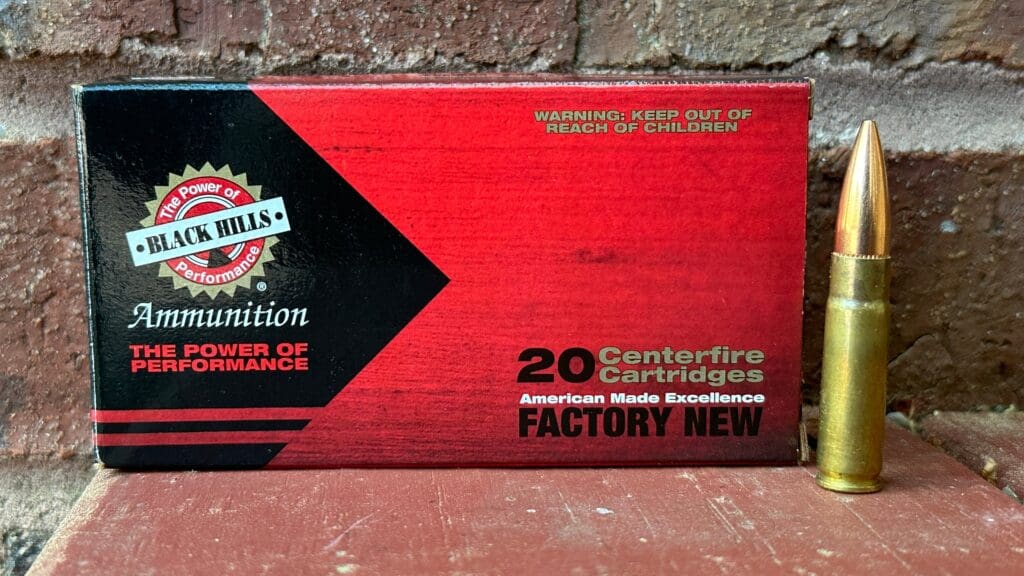
The .300 Blackout costs 30-70% more per round compared to 5.56 depending on the round. Subsonic ammo is especially pricey. Availability has continued to improve as the .300 BLK gains more and more popularity.
Here at Velocity Ammo Sales, we specialize in bulk shipments. Load up on 5.56 in 1,000-round cases for practice, then grab smaller boxes of proven defensive .300 BLK or 5.56 hollow points for your home gun.
Mixing supersonic and subsonic .300 BLK cases lets you train for both scenarios affordably.
Common .300 BLK Vs 5.56 NATO Myths & What the Data Actually Says
Even though .300 BLK and 5.56 NATO have been around a while and have been staples in defense for quite some time now, plenty of people have preconceived notions about these cartridges that just aren’t true.
Myth 1 | .300 Blackout is always better for home defense because it hits harder.
It hits hard, but heavier bullets often mean more penetration through walls unless you choose fragmenting or expanding designs carefully.
Myth 2 | 5.56 is too weak and will bounce off threats.
Modern 5.56 defensive loads create devastating temporary cavities and have excellent track records in real incidents when shot placement is good.
Myth 3 | All rifle rounds are equally dangerous to bystanders.
Bullet construction and velocity matter. Fragmenting 5.56 generally poses less risk beyond the first couple of walls than intact .300 BLK projectiles.
Myth 4 | You need subsonic .300 BLK for quiet home defense.
Suppressed supersonic .300 BLK is still much quieter than unsuppressed 5.56, and many people prefer the extra velocity and energy.
Building Your Ideal Home Defense Setup
When it comes to building your ideal home defense setup, there are always many different things to consider, such as your personal preference, your home layout, over-penetration, and several other factors.
Some experienced owners are actually keeping two uppers for their AR-15 platforms: a 16-inch 5.56 for general use and training, plus a short suppressed .300 Blackout for dedicated nighttime home defense.
If you can only choose one, ask yourself the following:
- Apartment or tight neighborhood? Go 5.56 with 55-77 grain expanding loads.
- Detached house with suppressor? .300 Blackout is tough to beat.
- Super-short barrel priority? .300 Blackout wins.
- Budget and training volume matter most? 5.56 lets you shoot more and learn faster.
Whichever direction you decide to go, focus on quality sights, a reliable light, and plenty of quality practice ammo coupled with ample range time to become proficient.
Final Thoughts and Friendly Advice
No single caliber or round is perfect for every situation. The “best” home defense round is the one you completely understand, train with regularly, and trust to perform when the situation counts for real.
Choose what fits your personal needs and wants for your home defense setup.
Many are turning towards the AR-15 platforms because they are easier to wield, more accurate to shoot, and are customizable to the needs of the shooter.
Whichever direction you decide to go with your home defense round, make sure that you are educated on what that round is capable of doing. Practice with that round and practice with it often.
Have a plan for your home defense and practice it physically and mentally as much as you can. Know your background and where you might be shooting towards at the moment.
This is definitely to prepare for the worst case scenario and try to account for everything that could happen in the moment.
Remember, it’s not about maximizing firepower, it’s about protecting the people you love while minimizing risk to everyone else. Stay safe out there.
For more reading, explore our guides on Best 5.56 NATO Grain for Your Use [Full Guide] and the ballistics deep dive we mentioned earlier. Knowledge plus preparation equals peace of mind.
.300 Blackout Vs 5.56 NATO FAQs
Is .300 Blackout or 5.56 NATO Better for Home Defense?
For most home defense scenarios, 5.56 NATO has a slight edge due to its tendency to fragment and lose energy quickly, reducing over-penetration risk. However, .300 Blackout can perform exceptionally well in short barrels and suppressed setups depending on your priorities.
Which Round Has Less Risk of Over-Penetration Indoors?
5.56 NATO generally presents less over-penetration risk because its lighter, faster bullets tend to fragment and slow down after hitting drywall or soft tissue. In contrast, heavier .300 Blackout rounds often stay intact longer and can pass through multiple interior walls.
How Do .300 Blackout and 5.56 Perform in Short Barrels?
.300 Blackout is specifically designed for short barrels and maintains strong energy even from compact setups. Meanwhile, 5.56 NATO loses significant velocity and effectiveness when barrel length is reduced, making it less efficient in very short configurations.
Is .300 Blackout Better for Suppressed Home Defense Rifles?
.300 Blackout excels in suppressed use, especially with subsonic ammunition that significantly reduces noise levels. It offers a quieter shooting experience compared to 5.56, which remains loud even when suppressed due to its supersonic velocity.
Which Caliber Is Easier to Control for Follow-Up Shots?
5.56 NATO typically produces lighter recoil, allowing for faster and more accurate follow-up shots under stress. .300 Blackout has more noticeable recoil, particularly in short-barrel setups, which may require additional training to maintain quick shot-to-shot control.