Prefer audio over written content? Listen to the article here:
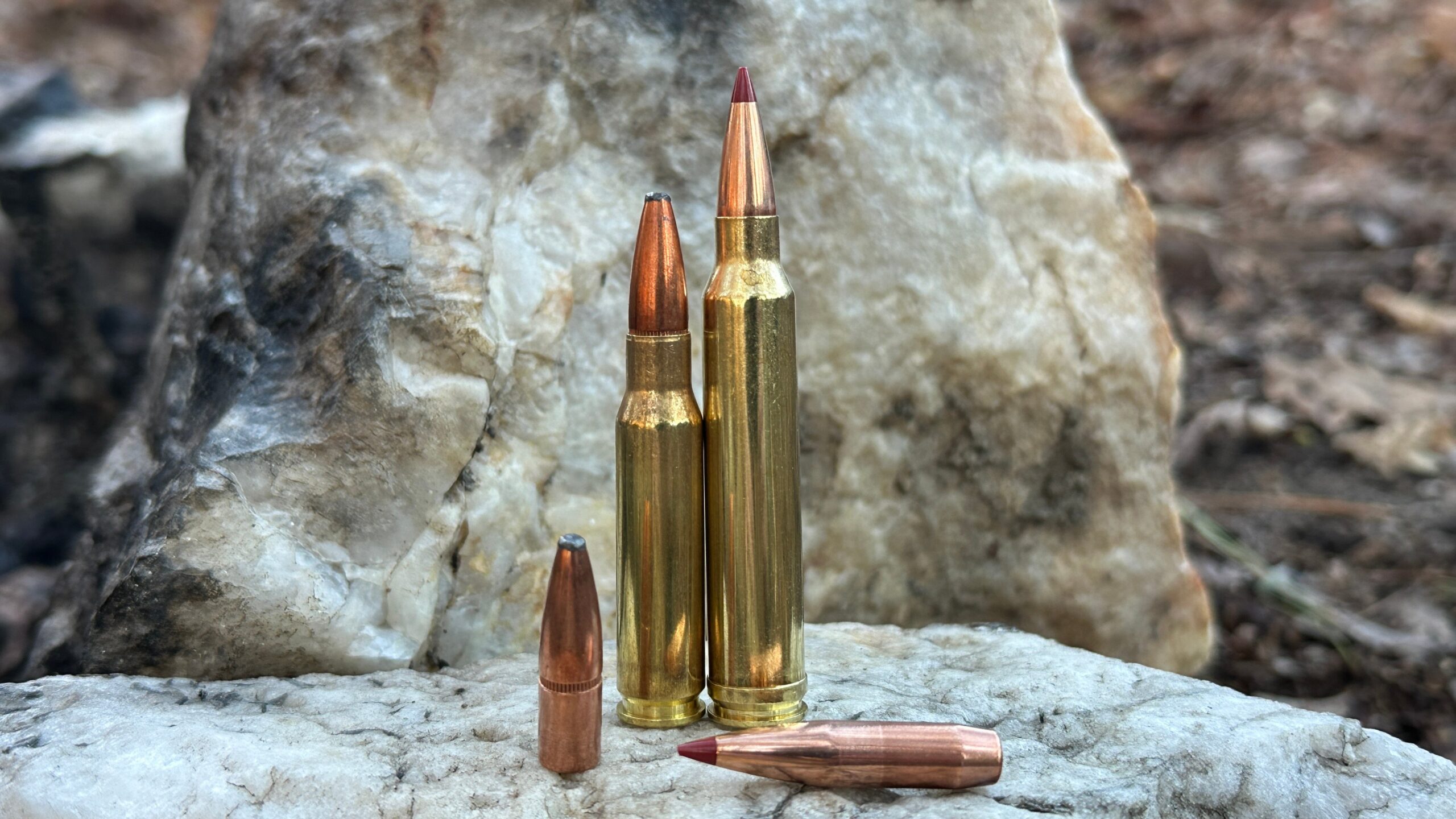
At some point, every campfire or barstool argument ends up here: .308 Winchester or .300 Winchester Magnum? It’s a classic debate filled half with facts and half with friendly banter. For good reason too, both have avid supporters, both have history, and both have dropped more deer, elk and paper targets than we can remember.
Short answer? You’ll want .308 Win when hunting deer and medium game at moderate distances, while the .300 Win Mag offers higher velocity, energy, and a flatter trajectory on bigger game and longer ranges.
Although there is a lot more to it, so let’s dig in; not with spreadsheets and lab coats, but with the kind of real-world talk you’d hear leaning against a tailgate after sighting in at the range.
TLDR; Choosing the Right Tool for the Job
| Game Type | Typical Range (Yards) | Recommended Cartridge |
|---|---|---|
| Whitetail | 50–200 | .308 Win Remington Core-Lokt 150 Grain PSP |
| Mule Deer | 200–500 | .300 Win Mag Hornady American Whitetail 150 Grain InterLock |
| Elk Or Moose | 200–500+ | .300 Win Mag Norma 180 Grain ORYX Premium Bonded Core |
| Hogs & Big Cats | 50–300 | .308 Win Norma 170 Grain Tip Strike |
| Black Bear | < 250 | .308 Win Remington Core-Lokt 180 Grain PSP |
| Black Bear | > 250 | .300 Win Mag Hornady Precision Hunter 200 Grain ELD-X |
| Long Range Target Practice | 1,000+ | .300 Win Mag Hornady 178 Grain ELD Match |
The .308 is your trusty buddy of a cartridge that is ideal for Midwest woods, Southern thickets, or any place where 300 yards is a long poke.
The .300 Win Mag is built for Western landscapes, wind, and game that can crush your ribs if you get too close.
Both are classics. Both have filled freezers for decades. The only “wrong” answer is picking the one that doesn’t fit your terrain or scenario.
Ballistics Breakdown: What the Numbers Really Mean
Here’s what separates these two heavyweights on paper, and more importantly, in the field:
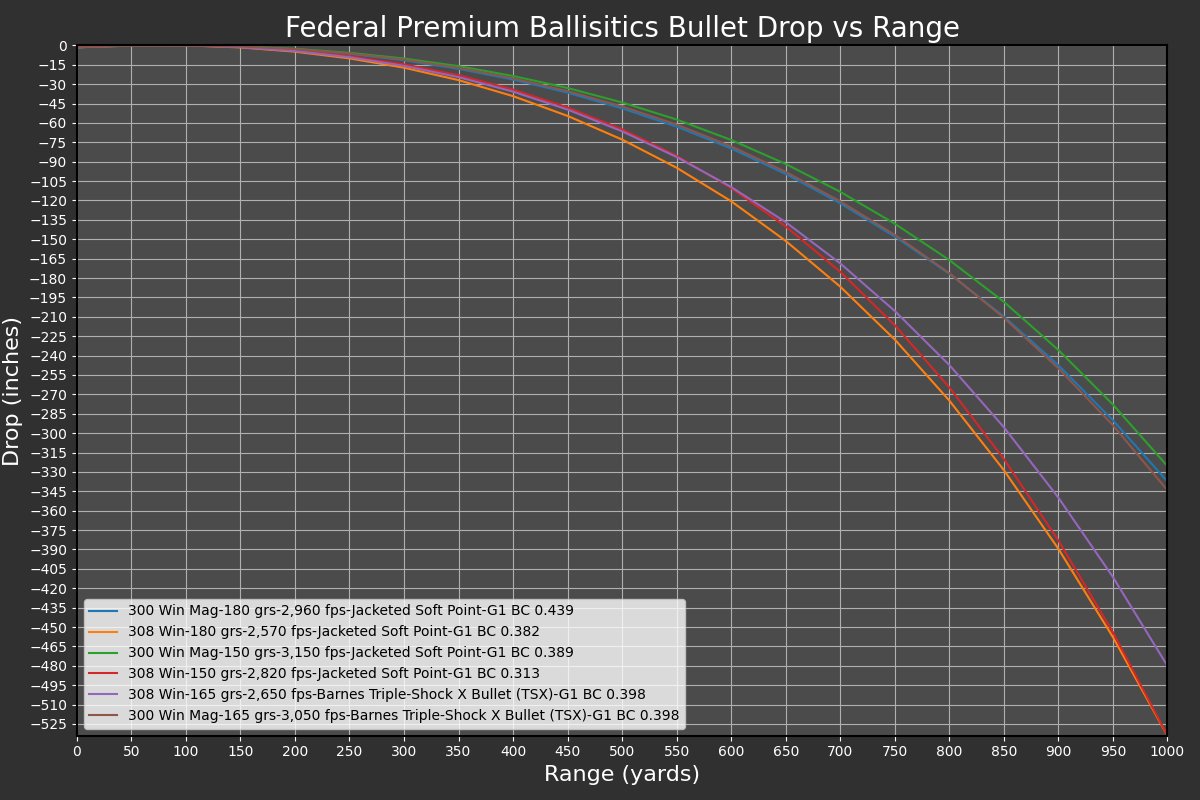
| Cartridge | Bullet Weight | Muzzle Velocity (fps) | Muzzle Energy (ft-lbs) | Drop @ 200 yds | Drop @ 500 yds | Wind Drift @ 200 yds (10 mph) | Wind Drift @ 500 yds (10 mph) |
|---|---|---|---|---|---|---|---|
| 300 Win Mag SP | 180 gr | 2960 | 3502 | −3.1 in | −48.8 in | 2.9 in | 20.0 in |
| 300 Win Mag SP | 150 gr | 3150 | 3305 | −2.7 in | −44.2 in | 3.0 in | 21.1 in |
| 300 Win Mag TSX | 165 gr | 3050 | 3408 | -2.9 | -47.3 in | 3.0 in | 21.4 in |
| 308 Win SP | 180 gr | 2570 | 2640 | −4.9 in | −72.9 in | 4.1in | 29.4 in |
| 308 Win SP | 150 gr | 2820 | 2648 | −3.9 in | −65.0 in | 4.4 in | 32.9 in |
| 308 Win TSX | 150 gr | 2650 | 2573 | −4.4 in | −66.5 in | 3.7 in | 26.7 in |
On paper, the .300 Win Mag wins the speed and energy game, no surprise there. As expected by its size, it shoots flatter, hits harder, and fights the wind better downrange. Even out past 500 yards, it still packs enough punch for elk-sized animals.
Not quite as powerful, but the .308 isn’t playing in the kiddie pool either. Its slower speed means more predictable recoil and tighter follow-up shots (if needed). Inside 400 yards, which realistically covers 90% of the shots most hunters are comfortable taking, it’s reliable as the sun rising in the east tomorrow.
Think about trucks. It’s the same story. A one ton duelly hauls more weight, and a quarter ton gets better gas mileage. The best one is the one that fits your needs.
Ballistics can be tricky and bullet weight is a big factor here; if you want to learn more about its effects, check out our other article: How Does Bullet Weight Actually Affect Performance?
Real-World Use: Matching Each Round to the Hunt
If your hunting spot has trees thicker than telephone poles or cornfields that fade into woodlots, the .308 is right at home. It’s the round you hand to your kid, your buddy, or your dad and know they’ll be effective.
It’s one of those cartridges you can practice with all year and still look forward to shooting. That alone makes it worth its weight in brass.
Step out West, and things change. Longer shots, unpredictable winds, and larger animals call for something that carries authority past 500 yards, enter the .300 Win Mag.
The .300 hits like a freight train, but it also kicks like one. A good muzzle brake or recoil pad helps a lot. In return, you get the kind of confidence that makes 400-yard shots feel like chip shots. For serious Western hunters, the .300 Win Mag isn’t overkill, it’s insurance.
While the two cartridges can sound like extremes on each end of the ammo isle, there is plenty of overlap in between. Let’s dive into specific uses and which one will serve you best.
Bagging Whitetail Deer (50-200 Yards)
If whitetails are your main target and most of your shots are inside 200 yards, the .308 isn’t just adequate, it’s downright ideal.
It kills cleanly, preserves a reasonable amount of meat, and doesn’t punish your shoulder. For tree-stands, saddle hunts, or ground blinds tucked in thick timber, a .308 is the perfect companion.
It has the right amount of penetration and power for whitetail, not to mention the .308 Winchester has harvested literally millions of them.
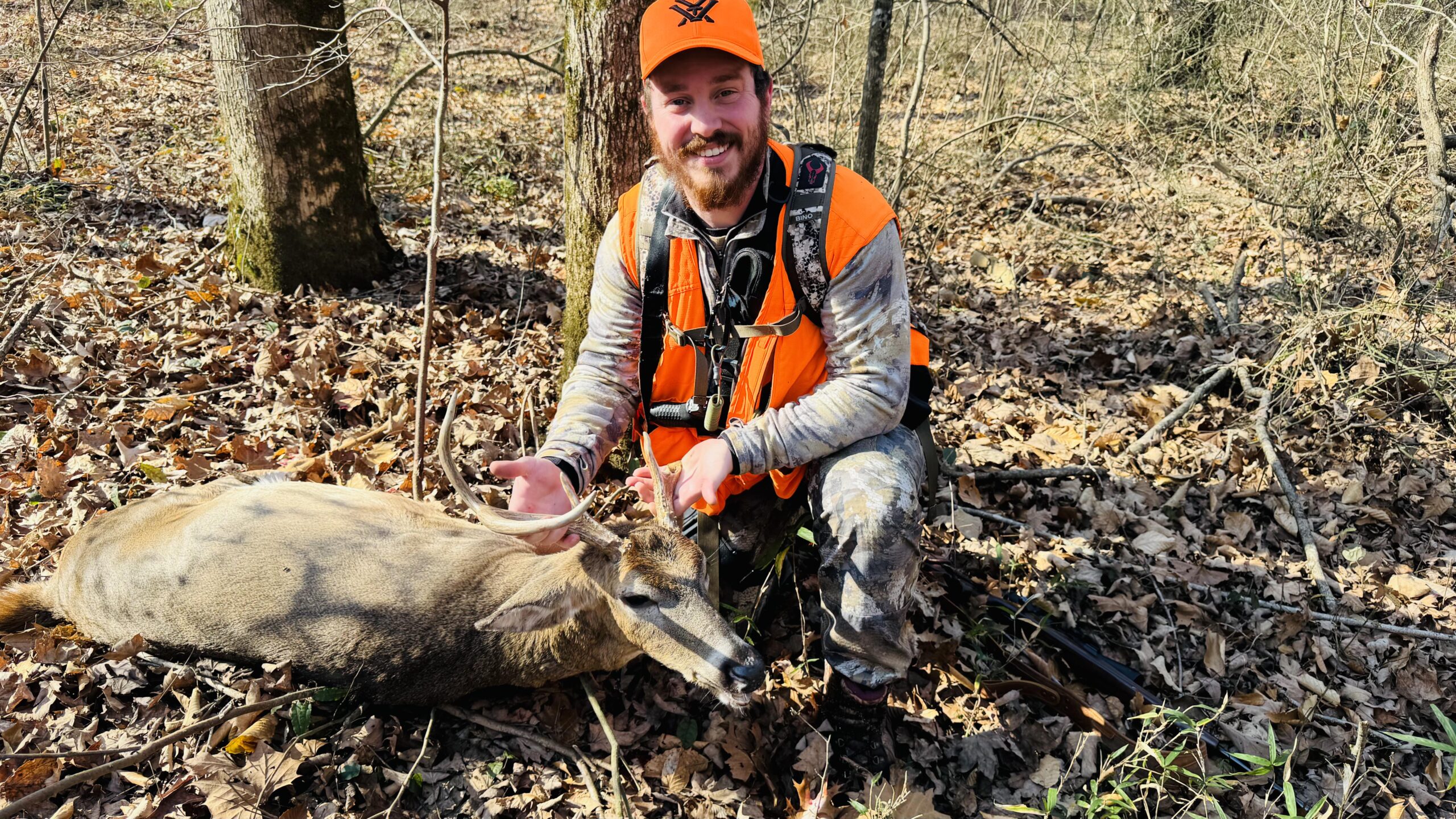
This past season, I knocked down this fighter with the .308 Win Remington Core-Lokt 150 Grain PSP in Kentucky. The shot was about 90 yards, and after somehow crossing a creek with an eight foot bank, this guy was down in less than 30 yards.
Reaching Out for Mule Deer (200-500 Yards)
This is where things change up. Mule deer dwell in open country where the wind doesn’t take weekends off. Shots are longer. The terrain is tough. You might be shooting prone on a ridge or crossing a canyon to shoot.
These are times where the flatter trajectory and less wind drift of the .300 Win Mag comes into its own. It just makes you feel better knowing your hunt hinges on that one tough shot at 400 yards.
Can the .308 do it? Yes. Many hunters have filled their tags with .308s at these distances. But the .300 Win Mag does it with noticeably more margin for error.
I have really been liking the Hornady American Whitetail line of ammo over the last few years, and the .300 Win Mag Hornady American Whitetail 150 Grain InterLock would be perfect for a mule deer hunt.
If you are really diving into the best round for mule deer, you’d be missing out if you didn’t read our other article: The Best Cartridges for Mule Deer Hunting [Ranked]
Knocking Down Elk (200–500+ Yards)
Elk are the reason many shooters eventually upgrade to a magnum. They’re big, they’re tough, and when they’re standing across a valley, it helps to have some extra horsepower on your side.
The .308 is capable of taking elk, but only at responsible distances and only with excellent shot placement. Meanwhile, the .300 Win Mag maintains the energy needed for deep penetration much farther downrange.
If elk hunting is on your bucket list or part of your annual schedule, the magnum advantage becomes more than theoretical. The age old stat for elk is that you need 1500 ft-lbs of energy to take one down, look at a ballistics chart and you’ll see that the .300 Win Mag holds that much longer than the .308.
You will want a cartridge with a sturdy bullet, and the .300 Win Mag Norma 180 Grain ORYX Premium Bonded Core would be perfect for Elk. You will be sure to get enough penetration while not forgetting about a quality amount of expansion.
Stalking Black Bear (100–250 Yards)
This case is a bit more flexible depending on the situation. Though they are a predator, black bears aren’t as massive or bone-dense as elk, plus most of your realistic shots at a bear happen at moderate distances compared to other game. In timber or over bait sites, the .308 works mighty fine (as you can see).
Bear hunting in mountainous terrain, where spotting and stalking is the game, with longer shooting lanes, the .300 Win Mag adds some peace of mind with extra welcome punch and reach. You’ll appreciate the extra power in your hands after you touch your first bear.
In short, if you are on the east coast and plan on shorter shots, go with the .308 Win. If you are hunting out west and plan for shots to get well over 100 yards, pack the .300 Win Mag.
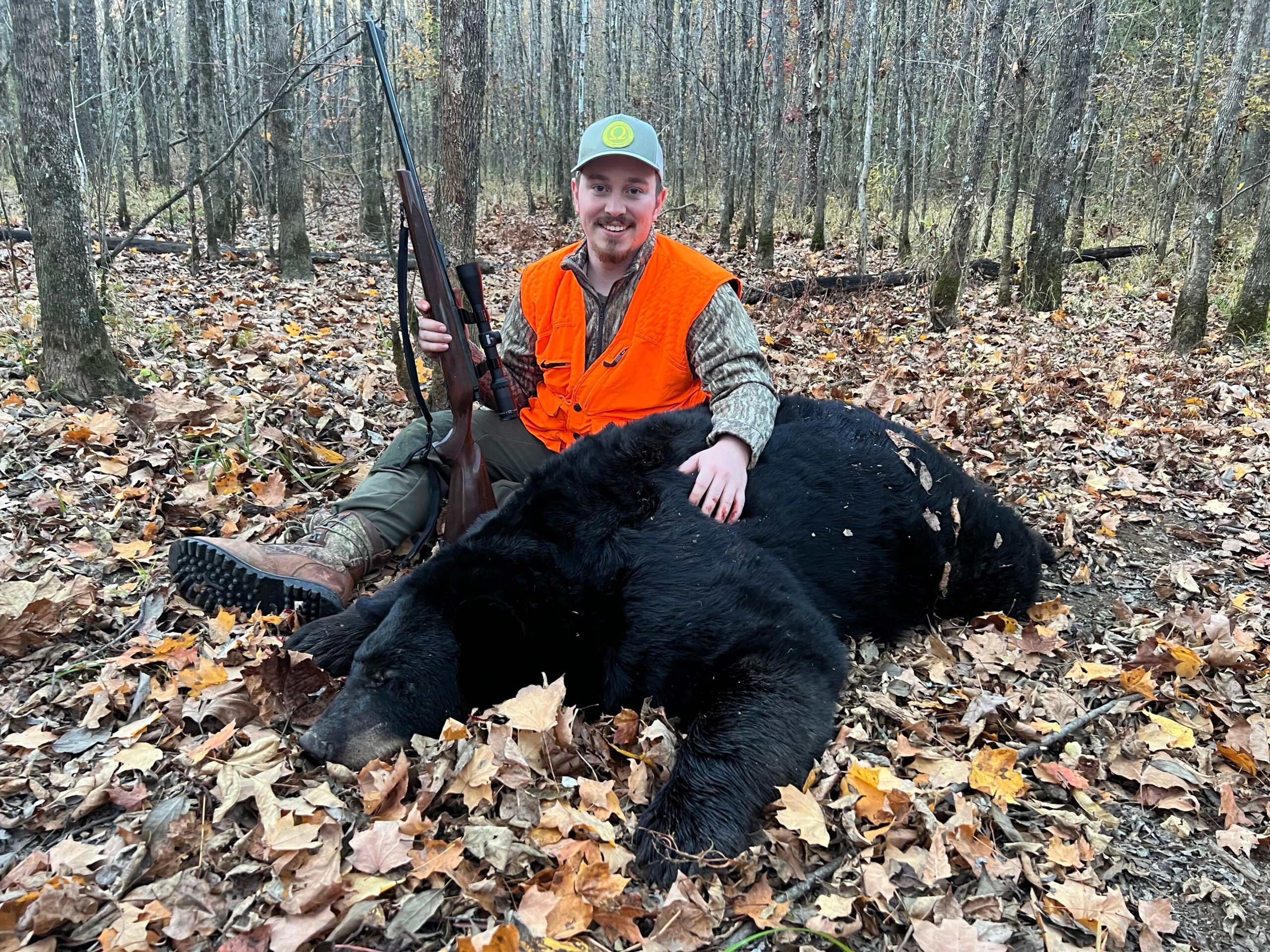
For close range black bear hunts, I have got to recommend the .308 Win Remington Core-Lokt 180 Grain PSP. In 2022 I used it at about 20 yards on this 350 pound Georgia sow… She dropped in her tracks.
If you are getting further west into wilder country, I would go with the .300 Win Mag Hornady Precision Hunter 200 Grain ELD-X. You will not be sorry about having the added power.
If you want to learn more about the ballistics we used to make that decision, check out this article: Internal External & Terminal Ballistics [What Truly Matters]
Chasing Giant Moose (100–400 Yards)
Like Elk, moose are large enough that a little extra power never hurts. The .308 can take moose at moderate distances with premium cartridges, but most experienced moose hunters will tell you to lean toward using the .300 Win Mag.
The difference in energy is impossible to ignore when you’re shooting across a bog at an animal that makes a compact car look like a toy.
There is no doubt that a .308 will take down a moose, but at any kind of long distance, you are going to appreciate the extra gas the .300 Win Mag has.
I still like the .300 Win Mag Norma 180 Grain ORYX Premium Bonded Core that I recommended for elk. It performs well on any big bodied animal where you need to make sure you can punch through.
Hunting Hogs & Big Cats (Dusk & Night Hunts)
This category splits nicely, and can go either way. With big pigs and cougars or mountain lions, there’s really no wrong answer here (depending on your shot distance).
Fun fact, so that you don’t sound like a greenhorn on your first big cat hunt: cougars, mountain lions, and pumas are all the same cat. Mountain lion is a western US term, cougar is used in the east, and the only people I’ve heard use the term puma are college professors, soccer players, and sneaker heads.
Now back to your regularly scheduled program.
The .308 Win is perfect for AR-10 platforms, especially paired with something real fun like a brand new night-vision sight, and inexpensive enough in bulk to shoot frequently.
If you live down south and thinning the feral hog population at short to moderate distances is the game, a .308 will get the job done every time and have you screaming “SOOEY!”
On the other hand, the .300 Win Mag is better suited for long-distance ranch shots or anytime you really need to reach downrange as far as possible. It’s definitely not necessary for close-range night hunts.
If you want a quick AR platform, you will have an easier time finding one in .308 and it will be easier to shoot quickly. If you are set on a bolt action and precise shots farther out, use the .300 Win Mag.
The .308 Win Norma 170 Grain Tip Strike is nearly perfect for this kind of hunt. It is heavier and harder than what you would see in a whitetail bullet, which is exactly what you need for thick hogs.
If you want to see some more stellar options for hog hunting cartridges, checkout this article: 8 Deadly Cartridges for Hog Hunting
Ringing Long-Range Steel (600–1,000 Yards)
The .308 can reach 1,000 yards, but the .300 Win Mag makes that distance feel far less dramatic. If your weekends involve steel plates and wind calls, you’ll appreciate the magnum’s ballistic advantage.
If you are really reaching out to 1,000 yards, you’ll find the 308 drops by more than 530 inches at that point. The 300 Win Mag in comparison is dropping 330 inches. That is 40% less bullet drop!
If you are obsessed with long range shooting, you are likely going to look at more cartridges than the 308 and 300 Win Mag, but between the two, you will want the 300 Win Mag all day long.
No surprise, you will want a quality match round here. The .300 Win Mag Hornady 178 Grain ELD Match is the perfect choice for the .300 Win Mag lover, it is loaded to tight specifications from the factory. You will struggle to get significantly more repeatable performance from another line of ammo.
Two Cartridges, One Family Tree
The .308 Winchester came first, born from the 7.62 NATO after World War II and designed to give soldiers (and later, hunters) a cartridge that packed power in a short, efficient case. It soon gained a reputation for being accurate and consistent, whether on the battlefield or the back forty.
Ten years later Winchester said, “Let’s go bigger.” The result was the .300 Winchester Magnum. They lengthened a .338 Win Mag case, necked it down to .30 caliber and created a round that could propel 180-grain bullets at flinging speeds. The end result was a long-range, country rocker.
If the .308 is your dependable half-ton pickup, the .300 Win Mag is the three-quarter-ton diesel with a lift kit and an attitude.
Recoil, Accuracy & Barrel Life
Let’s be honest, the .300 Win Mag thumps, if you know you know. A 9-pound rifle shooting magnum loads can push over 25 ft-lbs of recoil energy. For reference, the .308 stays at about 15 ft-lbs.
The sweet spot difference between, “fun afternoon” and “I’ll feel that tomorrow.”
Both can shoot sub MOA groups with good ammo, but barrel life is where the .308 wins. It’s not uncommon for a .308 to last five thousand rounds before it starts to open up groups. The extra powder charge and pressure of the .300 wears barrels down quicker. Usually twice as fast as the .308.
If you’re a high-volume shooter, the .308’s easier on your shoulder, your gear, and your wallet. If you’re a once-a-season elk hunter, the .300’s barrel wear isn’t even a blip on the radar.
Cost & Availability: the Crapshoot
Ammo prices change like the wind, but the pattern stays the same. This is one of the biggest real-world deciding factors for many shooters. If you shoot year-round, cost can creep up fast.
Being so versatile, manufacturers produce .308 Win like it was going out of style. It’s offered in countless special types for every situation, and is usually dirt cheap when you purchase in bulk. The same lot number, same performance, every time you pull the trigger.
The .300 Win Mag is also widely available online, and still offers meaningful savings when purchased in bulk, but it will almost always be more expensive per round. The powder charge alone guarantees that.

Two Legends, One Goal
The truth is, you can’t really lose either way. The .308 Winchester remains one of the most balanced, forgiving, and downright lovable cartridges ever made.
The .300 Win Mag is its muscle-bound cousin; hungrier, louder, and perfect for hunters who like to reach way out there.
Pick the one that matches your hunts, and spend your time shooting instead of arguing about it online. Either way, you’ll be running one of the best .30 caliber rounds ever invented.
And when you’re ready to stock up, skip the store markup. Velocity Ammo Sales has both, from 20 round boxes to bulk cases stacked and ready to ship straight to your door.
Because when it matters, it’s not about winning the debate; it’s about making the shot.
.308 Win Vs .300 Win Mag FAQs
Q: Do 308 and 300 Win Mag Shoot the Same Bullet?
No, .308 Win and .300 Win mag do not use the same bullet. They are both .30 caliber, but everything else is different. You will not be able to shoot a 300 Win Mag bullet through a rifle chambered in .308 Win, and vise versa.
Q: Is 300 Win Mag Overkill for Deer?
Yes, in comparison to what you really need. The .300 Win Mag will dump more energy into a target than is needed to drop whitetail or mule deer, especially at ranges under 300 yards. It will kill deer just fine if you put your shot where it needs to go, but the added recoil over lighter cartridges like the .308 Win means some hunters pass it over. Lighter recoil = less meat damage and more shooting without fatigue.
Q: Is 308 Enough for Elk?
Yes, if you aren’t reaching. As long as you’re using a quality bullet placed in the right area, you can and will fill your elk tags with a .308 Win. You’ll have enough penetration and terminal performance at distances under 300–400 yards. Don’t let someone try to tell you otherwise; it doesn’t have the capability to reach like something like a .300 Win Mag will.
Q: Will a 300 Win Mag Take Down a Grizzly Bear?
Yes, if you’re careful about your shots and pick the right bullets. The .300 Win Mag has more than enough energy to kill a grizzly bear if you place your shots where they need to go and have the experience to make them count. Ideally you’d be shooting heavy bullets with controlled expansion types of profiles. I wouldn’t trust anything smaller for defensive bear hunting though. Plenty of guys run larger caliber handguns or even shotguns for that kind of thing.
Q: Do Snipers Use 300 Win Mag?
Elite military snipers and various law enforcement snipers around the globe have been using .300 Win Mag for a long time. This is due in large part to its capability at long distances with flatter trajectory and less wind resistance than shorter action cartridges like the .308 Win. There are a lot of shiny new cartridges coming out these days that are getting a lot of attention; .300 Win Mag shouldn’t be overlooked though.