Elk hunting certainly requires a heavier grain bullet than whitetail hunting, but picking the perfect grain bullet is not always simple. The .308 Winchester can be used to hunt any big game in North America, but you still need to pick the right cartridge for the job.
One of the biggest influences on how that bullet flies, is how much it weighs; picking the right grain is crucial. You wouldn’t want to use a lightweight coyote cartridge on elk, and the other way around would be overkill.
Thankfully, there are no right or wrong answers. The “best” cartridge depends on what type of shooting you plan to do, and there is plenty of wiggle room for each application as well.
If you don’t know the right grain for you, don’t stress, this guide will walk you through some common (and not so common) .308 grain choices, explain how each behaves, and which works best for specific tasks.
- • Best .308 Grain for Training, & General Range Use: 147 Grain
- • Best .308 Grain for Precision Competitive Shooting: 175 Grain
- • Best .308 Grain for Self Defense / Home Defense: 155 Grain
- • Best .308 Grain for Suppressed Rifles: 200 Grain
- • Best .308 Grain for Short Barrels (16” and Under): 155 Grain
- • Best .308 Grain for Varmint Hunting: 125 Grain
- • Best .308 Grain for Wild Hog Hunting: 150 Grain
- • Best .308 Grain for Whitetail Deer Hunting: 165 Grain
- • Best .308 Grain for Mule Deer Hunting: 175 Grain
- • Best .308 Grain for Elk Hunting: 180 Grain
- • Best .308 Grain for Black Bear Hunting: 180 Grain
Why Bullet Weight Matters
A “grain” is a measure of bullet mass which is about 1/7000 of a pound. In general, lighter bullets (110-150 gr) accelerate faster and have higher muzzle velocity than heavier bullets (165-180+ gr).
Sectional density (SD) is another ballistic spec that is nice to know when estimating a cartridge’s penetration depth. Heavier bullets of the same caliber will have greater SD, meaning greater penetration and heavier terminal performance.
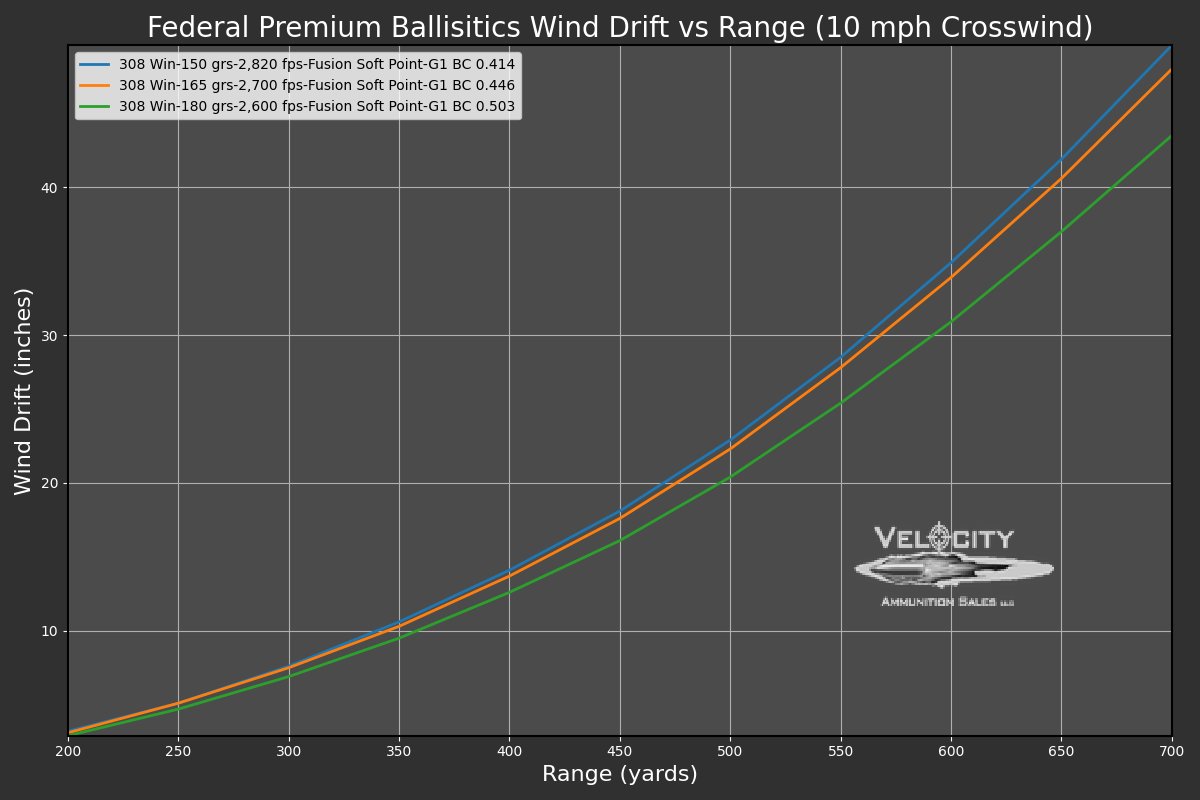
Lighter bullets also have a relatively flatter trajectory at shorter ranges, and softer felt recoil since the projectile takes less energy to move down the barrel. Closely paired to that, they experience more wind drift than heavier bullets over distance.
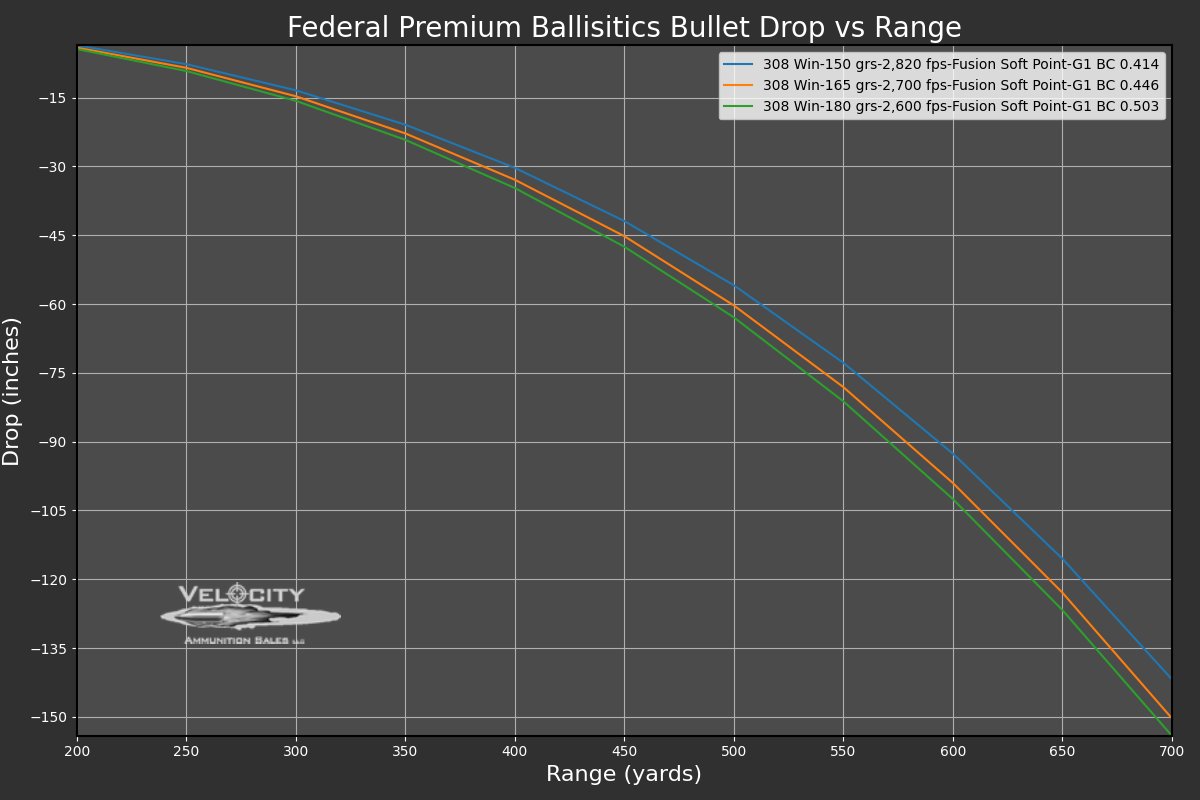
Since lighter bullets are typically slimmer, they tend to have a lower sectional density, and therefore ballistic coefficient (BC) all other things held constant. As a result, they tend to lose more velocity at longer ranges than their heavier counterparts.
Heavier bullets are slower at the muzzle for the same cartridge but have a higher BC, so velocity is better preserved over distances. They resist wind resistance more easily and retain more energy when you’re shooting a few hundred yards.
Practical Tip: Bullet weight interacts with bullet shape, construction, velocity, and your rifle’s barrel twist rate. The rifling twist has to stabilize the bullet (usually factory .308 barrels have 1 in 10 or 1 in 12 twist rates), but very long or heavy bullets may need a faster twist to maximize their performance.
If you want to go into even more detail about bullet weight, we have an entire article about it here: How Does Bullet Weight Actually Affect Performance?
Some Less Common Scenarios and Weights
Some .308s have an outlier grain count that you won’t find easily on ammunition store shelves. These are usually reserved for very specific shooting situations or skill sets, and I don’t want them to surprise you.
110 gr cartridges are advertised most often as a low-recoil round, which is great for kids practicing at the range, or for adults who don’t want the typical 308 recoil, but still enjoy shooting. This weight bullet has a much higher muzzle velocity, so make sure to check your rifle’s manufacturer specs before cycling them through.
190-220 gr subsonic rounds are designed for suppressed shooting and absolutely require a rifling twist rate of 1:10 or faster. They produce consistently tight groups, which makes them great for precision rifles.
220-250 gr rounds are exceptionally heavy compared to the typical off-the-shelf .308 ammunition. They are considered specialty long-range precision rounds and come with a price tag to match. If you want to use these, your twist rate needs to be quick, around 1 in 8.
Best .308 Grain for Training, Plinking, & General Range Use
There’s not necessarily a strict “best grain” for .308 that you’re just using to go plinking. It’s most common to use an economical .308 cartridge, which tends to fall in the 147-168 gr range, like this bulk 147 grain FMJ Wyoming Cartridge.
The 147 grain option is going to give you slightly less recoil here, and since we are not worried with impact ballistics on the range, that lighter bullet doesn’t have many downsides.
If you want to learn more about different types of ballistics, check out this quick article we wrote on the topic: Internal External & Terminal Ballistics [What Truly Matters]
Factory match or premium hunting loads can be reserved for when it actually matters. The same goes for defensive ammunition; it’s nice to practice with home defense ammo once in a while, but you’ll find a more economical round will serve you just fine when running drills regularly.
Practical Tip: Your rifle will likely “like” a particular load or grain better than others. Every rifle barrel has small characteristics that make it perform differently between loads (even between the same model barrel). Test a handful of loads, switching up both grains and brands, to see which performs best through your rifle.
Best .308 Grain for Precision Competitive Shooting
Precision competition is about consistency, minimal vertical dispersion, and doing well in less-than-stellar conditions. Match bullets in the 168-175 gr range are manufactured to tight tolerances and provide very repeatable BC and stability.
Within this range, 168 gr are historically popular in factory match loads, but 175 gr are increasingly favored for longer range events.
The heavier the grain, the higher the BC and better the wind resistance, so many precision shooters prefer a 175-grain cartridge, like the Federal Gold Medal Match 175 Grain BTHP. Make sure to check your competition division rules, as some restrict the bullet grain and muzzle velocity.
All things considered, although heavier bullets almost always have better ballistic coefficients, they exit the muzzle at a lower velocity. The problem with bullets that sink into the transonic region (around 1,300–1,100 fps) is that their stability can suffer.
In fact, for most people shooting factory .308s at typical match ranges a well-developed 168-grain load will often be supersonic longer than you might think, and actually deliver a better vertical hold in mid-range distances. These Black Hills 168 Grain Match BTHP 308’s are a fan favorite.
In terms of pure downrange precision over match ranges of 300–800 yards, both 168- and 175-grain bullets will be very effective. However, at ranges that regularly extend past 800 yards, the better wind-drift performance of the 175-grain bullets will begin to show, and especially in marginal conditions.
Handloaders can dial in this balance by adjusting the velocity spread and seating depth, but even factory match ammo is available today that is consistent enough to be competitive in most club-level and regional matches.
Practical Tip: Remember that heavier ammunition typically performs better with a tighter barrel twist rate. If you’re thinking of dabbling in the competition shooting sector or just haven’t had the money to upgrade your factory barrel, test out different weights of match bullets.
Competitive shooters pay a lot of attention to their bullets’s ballistic coefficient, if you want to learn more about that, check out our guide here: How Ballistic Coefficients Effect Long Range Shooters
Best .308 Grain for Self Defense / Home Defense
A .308 Winchester rifle may have a place in a defensive kit for people who live in rural areas, on large properties, or have the ability to engage at longer ranges and with good backstops. It will certainly potentially provide a benefit in cartridge power and accuracy.
Lighter weight bullets in the 147-155 grain range are great for defense. These lighter loads tend to retain higher velocities and provide a better likelihood of fast expansion as opposed to over-penetration. Defense scenarios are also in much shorter ranges than the long ranges where heavy bullets out perform lighter ones.
Rapid or controlled expansion loads are preferred to match-style or barrier-blind projectiles. An expanding bullet will generally help to quickly transfer energy and lessen the likelihood of over-penetration, especially compared to heavier, deeper-penetrating bullets.
Some of the best defense rounds on the market are the Hornady Critical Defense 155 Grain FTX .308’s. These loads are nickel plated to increase feed reliability, and they deliver rapid expansion for reduced potential of over-penetration.
Best .308 Grain for Suppressed Rifles
Suppressors on .308 rifles are mostly used for hunting, training or defensive purposes. Although suppressing a rifle changes how the cartridge behaves. The most obvious differences are gas management, and recoil impulse.
As a general rule, heavier bullet weights in the 175–200 grain range work better suppressed in .308. Heavier bullets make for lower muzzle velocities, reducing crack out of a suppressor and often improving cycling (with adjustable gas systems) smoothness.
Subsonic .308 loads (190–220 grains) with the right suppressor can further reduce noise, but need special ammo, like the Sellier & Bellot 200 Grain Subsonic FMJ (7.62×51 NATO is safe in 308 Win chambered rifles).
For most shooters a heavy supersonic load will have the best overall balance for running suppressed, with the benefit of lower blast and recoil while retaining reliable expansion and external ballistics.
As always with suppressed rifles, bullet weight is very ammo-dependent so multiple rounds should be tested for recoil sensitivity and tuning.
Best .308 Grain for Short Barrels (16” and Under)
Short barrel .308s lose velocity quickly and therefore transfer energy better with bullets that expand easily and more consistently. As a result, you want a lighter round with more muzzle velocity.
For short barrels, 150 to 165 grain bullets are a good place to start. Heavy .308 bullets like 175 grains or higher can be problematic for sub-16″ barrels, resulting in excessive bullet drop and lower effective range.
Again, the Hornady Critical Defense 155 Grain FTX is a good choice. Short barrel 308’s are usually defense rifles, so this is not totally surprising. These are some of the most reliable and customer favorite .308 cartridges that we have.
Bullets lighter than 150 grains may have higher velocities, but could be more affected by wind, as well as lose penetration on heavier targets. For the majority of short-barreled .308s a middle-of-the-road bullet will have the most consistent all-around performance.
Best .308 Grain for Varmint Hunting
Flatter trajectories, manageable recoil, and fast target acquisition become increasingly important for varmint hunting. Under these circumstances, .308 loads see the greatest advantage from lighter, faster bullets with good explosive terminal effect.
For dedicated varmint hunting, bullets weighing between 110 to 125 grains are the best. The lighter bullets maintain higher velocities, translating to flatter trajectories, less holdover at common varmint ranges, and reduced recoil impulse for faster follow-up shots.
The most popular bullet designs for .308 varmint hunting emphasize fast expansion and fragmentation upon impact. This aids in rapid, humane kills on small-bodied game while limiting the chance of unwanted pass-throughs or ricochets when shooting in open country or near livestock.
A great example is the Federal BallistiClean 125 grain Frangible cartridges. They are compressed copper projectiles designed to disintegrate upon impact, greatly reducing the risk of splash back, ricochets, spalling, and over penetration when shooting soft targets.
Best .308 Grain for Wild Hog Hunting
Hog hunting requires bullet designs that can handle dense muscle, thick hide, and heavy bone. Hogs are built different, and you often need deep penetration to reach vital organs. Off-angle shots on the run are common, so extra penetration can help.
Bullet weights in the 150–165 grain range are the most popular for hog hunting with a .308 Win. These bullets have good velocity and energy for penetration and expansion across a broad range of distances and shot placement scenarios.
The Norma 150 Grain Soft Point is a great cartridge for this. Controlled-expansion bullets are preferred for hog hunting. Bullet designs that hold together going through bone and heavy tissue produce more consistent penetration and reliable bullet performance.
Lighter varmint-style bullets should be avoided. Varmint bullets tend to fragment and fail to penetrate enough on hogs. Bullets heavier than 175 grains are acceptable, but offer diminishing returns if you are not hunting at long ranges or through thick cover.
If you want to see a few other cartridges that are great for dropping hogs, check out this article we wrote recently: 8 Deadly Cartridges for Hog Hunting
Best .308 Grain for Whitetail Deer Hunting
For whitetail deer hunting, shot distances are almost always shorter than 300 yards. This range requires quick expansion and consistent terminal performance more than absolute long-range ballistics.
You’ll find that 150 to 165 grain bullet weights are pretty common for whitetail cartridges. This range of weights has enough velocity to reliably expand at shorter ranges but also has sufficient penetration power for quartering hits and varying angles.
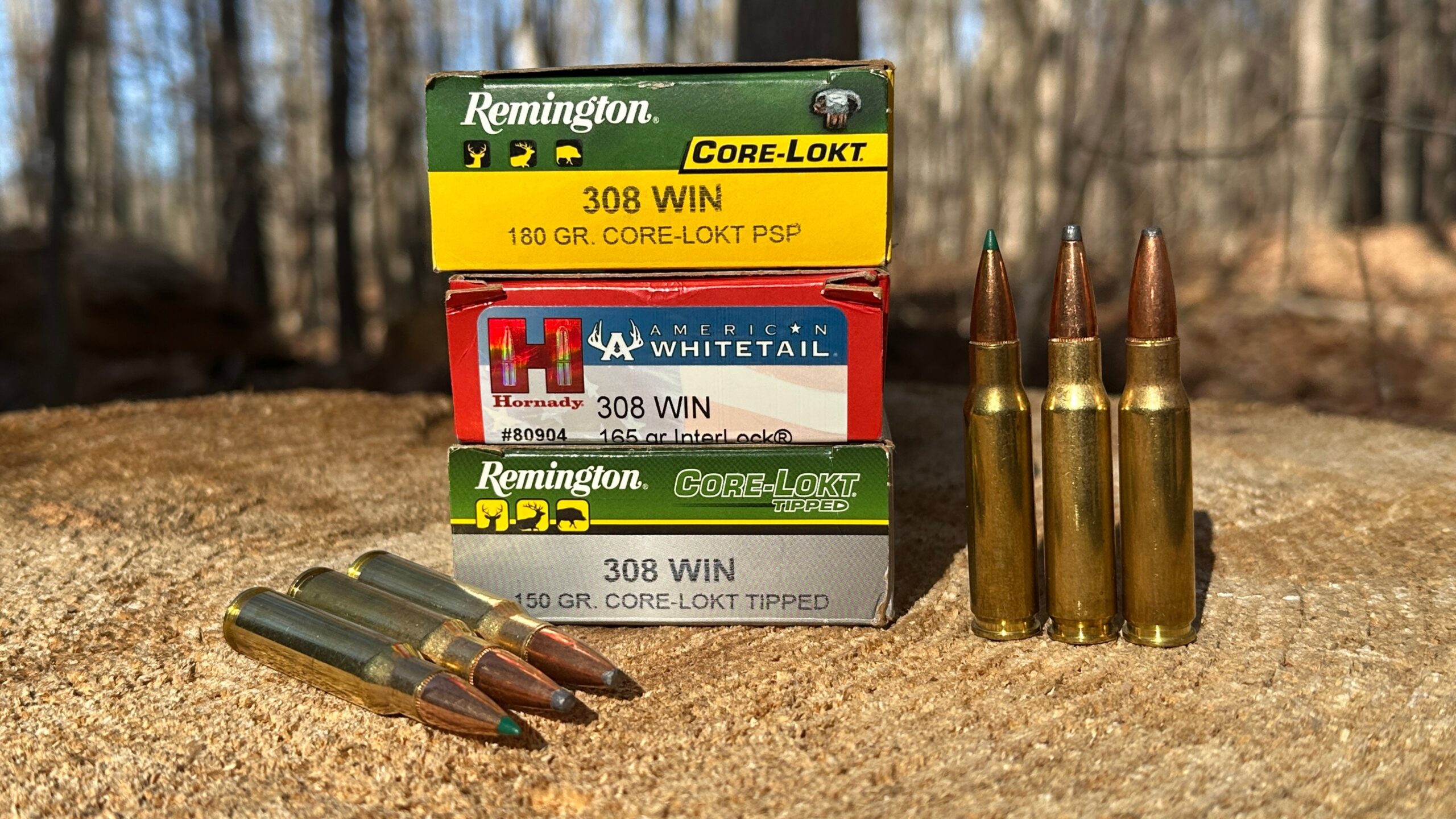
Personally, I have been using 150 grain Remington Core Lokts for a while. They zip right through 150 pound Georgia deer, but I had them stop in the opposite shoulder of two Kentucky deer this year (one at 10 yards and another at 90).
So if you hunt farther north and you are not seeing complete pass through, try a heavier bullet around 180 grains. For most hunters, a solid mid-weight load (like the Federal Vital Shok 165 Grain Nosler Soft Point) strikes the best balance for accuracy and terminal performance.
If you want to see a bit more about bullet design in general for whitetail hunting and explore a few other calibers, check out this article we wrote recently: The Best Bullet Design for Whitetail Hunting
Best .308 Grain for Mule Deer Hunting
Mule deer tend to be easier to hunt over open terrain and at longer ranges than whitetail, with shots often exceeding 300 yards you’ll need a bullet that doesn’t limit you. In these situations, wind drift and retained energy can become actual factors.
For mule deer hunting, the best .308 grain is in the 165 to 175 grain range. These heavier bullets generally have higher ballistic coefficients to help retain velocity and reduce wind drift at long range while still providing dependable terminal performance.
Lighter bullets can certainly work fine at shorter ranges, but they are more susceptible to wind drift on longer shots. Hunters looking for the most versatility across variable terrain and ranges out to 500 yards will likely find a heavier .308 bullet to be a more forgiving option.
If you want to use a bullet that will not limit you, try a 175 grain option. This gives you a good balance of stability and expansion on impact that is sure to drop a mule deer during those long open country shots.
If you want to explore a few other options for mule deer, you have got to check out this article we wrote: The Best Cartridges for Mule Deer Hunting [Ranked]
Best .308 Grain for Elk Hunting
Elk have dense muscle mass and much more bone than deer to punch through, but the average .308 cartridge holds over 1500 ft-lbs of energy over 300 yards. This is plenty enough to take down an elk, and a lot of hunters find success with a bullet that weighs 165 to 180 grains.
Heavier bullets retain momentum better, have greater penetrating ability to get to vital organs even on quartering shots or after punching through a large shoulder bone. I would likely try the tough Norma 180 Grain Bond Strike for elk.
Much like a mule deer, you will do well with a 175 grain option, but with a hard bullet design (possibly a monolithic) you can get away with a lighter bullet. Although you will need good shot placement and have a larger margin of error.
Controlled-expansion bullet designs are especially critical for elk hunting. Bonded or monolithic bullets can be more likely to hold together under impact for deep, straight penetration with reliable expansion.
Best .308 Grain for Black Bear Hunting
The .308 Winchester has taken down a black bear or two, but you will want a large bullet that can pierce the heavy hide, solid muscle, and thick bone. Bears are some of the roughest and toughest animals you will find in North America, and taking one down is no small feat.
With a .308 Winchester, 165 to 180 grain bullet weights are a good choice for black bear hunting in. These heavier bullets provide greater momentum and more consistent penetration to get through bears at moderate ranges.
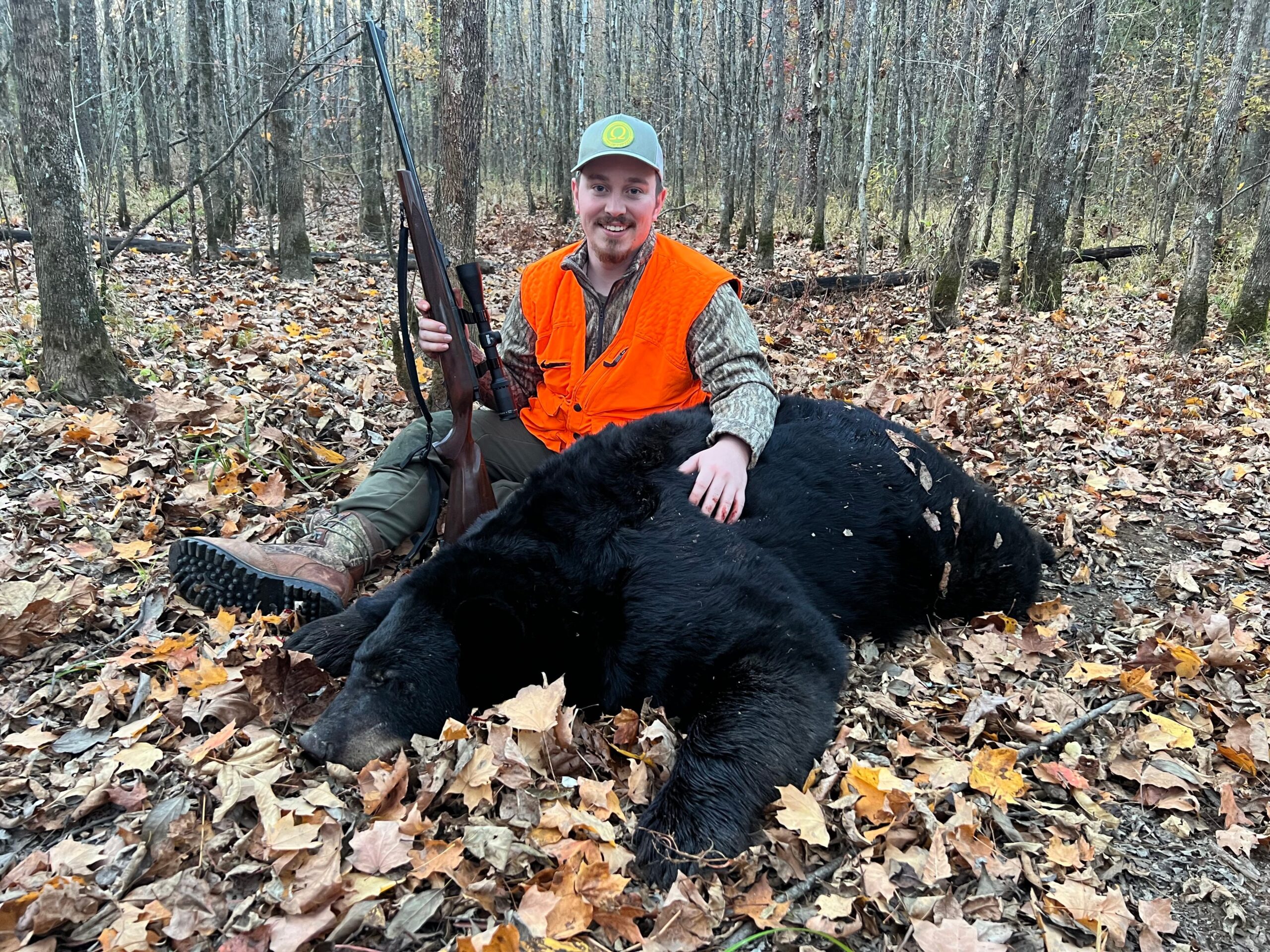
Personally, I took a black bear with my Remington 700 chambered in .308 back in 2022. I was deer hunting in Georgia with the “deadliest mushroom in the woods”, the Remington Core-Lokt. I had the tipped 165 grain version, and admittedly, I was glad it did its job at 20 yards on this 350 pound bear.
Lighter bullets can over-expand too quickly and not penetrate deep enough to reach vital organs, especially on quartering shots. Bear hunters in wooded country will find that heavier .308 bullets offer the penetration and durability you need for consistent performance.
The Best .308 Grain for You
Selecting the ideal .308 grain is really about bullet selection for your rifle, your environment, and your intended application. The .308 Winchester is an outrageously flexible cartridge, but it’s only when bullet weight and construction are selected intentionally that it becomes apparent.
There’s no one “magic” grain that performs best in all applications. Whether hunting big game, competitive shooting, running suppressed, or just plinking at the range, knowing how bullet weight impacts velocity, penetration, and stability lets you make educated, informed choices.
308 Winchester Grain FAQs
Q: What Grain .308 Does the Military Use?
The military standard 7.62×51 NATO round is 147 grain for a general-purpose round, but 168 to 175 grain loads are also used for designated marksman and sniper roles.
Q: Is 165-Grain .308 Good for Deer?
165-grain .308 is an awesome deer round. It has predictable expansion, deep penetration, and steady performance at most whitetail distances under 300 yards.
Q: What Is the Best Grain for a .308 Win?
There is no one-size-fits-all answer for the best .308 Winchester bullet weight. Factors that will help you choose the best bullet weight include the intended application (hunting, competition, defense, etc. ), barrel length, and shooting distance.
Q: What Grain of .308 for Elk?
For elk hunting, hunters often prefer 180 grain .308 bullets. Bullets at this weight will give you more penetration, which is important for getting through bone and dense muscle tissue on large-bodied animals.
Q: What Grain .308 for Coyote?
Coyotes are smaller game, so lighter .308 bullets in the 110–125 grain range will give you the flatter trajectory and reduced recoil you need to take full advantage of their small body size with rapid expansion.