Prefer audio over written content? Listen to the article here:
Subsonic 9mm ammo isn’t about chasing velocity; it’s about control, consistency, and purpose.
Whether you’re running a suppressor, training indoors, or dialing in a home-defense setup, the right subsonic load makes a noticeable difference in recoil, sound signature, and reliability.
Subsonic ammunition is all about flying below the speed of sound to minimize noise, making them a favorite for several different uses like tactical training, hunting, or just enjoying a quieter day at the shooting range.
While there are many 9mm subsonic options, picks like the Hornady Subsonic 147 Gr XTP HP, the PMC SFX 147 Gr SFHP, and the Speer Gold Dot 147 Gr JHP rank in the top 3 spots. Along with other options, these picks offer low noise, great accuracy, and are ideal for suppressed shooting or self-defense.
Top Picks: Best 9mm Subsonic Ammo
Quick-reference list of standout loads by use case.
-
Best for Everyday Carry
-
Most Affordable
-
Most Likely to Cycle
-
Best for Penetration
-
Most Consistent Expansion
-
Best for Range Day
We will focus on the details of each one of these 9mm subsonic rounds. We will also cover what makes subsonic ammunition special, what they can be used for, and tips to help you choose the right one for you.
Best for Everyday Carry | Speer Gold Dot 147 Grain JHP
Speer’s Gold Dot is legendary among pro shooters and this 147 grain jacketed hollow point lives up to the hype. It is designed for consistent performance that has earned the trust of the law enforcement world. The bonded core prevents separation for deep penetration.
The Speer Gold Dot 147 Grain JHP comes in at around $460 for 1,000 rounds, $0.46 per round, making it a premium choice that still doesn’t break the bank for the performance. These nickel plated brass cases are reloadable and corrosion resistant. Pick up a single box here.
While these are not always labeled as subsonic rounds, the 147 grain weight keeps it under sonic speed naturally.

These rounds are ideal for personal protection as the hollow point expands toughly and accurately. With its law enforcement contract finished, this round has come down significantly in price so that you can get a duty grade quality round at a civilian price.
Many users rave about its reliability in various pistol models with zero feeding issues at all.
The Speer Gold Dot 147 Grain JHP is great for those who want proven performance without the need for experimentation. The Gold Dot’s reputation for stopping power makes it a go-to for serious shooters who are looking for real world reliability.
If you want to use subsonics for self-defense, these are a good choice. Although if you want to use the best possible cartridge for 9mm self-defense, read our other article: What is the Best 9mm Self Defense Cartridge for EDC?
Most Affordable | PMC SFX 147 Grain Solid First Hollow Point
For those of you that like to buy in bulk, the PMC’s SFX line is a shooter’s dream. The 147 grain Solid First Hollow Point (SFHP) is built for subsonic duty, which offers maximum terminal effectiveness and penetration. It is designed for those who demand duty grade performance but with a lower price tag.
At about $385 for 1,000 rounds, $0.39 per round, the PMC SFX 147 Grain SFHP is economical for those that love to shoot frequently. These rounds tend to move fast, so make sure you stock up when they are available.
PMC ensures controlled expansion, making it reliable in self-defense scenarios and shooters have notedly appreciated the consistency and tight groups.
If you shoot often, this bulk option saves money in the long-term, but is also great and reliable for everyday carry or home defense as well. It is great for running drills at the shooting range, everyday reliable carry, or just stocking up on ammunition.
Don’t sleep on the PMC SFX 147 Grain SFHP just because it is cheaper priced. It provides a duty grade balance of penetration and expansion at an economic price.
Hollow points are usually the go-to for any kind of defense, but if you are wondering just how effective they are, check out our other article: Do Hollow Points Actually Make a Difference in Self Defense?
Most Likely to Cycle | Hornady Subsonic 147 Grain XTP Hollow Point
This round is a standout for anyone seeking reliable expansion at lower speeds. Hornady nailed it with their XTP (eXtreme Terminal Performance) bullet design, which opens up consistently even when flying at subsonic speeds. It is perfect for those that want proven tech in their everyday carry ammunition.
Priced at about $1.04 per round when buying boxes of 25 rounds, the Hornady Subsonic 147 Grain XTP Hollow Point is well priced for the performance and perks. Buying them in bulk can get the price much lower, around $0.52 per round.
The brass cases are reloadable and non-corrosive, so your gun stays cleaner, longer.
The unique powder used in these rounds reduces flash, ideal for low-light or suppressed use. The box claims these XTP hollow points expand reliably, but users are back and forth on it. Although these Hornady rounds are made to be subsonic specifically in handguns, so you can count on them cycling.
If you are new to subsonics, this is a great round to start with. It is forgiving and performs well in most 9mm pistols. The heavier grain also ensures that it cycles smoothly without the need for adjustment. You can’t go wrong with this pick!
Best For Penetration | G9 Defense 126 Grain Subsonic External HP
This is our most innovative pick on the list. The G9 Defense 126 Grain Subsonic External Hollow Point is machined from solid copper and uses a fluted design to create devastating wound channels through fluid dynamics, not just expansion.
That might sound highly technical, but it is a modern twist on subsonic technology.
The G9 Defense 126 Grain Subsonic External Hollow Point is priced on the steeper side at $30 for a box of 20 rounds, roughly $1.50 per round. This is a premium price, but totally worth it for a quality self-defense round.
The copper construction means no lead fouling and is also non-corrosive, meaning it’s better for your firearm and holds its integrity longer.
Users praise this round’s subsonic performance in suppressed pistols, with low recoil and high energy transfer in a smaller grain bullet. The external hollow point creates hydraulic disruption, making it highly effective against soft targets.
This is the perfect round for those that are seeking some cutting edge ammunition of the future. It is lighter than the traditional 147 grain ammunition, but they are engineered to stay subsonic, offering great versatility in compact everyday carry pistols.
If you want to know more about how that extra 20 grains actually affects performance, check out our other article here: How Does Bullet Weight Actually Affect Performance?
Most Consistent Expansion | Federal LE 147 Grain Hi-Shok JHP
Federal’s Law Enforcement Hi-Shok is a reliable choice for subsonic needs. The 147 grain jacked hollow point is loaded for consistent expansion and optimum penetration. These are ideal for defensive use. Subsonic by design, it reduces noise while performing at a high level.
At $275 for 1,000 rounds, $0.28 per round, the Federal LE 147 Grain Hi-Shok Sub-Sonic JHP is super budget friendly, which means if you are going to stock up, get on it while supplies last. It is brass cased, reloadable, and non-corrosive.
The Hi-Shok bullet offers proven performance that is trusted by law enforcement agencies everywhere.
Shooters note that it is very accurate and has low flash. No cycling issues in most firearms makes it a staple for both training and carrying for personal defense.
The Hi-Shoks are probably best known for expanding reliably. They often reach around 0.35 inches of expansion in bare gel tests, but get closer to 18 inches of penetration.
If you want affordable, high quality subsonic rounds, this fits the bill. It is versatile for both suppressed and unsuppressed applications.
Your expansion is going to depend on shot distance, barrel length, and more. If you want to learn more about all the science, read our article here: Internal External & Terminal Ballistics [What Truly Matters]
Best for Range Day | Remington 147 Grain Subsonic FMJ
If you are looking for a great training round without the premium price, the Remington 147 Grain Subsonic FMJ is what you are looking for. It is designed for range use with subsonic speeds for quieter practice. The FMJ ensures reliable feeding and minimal barrel wear.
The Remington 147 Grain Subsonic FMJ is priced at $200 for 500 rounds, $0.40 per round, making it a great bulk buy. They are brass cased, reloadable, and their non-corrosive primers keep things clean.
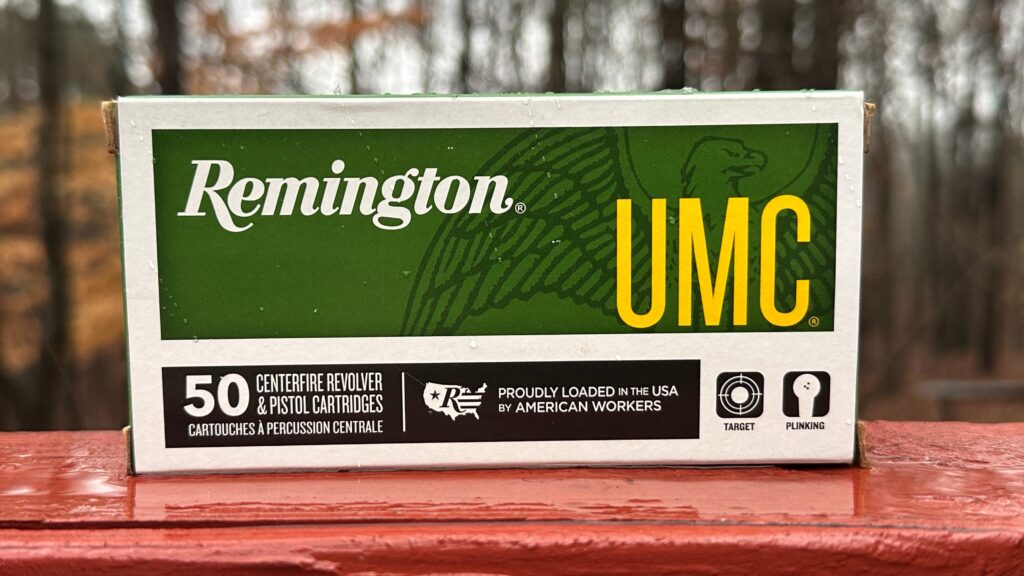
Users love it for high volume sessions as it cycles extremely smoothly in semi-auto pistols. While not a hollow point, it’s great for building skills at the range before switching to defensive rounds.
These are ideal for budget conscious shooters looking for subsonic rounds to practice with. Or if you are just looking for a quieter range experience, with less recoil to fine tune your shooting skills, this is your budget friendly companion.
What Is Subsonic Ammo & Why Does It Matter?
Let’s get a good foundation of subsonic ammo; it refers to bullets that travel slower than the speed of sound, which is roughly 1,125 feet per second.
For 9mm rounds, this usually means heavier bullets like 147 grains loaded with less powder to keep velocities around 900-1,000 fps.
There are some lighter grain options, like 126 grains, that have been engineered to stay subsonic with specific loadings.
Why does all this matter? When a bullet goes supersonic, it creates a loud cracking noise from breaking the sound barrier. Subsonic ammo avoids that, which results in much quieter shots.
These rounds are designed for smooth cycling in semi-auto pistols without an ear ringing blast. Subsonic isn’t just about being quiet, but also has advantages with creating less recoil for the shooter too.
Softer recoil makes follow up shots easier, which is a huge advantage for beginners or anyone practicing for precision.
Plus, the heavier bullet produces more momentum, which improves penetrating power at a slower speeds, which is perfect for defense scenarios.
Running a Suppressed Firearm
If you want to use a suppressor with your firearm, you would spend a pretty penny for a quieter muzzle blast, but your suppressor can’t do anything for your bullet when it is already in the air.
That’s why you want subsonic ammo with a suppressor.
For hunters, you may not want to use subsonics because it will impact your terminal ballistics. Although pistol shooters will definitely prefer a subsonic round after investing in a suppressor.
In short, subsonic ammunition can bridge the gap between performance and practical uses. It’s why more shooters are adding it to their ammo lineup for everything from plinking to personal protection.
Why Some Subsonic Ammo Doesn’t Cycle & How to Choose Loads That Will
Not all 9mm rounds create the same recoil impulse. In some firearms, this variation will cause cycling problems. This is especially true for subsonic and lighter-loaded ammunition, as both create less slide velocity. But more importantly, that reduced velocity may not be enough to fully cycle the action.
This is most common in guns with stiff recoil springs, short/slender slides, tight manufacturing tolerances or additional mass from an optic and/or suppressor. Telltale symptoms are failure to eject, failure to feed the next round, or failure to lock back on empty.
As far as selecting ammunition is concerned, the best solution is to choose ammo with a reputation of working well in semi-automatic pistols. Bullets of a heavier mass (147 grain or heavier) produce a longer, more linear impulse than lighter projectiles, even at slower velocities.
Higher quality factory loads that use clean-burning powder also help with consistent pressure from round to round. If you’re running a suppressor, selecting ammo that is specifically marketed as “subsonic” or “suppressor-ready” also increases the odds it will cycle reliably.
Of course, your specific firearm matters here more than anything else. Variations in springs, barrel length, slide mass, etc. all make a difference. Real world testing is the only way to ensure consistent function.
Benefits of 9mm Subsonic Ammo
Making the switch to 9mm subsonic ammunition can feel like a huge upgrade to your shooting experience. First and foremost, the reduction in noise is a huge win.
If you are at an indoor range or training in a backyard setup (make sure it’s legal to do so), it keeps things civil with neighbors. No more startling everyone around with each trigger pull.
Your own ears will thank you too, even with the use of hearing protection.
Another perk is that these subsonic ammunitions work really well with suppressors, upping their performance. Suppressors work by trapping gases and subsonic rounds let them shine without the sonic boom.
This combo can drop sound levels into hearing-safe territory, protecting your ears during extended sessions.
If that isn’t enough for you, recoil management is much smoother, even when shooting heavier bullets. The 147 grain 9mm options push back less sharply, helping you stay on target during faster paced shooting.
Even the subsonic 126 grain options pack a punch without the bigger snap, making it easier to control.
Many subsonic rounds are also optimized for hollow point expansion, making them highly effective for self-defense. They have good penetration without over-penetrating, which is key in home defense situations.
Don’t forget about accuracy! Subsonic ammo often results in tighter groups at the range because of consistent velocities and less recoil for follow up shots.
The lighter recoil can be super forgiving for new shooters trying to learn the fundamentals too.
Overall, whether you are into tactical situations and gear or just want to enjoy your shooting more, subsonic 9mm ammo delivers versatility without complications.
Common Uses for 9mm Subsonic Ammo
Most uses for 9mm subsonic ammunition revolve around self or home defense.
While that is what the marketing is geared toward, these rounds are extremely versatile and can still be used in all the typical 9mm scenarios.
Shooters also use it during training sessions due to the reduced noise and recoil for better technique and accuracy.
9mm subsonic ammo is also used for hunting small game and varmints. They don’t spook animals as easily, and coupled with a suppressed carbine setup can make it a varmint hunter’s dream.
Competitive shooters have moved to subsonic rounds as well due to their power factor rules. They meet minimum requirements with less kick, which leads to better accuracy and faster speed splits.
Overall, the 9mm subsonic round is about blending performance with discretion in everyday applications.
Choosing the Right 9mm Subsonic Ammo for You
Picking the perfect subsonic 9mm round should start with your primary use. For defense go with the hollow point rounds we mentioned above. For bulk budget shooting, rounds like the PMC SFX or the Remington FMJ are great.
Be sure to check your gun’s compatibility. Most 9mm pistols handle the 147 grain fine, but make sure you test them for cycling issues. Subcompact pistols might prefer certain loads.
Be sure to look at specs and consider things like velocity to ensure it is truly subsonic for your setup; longer barrels lead to increased velocities.
Don’t overthink this. Start with one pick and experiment. Find what works best for you, your needs, your uses, and your firearm.
9mm subsonic ammunition opens up a world of quiet, effective shooting. Our top picks stand out for their reliability, expansion, and affordability. Whether you are using them for defense, training, or just for fun, these rounds deliver without the noise and lower the recoil.
Remember to choose based on your needs and be sure to practice. Ensure that it works in your firearm before taking it into everyday carry situations.
You want to be comfortable and confident in the ammo you are using and we feel that a 9mm subsonic round will only help your confidence in both reliability and accuracy, let alone the noise reduction and recoil.
So go pick up some 9mm subsonic ammo as soon as possible. You won’t regret it!
Subsonic 9mm FAQs
Q: What Is the Quietest 9MM Subsonic Ammo?
The quietest 9mm subsonic ammo will be a heavier-for-caliber load that flies well below the speed of sound when fired through a suppressor. Ammunition in the 147–158 grain range generally creates the lowest aggregate noise levels as it will not make a sonic crack and it produces a softer muzzle blast when fired through a suppressor.
Q: What Grain Is Best for Subsonic 9MM?
147 grain is the most common and generally accepted bullet weight for subsonic 9mm as it is reliably subsonic while remaining functional and accurate in most pistols and carbines. Heavier 150–158 grain subsonic 9mm loads are also quite popular due to them staying comfortably subsonic out of longer barrels and tending to create a smoother recoil impulse in suppressed configurations.
Q: Do Navy SEALs Use Subsonic Ammo?
Yes, U.S. Navy SEALs, special operations forces, and other military units do use subsonic ammunition in situations where suppressed fire and a reduced acoustic signature is required. When paired with suppressors, subsonic ammunition can help reduce firing noise and eliminate the ballistic crack of supersonic projectiles.
Q: What Happens if You Shoot Subsonic Ammo Without a Suppressor?
You can shoot subsonic 9mm without a suppressor, and it will do no harm to your firearm or become unsafe to do so. The only main difference is the lack of the sonic crack but it will still be loud from the muzzle blast and expansion of the gunpowder. In practical terms, unsuppressed subsonic ammunition sounds about the same as normal ammunition, just a bit softer and without the distinctive crisp crack of bullets breaking the sound barrier.
Q: Do You Have to Cycle Subsonic Rounds Manually?
You will generally not have to manually cycle subsonic 9mm ammunition as most modern semi-automatic pistols and carbines will cycle them reliably. Subsonic ammunition does produce less energy than normal-pressure ammunition, however, and some firearms are more prone to cycling issues if they have not been tuned for it.