There’s endless debate when it comes to what ammunition and which firearm is the absolute best for self-defense. One of the most heavily discussed topics is whether or not hollow point ammunition makes a difference in self-defense scenarios. Sure, you can say any bullet is going to hurt someone, but if you have the choice to purchase one ammunition over another to protect yourself, your family, or other loved ones, you have to choose the best one for the job.
Let’s dig into whether hollow points make a significant difference as a self-defense round, including a little history, the ballistics, their overall effectiveness, and why someone would use this ammunition.
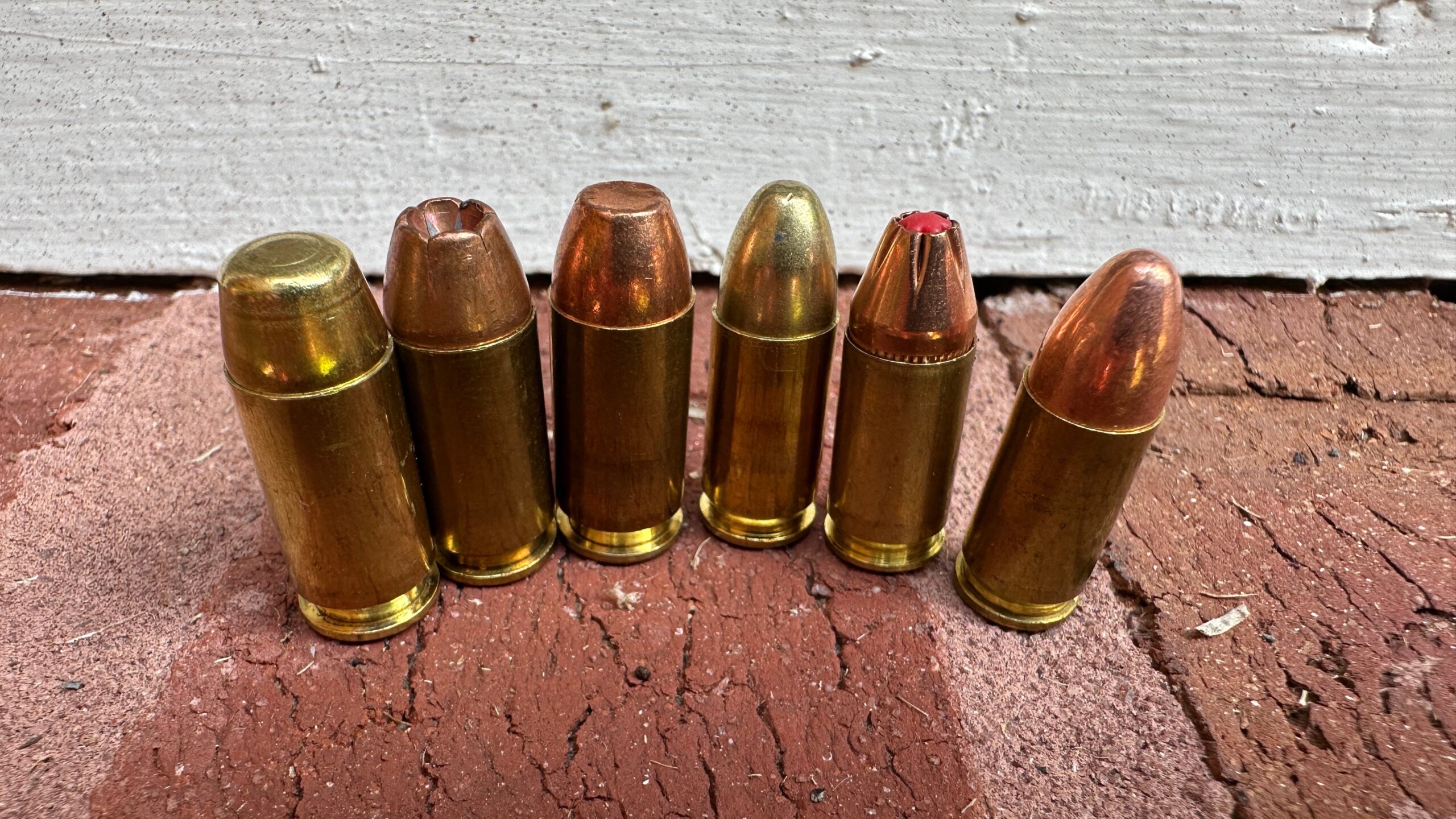
Why Hollow Points Were Developed
The environmental factors that brought about the development of expanding ammunition were wartime, combined with the technological advancement of solid ammunition. Historically, lead ammunition shot out of muzzleloading firearms had a limited velocity, which means they generally stopped in their target and had a low rate of penetration at distance. The soft lead metal provided some expansion on impact, but not much.
Faster bullets, combined with the invention of smokeless powder, more powerful firearms, and jacketed ammunition led to deeper penetration depths. However, as bullets became smaller and faster, the stopping power decreased. They started to overpenetrate targets more often than not, which caused less internal damage and the potential for enemies to return fire even when hit.
This demand for more effective ammunition led to the late 19th-century express bullets. These first hollow points had hollowed-out tips to reduce mass, increase velocity, and provide significant expansion. These developed into the jacketed hollow point (JHP) developed for the British Arsenal in Dum Dum, near Kolkata India, around 1890. The technology has come a long way since then, but we have had JHPs for a long time.
Why Hollow Point Terminal Ballistics Matter
Hollow points are particularly interesting for self-defense for two reasons. Firstly, they provide a lot of stopping power and transfer much more of their energy into the target than other rounds. Secondly, you get less of a chance of over penetration, which can be ideal for populated areas.
Better Stopping Power
JHP bullets create a wide wound channel on impact because they transfer more of their kinetic energy to the target. This creates a large area of damage and a more incapacitating (or fatal) injury. Especially compared to FMJ rounds, JHP rounds leave more destructive cavities. This also means the bullets slow down significantly upon impact.
Less Over-Penetration
Over-penetration is a concern in the modern world in several ways. The first is that it can leave an enemy with enough capacity to keep causing life-threatening damage before realizing they were hit. One of those too-quick to hurt right away shots.
The second concern is that over-penetration means you could hit something behind your target you didn’t intend to, including other people. In populated areas and at close range, this is a huge concern to have when choosing self-defense ammunition. The FBI recommends a penetration depth of 12-18 inches to make sure bullets can reach vital organs after penetrating common barriers like clothing, drywall, or glass while still avoiding over penetrating much further into a secondary target.
Do Hollow Points Stop Attackers Faster?
If you’re in a situation where another person threatens your life, you want to neutralize that threat quickly and effectively. And, while most civilians should be responsibly training regularly if they carry a firearm, the adrenaline associated with a life-threatening event can be overwhelming. You need a bullet that can do as much work for you as possible.
You want to minimize the number of rounds you have to put into a target in order to save a life. Even with regular practice and drills, things happen in real life that can cause our technique to be off just enough to land only one or two shots. With the shots you do land, you want to make sure the damage is enough to quickly neutralize the threat.
Comparing Hollow Point and FMJ Ammunition
| Feature | Hollow Point (HP) | Full Metal Jacket (FMJ) |
| Expansion | Expands, mushrooms | little expansion |
| Penetration Depth | 12–18 inches (optimal) | High penetration over 18 inches |
| Over-Penetration Risk | Lower | Higher |
| Wound Channel | Larger, more destructive | Narrower |
| Energy Transfer | Higher | Lower |
| Cost per Round | Higher | Lower |
JHP rounds have a lot of characteristics that make them a wise choice for self-defense ammunition. Of course, if my life depended on it, I’d pick up whatever was nearest, even if it is loaded with FMJs. Still, you should plan to use the most optimal equipment possible. That is why I make sure I keep my carry firearm loaded with self-defense JHP ammunition.
According to the 2021 National Firearms Survey, about 25% of defensive incidents happen inside the gun owner’s home, while almost half occurred on their property outside their home. About 9.2% happened in public, and just over 3% happened at work. Which means the majority of defensive scenarios also involve considering neighbors, family members, and surrounding property or animals when neutralizing a target.
Before You Use JHP Ammunition
While I have been talking up JHPs, the ammunition does have some downsides. The most common complaints you will see are going to be the cost, reliability in older firearms, and barrier performance.
One thing you don’t have to worry about is JHP being as widely restricted as some may believe. Commonly, but not exclusively, a law-enforcement round, JHP ammo is widely available. Most firearm restrictions surround the type and capacity of the firearm, not necessarily the ammunition. The most restricted ammunition nationwide is armor-piercing ammunition, not JHPs.
JHP Ammunition Costs More
Hollow point ammunition, especially rounds loaded specifically for self-defense, are often more expensive than FMJ ammunition. They are built to be reliable, flawless, and operational; all things you need in a defensive situation. Your life isn’t cheap; the price hike is worth it compared to your usual box of .22s.
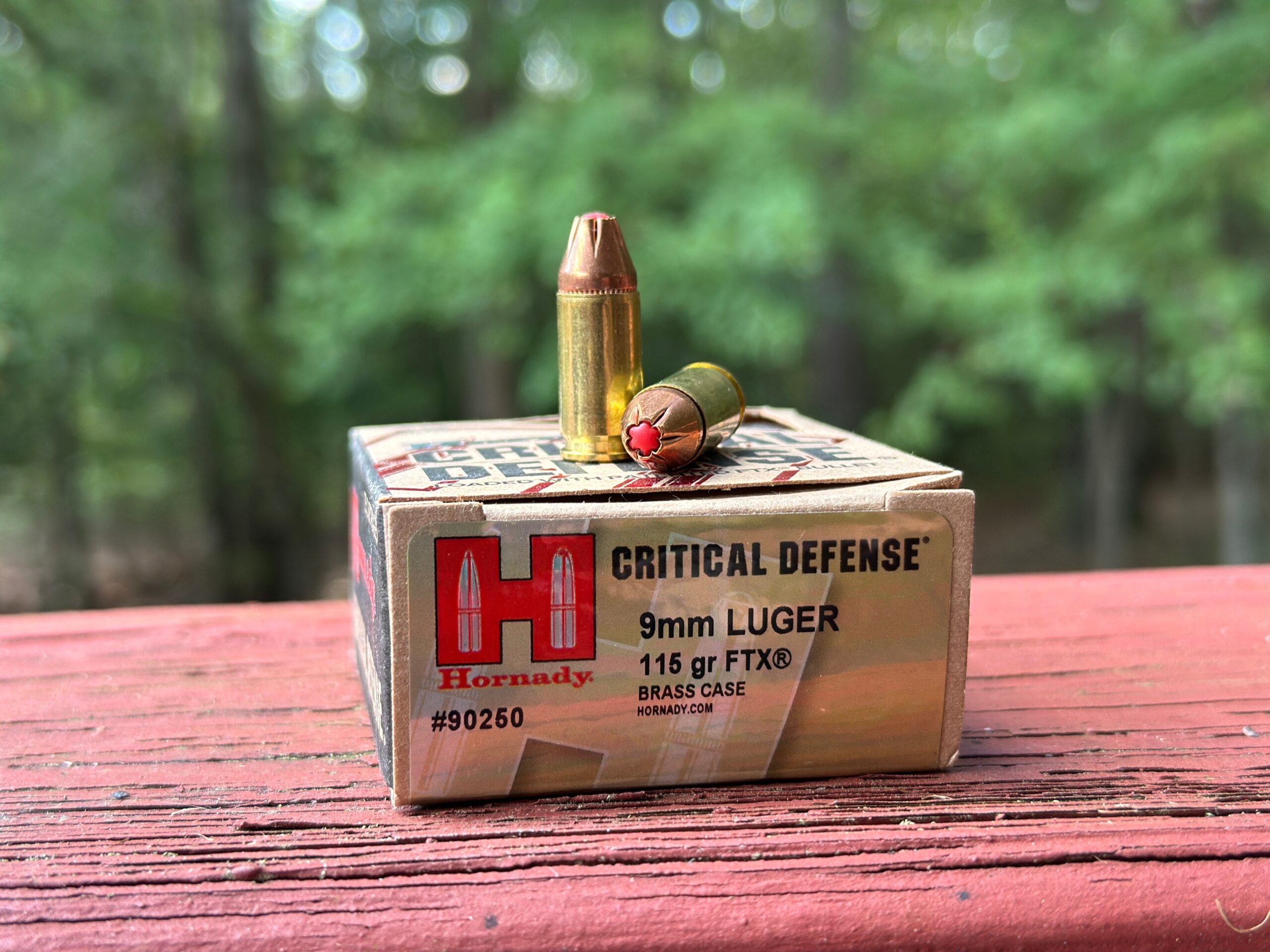
Although you get what you pay for. Personally, I carry a 9mm and use the Hornady Critical Defense 115 Grain FTX JHP. You can pay around $1.20 a round for these, but they run really well for me and I will be carrying them for quite a while.
Reliability in Different Firearms
Modern JHP rounds aren’t designed to run through older firearms smoothly. Some older or poorly designed guns may struggle to feed JHP reliably, which increases the risk of jams. Other semi-automatic type firearms may not agree with JHP and have more issues with feeding and failures to load.
Some JHP ammunition is also loaded heavily, which may not agree with some modern firearms, depending on the model. Always check your firearm handbook for the recommended ammunition specs before sinking money into a few boxes.
It should go without saying, but if you are going to defend you and your family’s life with a particular cartridge, make sure you buy a few extra boxes and take them to the range. I wouldn’t suggest depending on anything that you have not shot at least 100 times without a jam. That may be expensive, but it is certainly worth it. With a modern handgun, and new ammunition, you shouldn’t have very many problems.
Common JHP Cartridges
The most common calibers of JHP for handguns are 9mm, .45 ACP, .40 S&W, 10mm, .357 Magnum, .380 ACP, and .38 Special. The most common round for self-defense is 9mm. Keep in mind that there are JHP rounds for long-range shooting, hunting, self-defense, and target practice.
Each subtype of JHP is engineered for its specific purpose. Self-defense JHP maximizes terminal performance to incapacitate a threat while minimizing the risk of striking bystanders, while hunting and target JHP may have a similar expansion effect, but prioritize accuracy over stopping power.
You can get as specific as you want with the intended purpose of a particular cartridge, but at the end of the day, they are all deadly. So do your research, but don’t worry too much about every little detail.
Modern Features of Hollow Point Bullet Designs
The whole idea behind the JHP is rapid controlled expansion once it hits the target. Manufacturers use a variety of methods to facilitate controlled bullet expansion. One common approach is designing a jacket that is thinner near the front, allowing easier expansion upon impact.
Other bullets feature partitions in the middle of the core, which stop expansion at a predetermined point within the projectile to retain some penetration power.
Chemically bonding the lead core to the copper jacket is another common method. This prevents separation and fragmentation during penetration better than the mechanically locked bullets.
You will also see posts in the cavity that promote hydraulic expansion of bodily fluids within tissues; however, while highly effective against lightly clothed targets, this feature can be clogged by heavy clothing, sometimes resulting in no expansion at all.
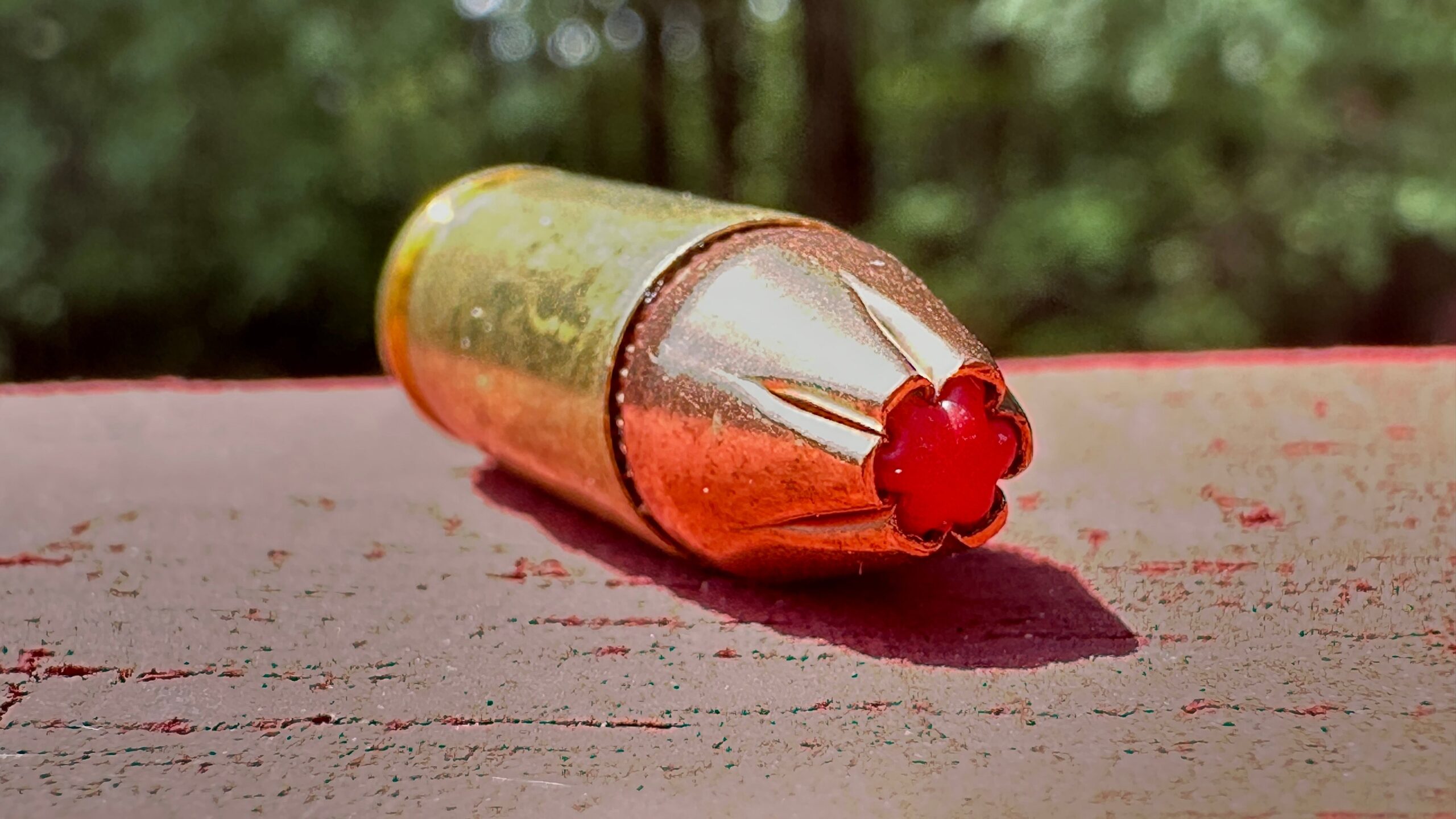
Finally, some bullets use plastic inserts in their hollowed out point. This gives them the aerodynamic profile of a full metal jacket while still allowing rapid expansion on impact. This design also improves feeding reliability, leading to it being one of the most popular JHP designs.
Remember Training Matters More
While JHP is a superior self-defense round, no ammunition is effective without a trained handler. Regular training is crucial if you own a firearm, regardless of the reason you own it. Home-defense, concealed carry, and even hunting all require time at the range. A choice in ammunition will never beat time and training when it comes to improving shot placement and response time.
If you spend a few hours on the range practicing your form and testing your equipment, you will be more prepared to handle deadly threats than 99% of people. Plus, going to the range is a good time, and you should not assume your carry pistol and ammunition is fully functional after months of carry without use.
Hollow Points Do Make a Difference in Self-Defense
JHP stacks the odds more in your favor by being an efficient and responsible ammunition choice for defensive use by balancing stopping power and safety for bystanders. Remember, though, that success in self-defense depends on multiple factors: training, mindset, and situational awareness. The right ammunition isn’t an excuse or solution to a lack of training and preparedness. Always keep practicing, make time to train, and shoot safely.