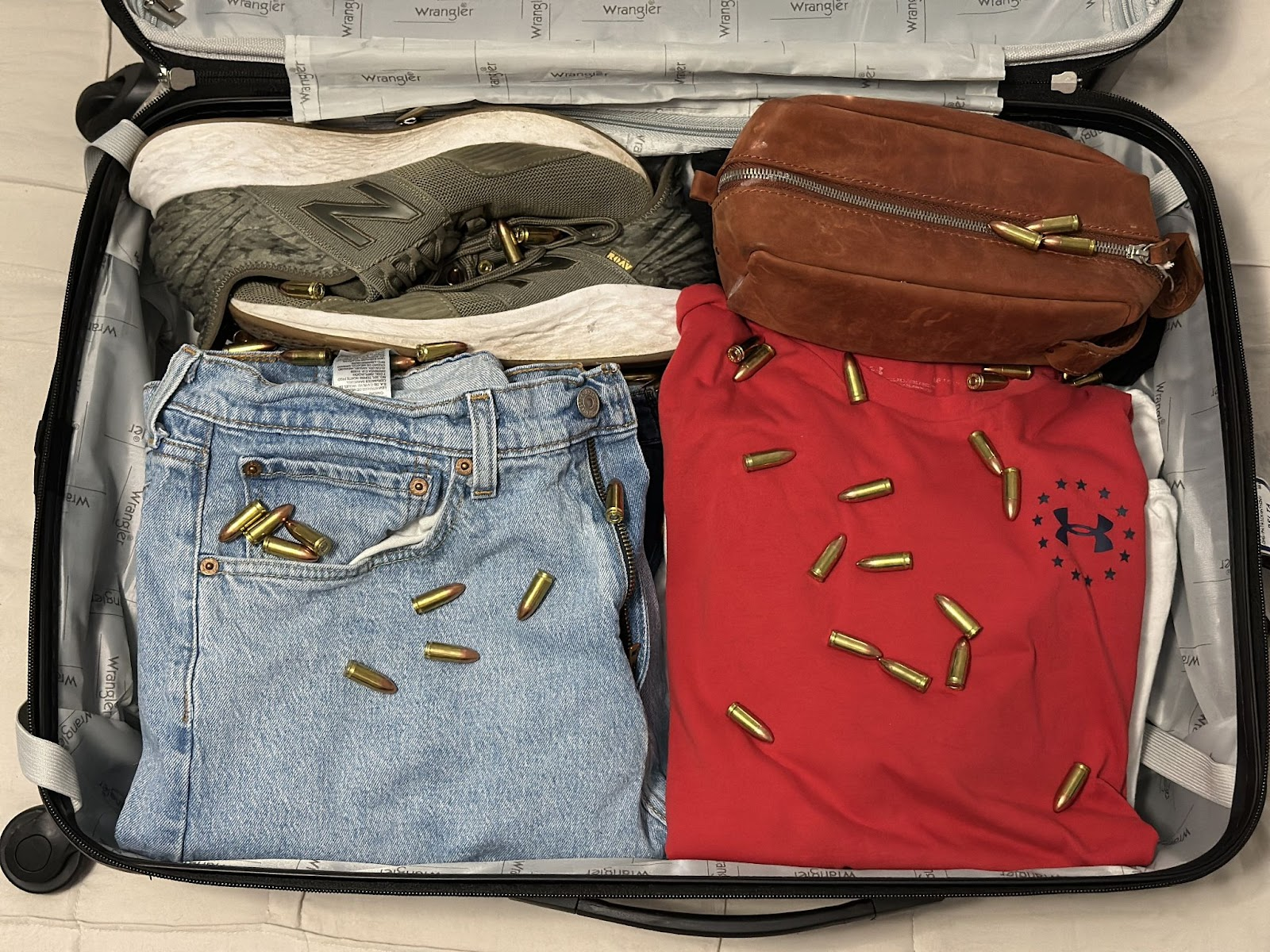
If you have to fly with ammunition, it can be a bit intimidating, but if you follow a few rules you will be just fine. The truth is, it’s not all that hard to fly domestically with ammunition or a firearm. The hardest part about it is abiding by luggage weight restrictions. Whether you are traveling with one box of ammo, or a whole ammo can, there are clear rules laid out on how to do it. Still, you will want to be prepared and know exactly what to expect before you get to the airport.
Most of this article will be about strict guidelines from the Transportation Security Administration (TSA), as well as specific airlines; so before we dive in, here’s a tip from personal experience. Whatever you do, you want to make sure you get to the airport early. If you bring firearms in an airport, do not be surprised if you are “randomly” searched or if things take longer than normal. Get to the airport at least an hour sooner than you would if you were not traveling with firearms or ammunition.
Each airline may have its own rules about traveling with a firearm and / or ammunition, but they all come second to TSA guidelines. Let’s cover those first.
TSA Guidelines on Traveling With Firearms & Ammunition
If you are just looking for the facts, here is a quick list of what you need to know,
- Firearms must be unloaded
- Ammunition has to be in a container designed for ammunition
- Ammunition cannot be stored in magazines
- Firearms, ammunition, and magazines must be in a locked hard-sided case
- Firearms, ammunition, and magazines may be stored in the same hard-sided case
- Firearms, ammunition, and magazines have to be in checked luggage
Rule number 1, your firearm must be unloaded unless you are a law-enforcement officer on a special assignment. After that, you must transport your firearm and all ammunition in your checked luggage. Putting any of it in your carry-on is going to get you flagged and you’ll likely miss your flight and likely find some legal trouble. It’s not too difficult though, as soon as you get into the airport, you will head to check your baggage. When you get there, they will ask you if you have anything to declare. They will likely see you standing there with a firearm case and make sure to ask you, but this is where you inform the airline you will be traveling with a restricted item. However, they will only allow you to travel with your firearm and ammunition if you have packed it correctly; and they are mighty picky.
Your ammo, up to 0.75 (19.1mm) caliber, needs to be in a “fiber (such as cardboard), wood, plastic, or metal box specifically designed to carry ammunition” (TSA). This usually means the cardboard box your ammo came in when you bought it. You will then need to pack your ammo inside a locked hard-sided case. You can put it in the same case as your firearm, but also keep in mind that ammo cannot be stored in magazines. Your magazines are also required to be in a locked hard case, and can be in the same one as your firearm and ammunition. In general, everything related to firearms has to be in a locked hard-sided case.
Here is a video of the TSA explaining how to pack a firearm and ammunition for transport,
If you have everything packed correctly, after declaring your ammo and firearms to the airline, they will give you some paperwork, and put your hard-sided case on the luggage conveyor belt. If you are taking a handgun, you are allowed to place its hard-sided case inside of another one of your checked bags, but you will need it out of the bag when you get to the luggage counter; they will want to inspect it.
Airline Specific Polices
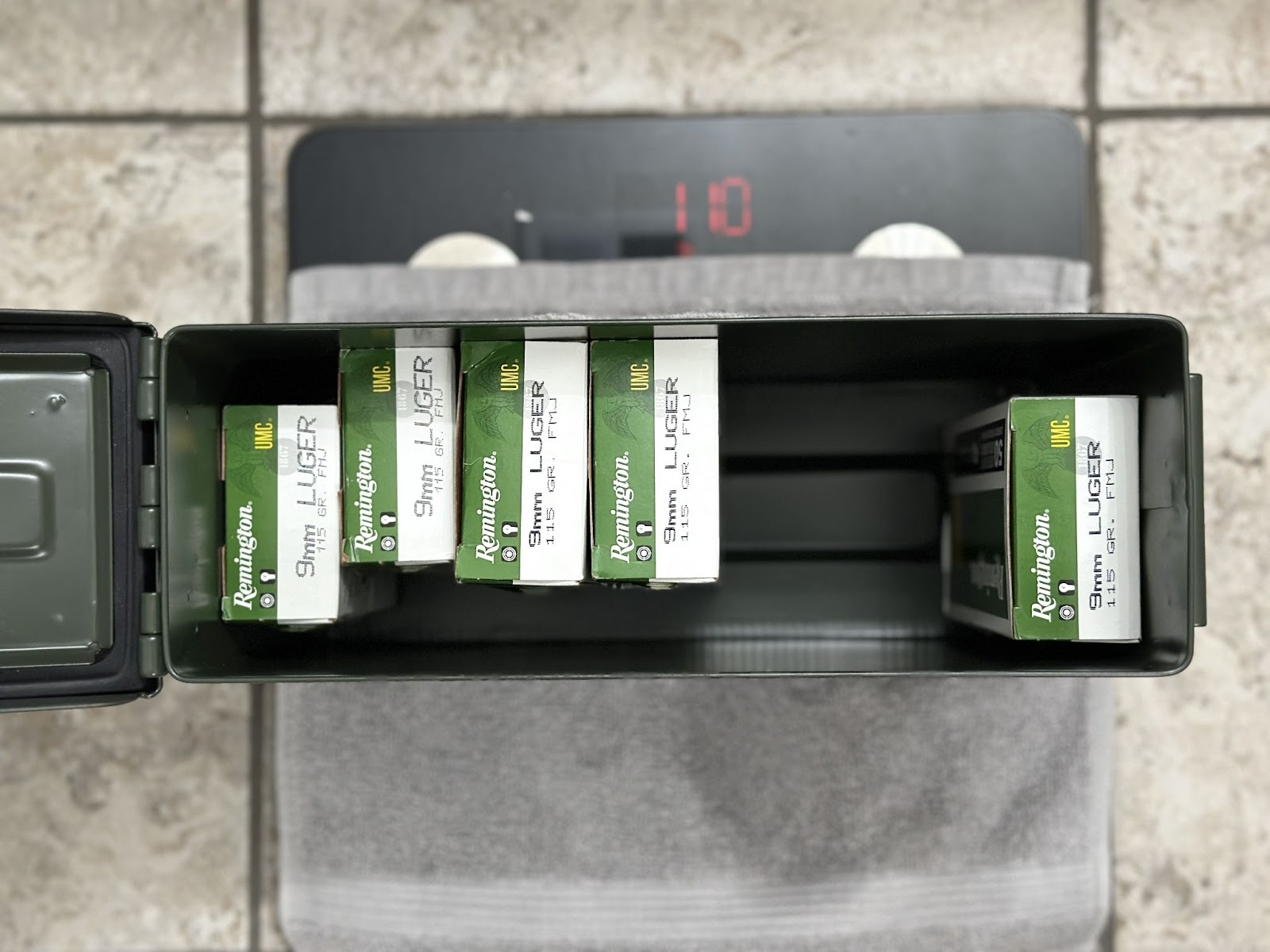
Thankfully, most airlines share similar policies around firearms and ammo. For starters, all firearms have to of course be unloaded, and then some airlines have restrictions on how much ammo you can travel with. The most common figure I saw was 11 pounds, and as you can see, I hit that right on the head with five boxes of 9mm and a cheap ammo can from Academy Sports.
| Airline | Firearm Policy | Ammunition Policy | Policy Link |
|---|---|---|---|
| American Airlines | Unloaded, locked hard-sided case, rifle cases require locks on each end | Up to 11 lbs | Link to American Airlines Firearms & Ammo Policy |
| United Airlines | Unloaded, locked hard-sided case | Up to 11 lbs | Link to United Airlines Firearms & Ammo Policy |
| Delta Air Lines | Unloaded, locked hard-sided case | Up to 11 lbs | Link to Delta Air Lines Firearms & Ammo Policy |
| Southwest Airlines | Unloaded, locked hard-sided case | Up to 11 lbs | Link to Southwest Airlines Firearms & Ammo Policy |
| Alaska Airlines | Unloaded, locked hard-sided case | Up to 50 lbs (some flights 11 lbs) | Link to Alaska Airlines Firearms & Ammo Policy |
| JetBlue Airways | Unloaded, locked hard-sided case | Up to 11 lbs, separate from firearm | Link to JetBlue Airways Firearms & Ammo Policy |
| Spirit Airlines | Unloaded, locked hard-sided case, one firearm per case | Up to 11 lbs | Link to Spirit Airlines Firearms & Ammo Policy (Page 31) |
| Frontier Airlines | Unloaded, locked hard-sided case | Up to 11 lbs | Link to Frontier Airlines Firearms & Ammo Policy |
| Allegiant Air | Unloaded, locked hard-sided case | Up to 11 lbs | Link to Allegiant Air Firearms & Ammo Policy |
| Hawaiian Airlines | Unloaded, locked hard-sided case | Up to 11 lbs, separate unless secured | Link to Hawaiian Airlines Firearms & Ammo Policy |
In addition to these rules, most airlines do not allow you to transport black powder or percussion caps for muzzle loaders, with a zero tolerance policy. A few airlines also mentioned that any kind of BB gun, air rifle, or replica firearm is subject to the same restrictions as actual firearms, and must be transported similarly.
Choosing a Hard-Sided Gun Case & Lock
When you are traveling with a firearm, a hard-sided lockable case is required by the TSA. Although if you are transporting a rifle that you want to hold any kind of zero, you are going to want a case that can handle a few hits. If you travel a lot you know that luggage gets thrown around, and while a gun case would be obvious to airline workers, that doesn’t mean they are going to be nice to it. Plus, this is an opportunity to get a larger gun case that can also hold a few boxes of ammo.
Ammo itself has to be in a box or container, usually the box you brought it in, but that box also has to be in a hard plastic or metal container like an ammo can or gun case. So you may as well get a nice gun case that will protect your firearm and hold a few boxes of ammo at the same time. You can find some super nice Pelican cases that will do the job, but you can also find some more affordable options at stores like Cabela’s. Just remember that you get what you pay for, and it may be worth it if you are flying out to Alaska for that once in a lifetime hunt.
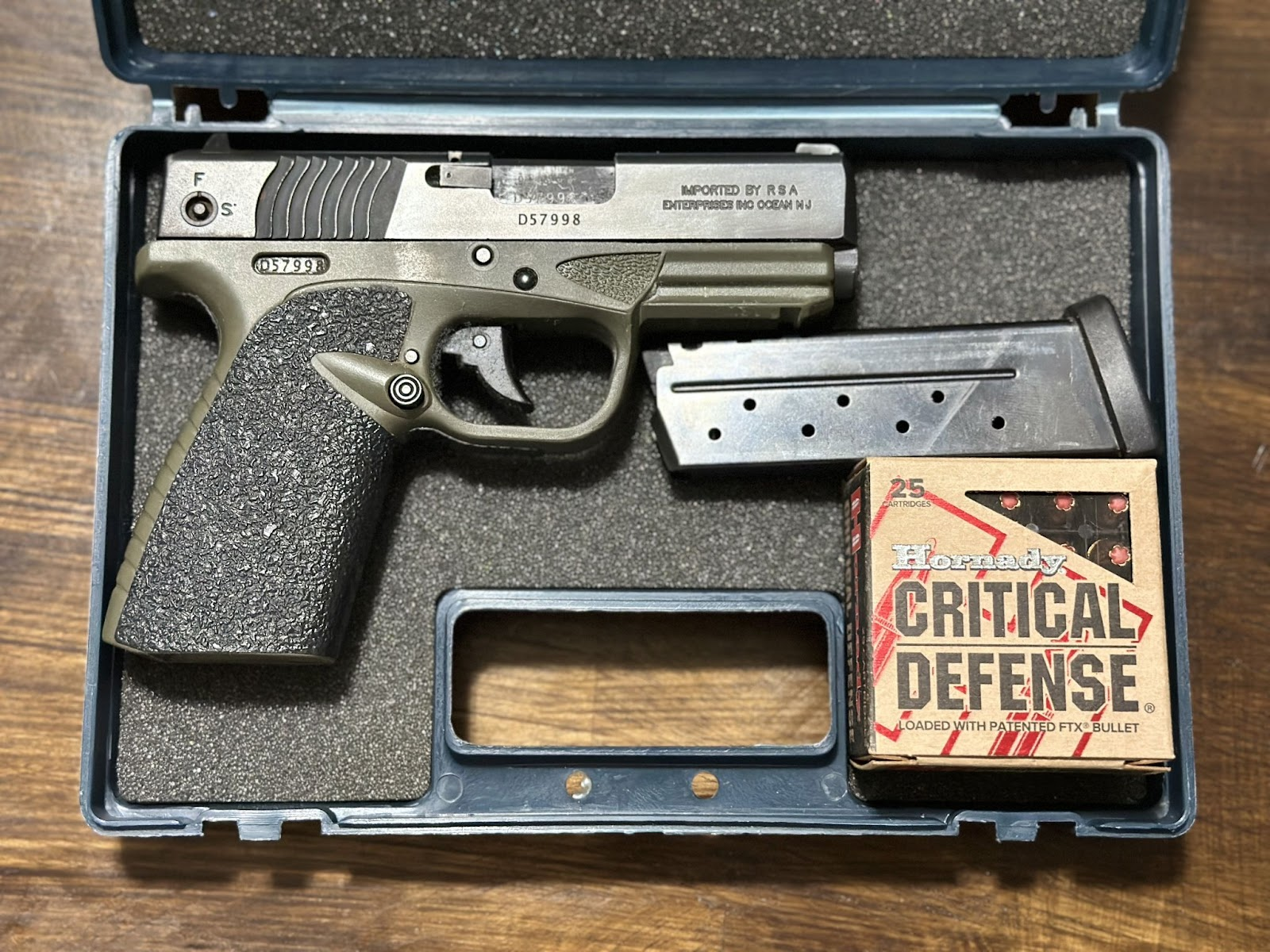
No matter what kind of case you use, make sure you have a few TSA-approved locks to secure it with. In general, what makes a lock TSA-approved is that they can open it with a universal key, without cutting the lock. So do your research on your preferred lock, but you can usually get these for around $10 to $20.
Possible Fines For Incorrect Firearm & Ammo Transportation
What you don’t want to do is try to get your firearm through security without checking it. Nowadays, the TSA is going to find everything. You can pay up to $17,062 for a single violation of TSA’s guidelines, so get it right the first time. Here are a few of the fines you could receive if you bring something to a TSA checkpoint that you shouldn’t:
| Loaded firearms (or unloaded firearms with accessible ammunition) | $3,000 – $12,210 + criminal referral |
| Unloaded firearms | $1,500 – $6,130 + criminal referral |
| Silencers, mufflers frames and/or receivers | $850 – $1,700 + criminal referral |
| Air guns, replica guns, inert guns, etc. | $450 – $2,570 |
Exact details can be found here, but the criminal referral means that you will likely be arrested and investigated for committing a crime. Even if the investigation is dropped though, you still have to pay the civil fine. Although I could not find much about getting in trouble for only having ammo, while I wouldn’t break the rules they set forth about it, it seems the fine structure is more focused on firearms.
You can also get in trouble for items in your checked baggage if you do not claim or pack them correctly.
| Undeclared and/or improperly packaged loaded firearms | $1,700 – $3,410 + criminal referral |
| Undeclared and/or improperly packaged silencers; mufflers; frames and/or receivers | $450 – $2,570 |
| Undeclared and/or improperly packaged unloaded firearms | Warning Notice (first violation only) / Subsequent violations may warrant NOV/Civil Penalty: $850 – $1,700 |
So as you can see, traveling with a firearm and ammunition can come with some steep fines and criminal charges if done incorrectly. Although you shouldn’t worry too much, the requirements to do it successfully are fairly black and white. Plus, this deep into the article, you are an expert on it.
One thing to know about these fines is that they are extreme for black power or anything the TSA defines as an explosive. You will find yourself with the maximum $17,062 fine and jail time if you improperly travel with your muzzle loader and accessories.
Traveling Internationally With a Firearm or Ammunition
The first thing that you should know about traveling out of the country with a firearm and/or ammunition, is that as strict as the United States is about it, every other country in the world is going to be even tighter. If you go through a domestic flight with a loose 9mm cartridge in your pocket, they are going to find it, and you will get searched, but you will probably still get to go on your flight if you get there on time. On the other hand, there are horror stories of people spending years in a foreign prison for forgetting about a loose cartridge in their backpack.
You can read about what the US Department of State has to say about traveling abroad with firearms here, but it mostly says they are not going to bail you out. I would like to add more info about how to travel abroad, but it is going to be very different for every country. Just know that no country is tolerant of firearms like the USA is, so it is going to be a big deal no matter where you go. Make sure to do some in-depth research on the country you are going to before booking your flight.
This Time, It’s Best To Follow The Rules
Flying with ammunition might sound intimidating at first, but it’s really just a matter of doing your homework and checking the right boxes, literally. Whether you’re heading to a hunting trip in another state or traveling to a shooting competition, the key is preparation. Know the TSA guidelines; travel with all of your firearms unloaded and pack them properly in a lockable hard-sided case with TSA-approved locks. You will also want to double-check your airline’s policy, and make sure you follow the weight limit for ammunition.
In general, don’t cut corners when you are flying with firearms and ammunition. A simple misstep, like a magazine loaded in your case or trying to use a soft-sided case, can lead to steep fines, missed flights, and even a criminal referral. If you take the time to do it right, traveling with ammo and firearms isn’t all that difficult. Airlines know that we need to travel with firearms, they are just trying to make it as safe as possible.