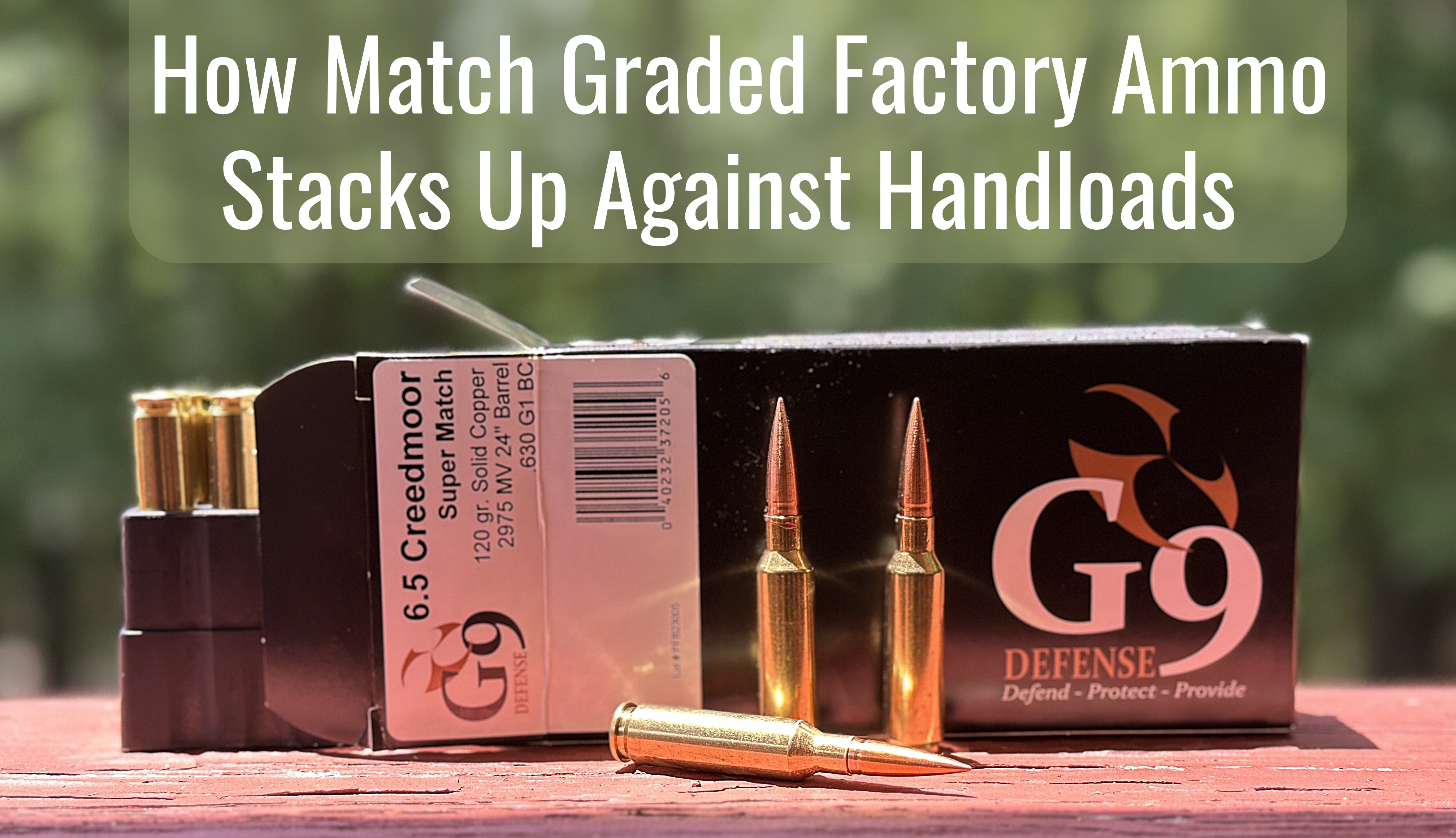
Shooters have argued for decades that handloads are king, they are often called more accurate, more consistent, and just plain better. It’s part pride, part tradition, and maybe a little nostalgia for when factory ammo wasn’t up to snuff; that’s not the case anymore.
Match-grade factory ammo now rivals most handloads in accuracy and consistency, giving shooters reliable, precision-built performance straight out of the box without the extra time, cost, or risk of reloading.
We’ll break down how modern factory match ammo stacks up against handloads in real-world accuracy, cost, and convenience. Then we will go into why it’s often the smarter choice for hunters, competitors, and anyone who’d rather spend their time shooting than reloading.
Why This Debate Still Gets Folks Fired Up
Let’s be honest, shooters are tinkerers. If something can be tweaked, we’ll tweak it. That’s why handloading has always had this mystique. When your reloading setup costs more than your rifle, and your weekends vanish under piles of brass, it’s fair to ask: is it worth it anymore?
This isn’t a knock on handloading. It’s a look at how far factory match ammo has come and why it makes more sense for most people, hunters, competitors, or anyone who just likes to shoot more and fuss less.
What “Match-Grade” Really Means & Why It Matters
For decades, “match-grade” was marketing shorthand for “better than usual.” Now, it’s a legitimate standard. Match-graded ammo isn’t even built the same way on the same high-speed production lines that pump out those cheap plinking rounds.
Match grade ammo is the epitome of quality over quantity, being made in smaller batches, with precision dies, consistent primers, and powder charges measured down to the tenth of a grain. Match-grade factory ammunition is a bottle of 20-year-aged bourbon, think good ol’ Pappy Van Winkle.
Handloading match-grade rounds is akin to working directly in the distillery. Buying ammo from the factory is sipping on that perfectly crafted bourbon.
Match-grade means quality over quantity in every single step of the process. From case selection to bullet seating depth, it’s all controlled by machines that simply don’t have bad days. That’s what gives you repeatable, sub-MOA accuracy right out of the box.
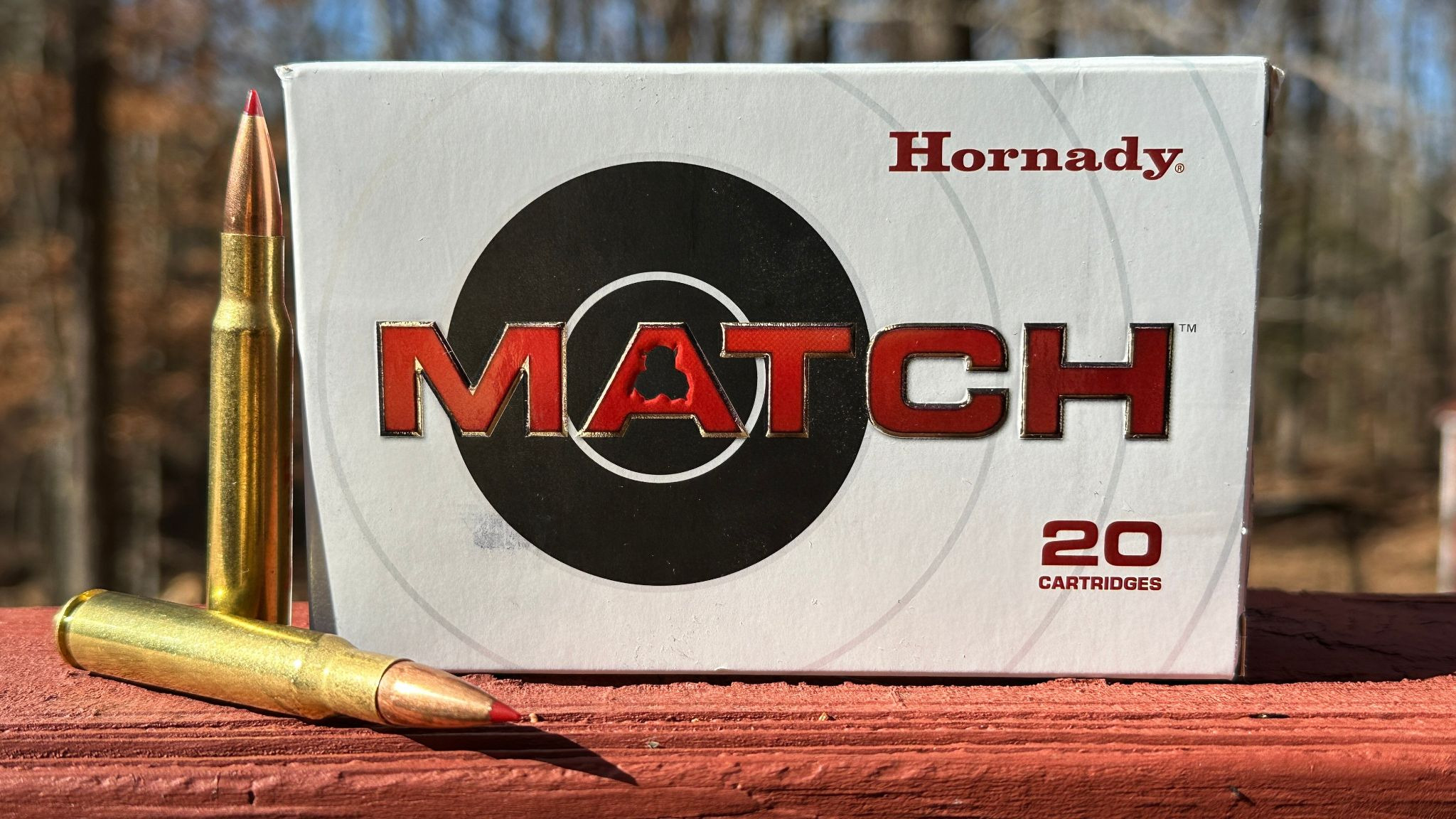
Hornady 30-06 M1 Garand 168gr ELD MATCH
Take the Federal Gold Medal Match or Hornady ELD Match, both available at VelocityAmmoSales.com. They’re made with Sierra MatchKing and Hornady ELD bullets, respectively, which are the same bullets used by competitive shooters who make their own handloads.
The difference? These are ready to shoot, and you don’t have to worry about double-charging a case or forgetting to seat a primer.
Factory Match Ammo in Real Conditions
If you talk to old-school reloaders, they’ll tell you the main advantage of handloading is “tuning”. Being able to adjust your powder charge, seating depth, or brass prep to your specific rifle is a huge plus. It’s true; a handload tailored to one rifle can shoot like a dream.
When you are handloading, you have to decide on everything that goes into a cartridge. Check out our other article about How Bullet Weight Actually Affect Performance.
There’s a catch though; modern match-graded factory ammo already gets most of the way there. Thanks to computer-controlled loading equipment and batch testing, factory match loads now produce velocities with standard deviations so tight that most competitive shooters can’t tell the difference.
Take the 6.5 Creedmoor Hornady Match 140gr ELD, for example. Many rifles will shoot it at or under 1 MOA, sometimes better. That’s precision most shooters won’t surpass with handloads unless they’ve invested hundreds of hours and thousands of dollars.
Even factory .308 match ammo, like Federal Gold Medal Match 168gr SMK, has been used in competitions for years with incredible consistency. The point is simple: match-grade factory rounds aren’t just “good enough.” They’re good, period.
Time Isn’t Just Money, It’s Everything
Sure, reloading has its appeal…the smell of tumbling brass, the satisfaction of crafting your own rounds, some shooters want to see how the sausage is made, and that’s understandable.
Handloads aren’t the money savers that some online forum lurkers like to preach about, and cranking enough of them out is a process that makes molasses look fast. Even a middle-of-the-road single-stage setup is going to run you close to $1,000! And that’s before you have loaded even a single round.
We wrote an entire article on the savings you can get from reloading and how they compare to the costs, check it out here: Is The Time & Money Spent Reloading Actually Worth it?
If you are the shooter who has to have everything top of the line, a progressive press is going to easily double or triple that price.
Great, now you’ve invested in the necessities for your reloading bench, now it’s time you add in the price of powder, primers, and bullets. Then you have to factor in the other most significant cost, your free time.
For the sake of argument, even if you aren’t brand new to the reloading game, pumping out 100 rounds can still take a few hours once you account for the entire process. This means sorting, cleaning, resizing, and inspecting your handloads for perfection and safety.
That’s precious time you could spend shooting, or doing anything else that doesn’t involve a case trimmer.
With factory match ammo, you skip straight to the fun part. You can spend more time at the range, at home, or better yet, out in the field.
Plus, bulk discounts often narrow that cost gap even further. If you shoot a lot of .223 or 9mm, the math tilts fast in the factory’s favor.
If you like buying bulk ammo, you should check out our article about storing it effectively here: Buying & Storing Bulk Ammo Effectively [A Step-By-Step Guide]
Let’s put some numbers to reloading over using match ammo.
| Caliber | Average Handload Cost (per round) | Factory Match Ammo (Velocity Ammo Sales) | Notes |
|---|---|---|---|
| .223 Rem | $0.40–$0.50 | $0.55–$0.70 | Handloads save a few cents, but not your time. |
| 6.5 Creedmoor | $0.90–$1.10 | $1.20–$1.40 | Factory match ammo often shoots just as tight. |
| .308 Win | $0.75–$0.95 | $1.10–$1.30 | Bulk deals can drop prices even lower. |
Even if you’re saving 10 or 15 cents per round with handloads, you’ll need to shoot thousands before it pays for your gear. For most shooters, that break-even point never comes.
Reliability, Safety, and Peace of Mind
Sure, handloading can be rewarding, but it’s also risky if you get sloppy. All it takes is a single overcharged case or bad primer to ruin your favorite rifle or put someone’s life in danger.
Factory ammo, especially match-grade, goes through a quality control process that most home setups can’t come close to matching.
Every lot is pressure-tested, velocity-checked, and visually inspected. The factory knows how tight the specifications on match-grade ammo need to be, so you know you’re purchasing a product that’s been verified to perform safely with the highest of expectations.
The truth is, the majority of handloaders can’t consistently produce rounds like a dedicated factory system that was built for one thing, and one thing only. Don’t get it twisted, that reliability matters, especially if you’re shooting a match, chasing a trophy mule deer, or training with your carry rifle.
When Handloading Might Make Sense
Now, to be fair, there’s still a place for handloading. If you compete in precision rifle series or shoot a wildcat cartridge that factory loads don’t cover, handloading is almost required. It’s also a hobby, and for a lot of folks, that’s reason enough.
It makes plenty of sense why some shooters take pride in crafting their own ammo, having fully customizable control over the finished product.
On paper, you can do your best to try and maximize each round’s performance, but the truth is that match ammo from the factory gets you at least 95% of the performance without any headaches.
You could spend a lifetime trying to outperform the factory with your handloads, but you don’t have to gamble on home-brewed rounds when your freezer’s on the line.
Understanding The Big Picture: Why Match Factory Ammo Wins for Most Shooters
At the end of the day, it comes down to this: how much is your time worth?
Factory match ammo lets you focus on the reason we are all here and what we all love to do…go shooting. If you’re somehow still on the fence, think about this analogy. Handloading is tuning your car every single weekend. Adjusting fuel-air ratios to maximize horsepower, gas mileage, and torque.
Buying factory loads that are match-grade is putting some miles on that same vehicle (whether they be highway or in the mud). Some drivers love spending all that time in the garage on their back, underneath the truck. Most of us just want to put the pedal to the metal and drive.
It’s 2025, and factory-made match-grade ammo has reached the point where precision, reliability, and convenience meet. Whether you’re sighting in a new rifle or competing in your first 3-Gun, USPSA, or IDPA match, you can trust that a box of match-grade ammo from VelocityAmmoSales.com will come correct with the accuracy and quality you need and feel.
If you are here researching ammo for your first match, check out this article to know what to expect when you get there, Your First Shooting Match: What to Expect at IDPA, USPSA, or 3-Gun
Load Less & Shoot More
Reloading will always have its loyal fans, and for good reason. It’s hands-on, technical, and rewarding in its own right. For most shooters, hunters, competitors, or weekend range regulars, modern match-graded factory ammo gives you nearly identical results without the investment, hassle, or risk.
You get proven performance, consistent accuracy, and the freedom to spend your weekends where they belong: outdoors, not hunched over a reloading bench.
If that sounds like a better deal, you can check out premium match-grade rounds at VelocityAmmoSales.com. Shoot more and reload less; it’s a win-win process.
Reloaded Ammo Vs Factory Match Ammo FAQs
Q: Does the Military Use Match Grade Ammo?
Yes. Certain specialized military and law enforcement teams will use match ammunition in their sniper rifles and designated marksman applications where tighter tolerances are required for increased accuracy beyond what standard-duty rounds can provide.
Q: Why Is Reloaded Ammo More Accurate?
Reloaded ammo can be tuned specifically for a given rifle, powder charge, bullet seating depth, primer choice, brass prep, etc. Which can allow the shooter to dial in specific performance parameters that factory ammo (especially at a mass-production level) may not be able to match or exceed.
Q: What Is the Difference Between Match Grade Ammo and Regular Ammo?
Match ammo uses tighter tolerances in its components and manufacturing, as well as higher-quality components. Regular ammo is typically built to more lighter tolerances for huge production runs and larger-scale distribution, and to save on costs.
Q: How Accurate Is Factory Ammo?
Modern premium/match line factory ammo is more accurate than most shooters. Loads that are well-suited to your rifle can often put sub-MOA or better groups with a quality rifle.
Q: What Is Match Grade Ammunition?
Match-grade ammo is ammunition that’s made with higher-quality components and more consistent manufacturing to meet tighter tolerances and specifications. It’s usually reserved for competitive shooting, long-range accuracy testing, or other use cases where repeatable precision matters most.