
Prefer audio over written content? Listen to the article here:
If there’s one thing all hunters can agree on, it’s that we want the animals we shoot to go down quickly. For so many reasons, it’s important to put our shots where they need to go and use the right equipment that allows for quick, clean, efficient kills. Firearms account for well over half of all whitetail kills, so it’s important to know which rounds you can count on to perform well in the field.
While it’s a relatively new round to the market compared to other common hunting calibers, the 6.5 Creedmoor is a reliable round for whitetail thanks to its flat shooting trajectory, accuracy, and balance of weight and recoil. With so many rifle cartridges on the market, the 6.5 Creedmoor has quickly become a popular option for hunters and a common chambering for rifle manufacturers.
I’ll preface everything with this: a lot of ink, both printed and online, has already been spilled on comparisons between the 6.5 Creedmoor and the cartridges that came before it. I may reference others, but I’m not here to argue, compare, or convince. Take this information for what it’s worth and decide for yourself if the 6.5 Creedmoor lives up to its billing.
Is the 6.5 Creedmoor actually worthy of being mentioned among the likes of the .30-06, .308 Winchester, and .270 Winchester? The short answer is yes, the long answer will require a bit of history and maybe an open mind from the old-guard of hunters.
Origins of the 6.5 Creedmoor
The 6.5 Creedmoor, like many other hunting cartridges before it, was born for another purpose. Originally introduced in 2007 by Hornady, the round was designed as an all-purpose competition round that would bring together the best qualities of other popular cartridges: flat-shooting, efficient downrange, low-recoil, and cost effective for the shooter.
Sounds a lot like a Goldilocks cartridge, doesn’t it?
A round that can balance those qualities would have a broad appeal that isn’t easy to find. Other than the .308 Winchester, there aren’t a lot of chamberings that cross-over between match shooting and hunting, and Hornady’s goal was to not only equal the appeal of existing cartridges, but to exceed them.
Adoption from match shooters happened a little faster than from hunters. Match shooters will pore over ballistics charts and tweak their loads to find just the right fit for their guns, so a round that performs as well as the 6.5 Creedmoor does on paper makes a ton of sense.
It was quickly adopted into the precision shooting world and made a name for itself based on its accuracy and performance downrange.
It took longer for the wider hunting public to warm up to the 6.5 Creedmoor, but once they did, its popularity grew like wildfire. Over the counter rifles began to be chambered for the 6.5, and the ammunition supply grew to feed the growing demand. Once the on-paper results were confirmed in the fields and woods across the country, the 6.5 Creedmoor quickly cemented itself as a standard option for hunters.
6.5 Creedmoor Field Performance
If you enjoy the science of shooting, stick around and we’ll talk about why the 6.5 was able to make that jump. If you’ve already glossed over, just know this: the 6.5 Creedmoor does everything well, but nothing perfect.
The 6.5 Creedmoor is flat shooting, accurate, and balances weight and recoil. Those characteristics are some of the key design specifications that Hornady sought to develop, but what is it about the round specifically that allows it to toe the line between form and function?
Size Matters
Whether we’re talking about pistols, rifles, or shotguns, there’s a lot tied up in the size of the rounds a gun fires besides just the dimensions of the bullet. There’s a mythology around certain rounds that supersedes actual performance. With the advancement of bullet technology, the performance gap between, let’s say the 45ACP and 9mm, has been reduced.
With the 6.5 Creedmoor, size is everything. The size of the projectile and the size of the casing allow for the specific performance that Hornady was looking for in their development. For the sake of comparison, I’ll bring the .308 into the discussion, it’s perhaps the best analogue in use-case and popularity.
Let’s start with the bullet itself. The 6.5 Creedmoor uses a narrower bullet than the .308 (6.5mm vs 7.62mm or .264 inches vs .308 inches), which cuts down on its weight. To make up for some of this weight loss, the bullets for the 6.5 are longer than those of the .308. In the same loadings, 6.5 Creedmoor rounds will run 10-25 grains lighter than those of the .308.
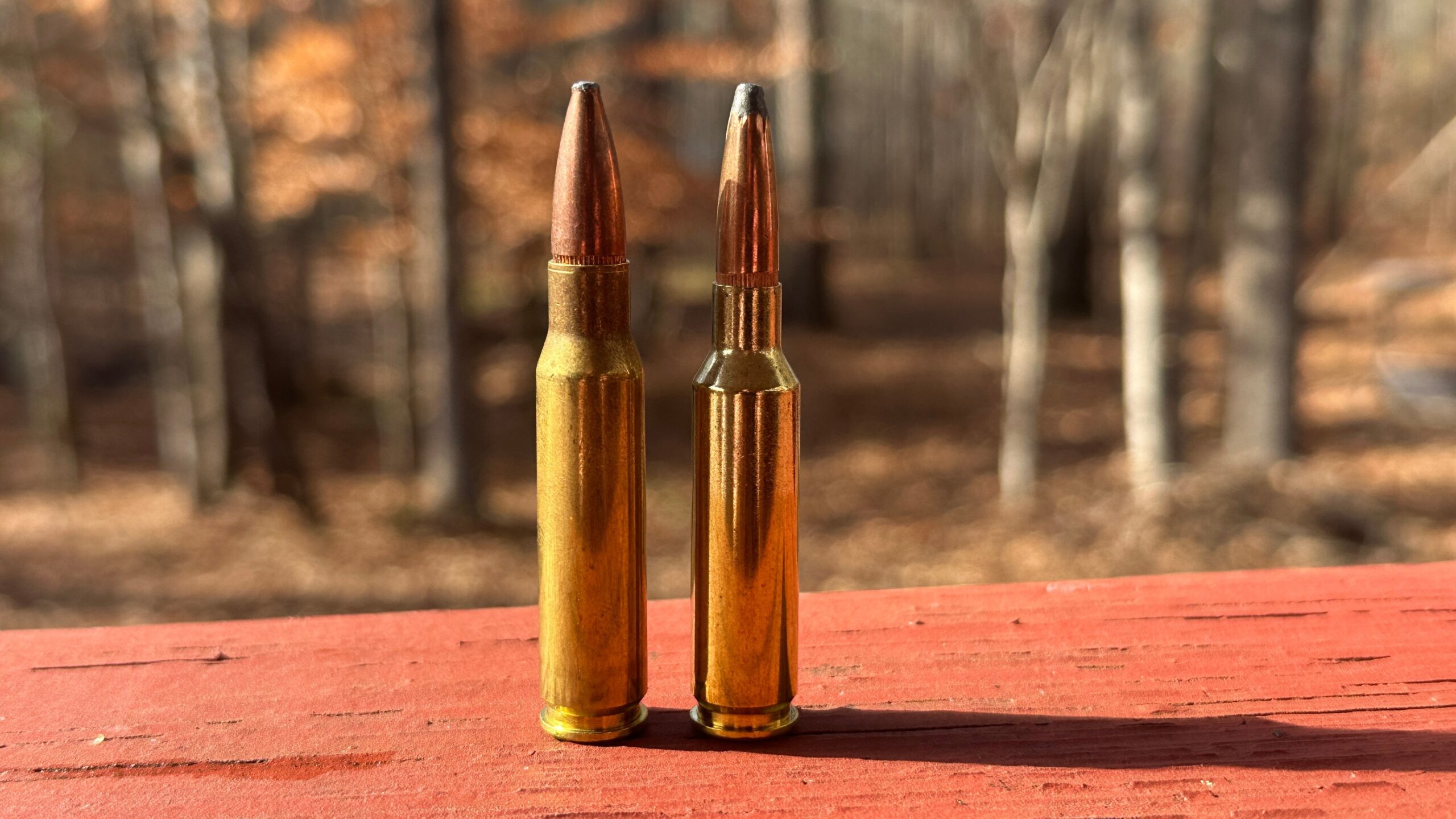
For example, Hornady’s American Whitetail has a 129 grain bullet for the 6.5 Creedmoor and a 150 grain bullet for the .308, a 14% weight difference. While not the lightest deer round available by any stretch, the 6.5 does come in lighter than the other well established deer rounds.
A lighter round, must equate to a higher velocity though, right?
All other factors being equal, yes. However, because the 6.5 was designed as a short-action round with a case similar in length to the .308, the longer bullet reduces the capacity of the case. This reduced capacity means the 6.5 has less powder behind it, and therefore, equal or lower muzzle velocities than its heavier counterparts.
So far, the size of the 6.5 Creedmoor seems to be a bit of a burden for the round when it comes to taking game. But it’s the size and length of the bullet that helps make the 6.5 effective on game, especially at longer distances. This is where modern bullet design and a better understanding of ballistic coefficient comes into play.
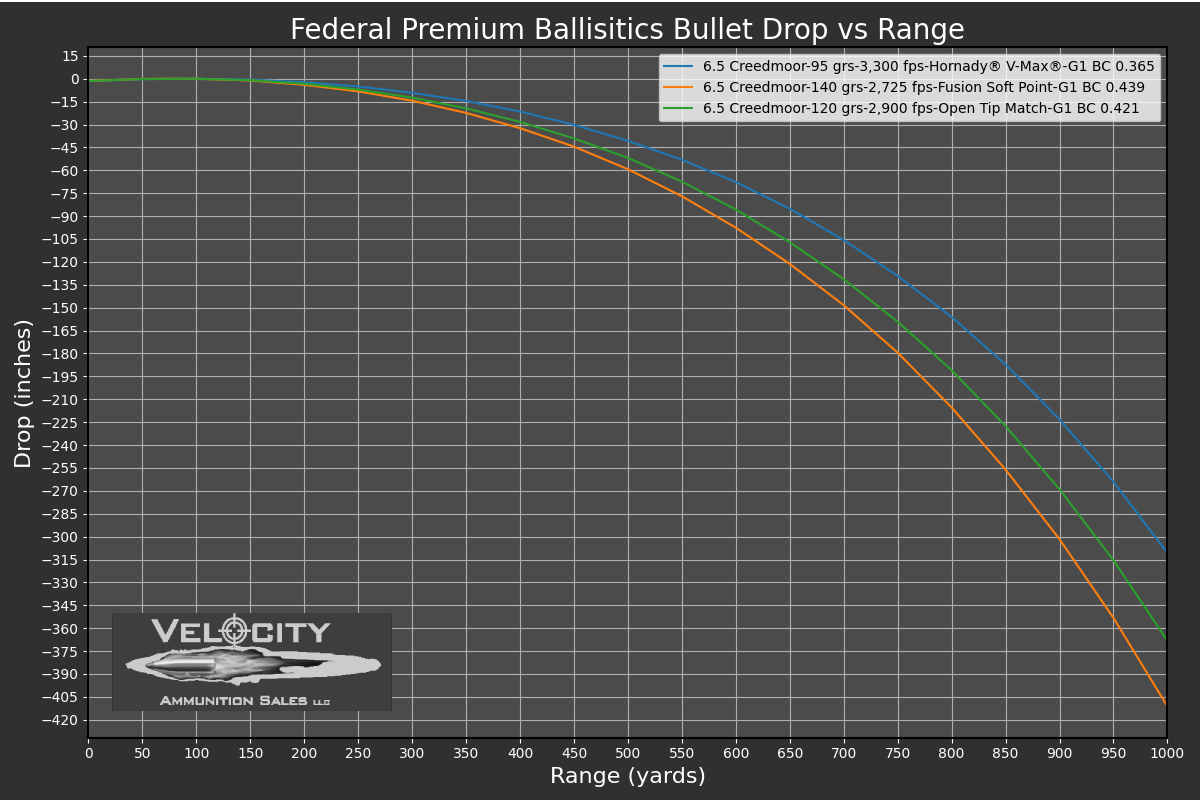
While it’s true that the 6.5 Creedmoor pushes a lighter projectile with less initial power, the narrow, longer bullet has a higher ballistic coefficient than that of a larger, shorter bullet. That means that the 6.5’s projectile is more efficient in flight, and therefore loses less energy as it travels than other rounds in its class.
So, while the muzzle velocity of the 6.5 may be lower, it quickly begins to make up for that difference with its more efficient flight. The velocity gap is already closing at 100 yards, by 200 yards the difference is even lower, and by 300 yards the difference is gone. From there on out, the 6.5 outperforms other rounds.
The further the 6.5 Creedmoor flies, the more its efficiency shows and boosts its performance.
Enough Science
Science and comparisons aside, what hunters want to know is whether or not a rifle can put venison on the table and a rack of antlers on the wall. If that rifle is a 6.5 Creedmoor, the answer is yes. The round may have its limitations on larger game such as moose or elk, but a well placed shot with good ammunition will handle a whitetail just fine.
The ballistic numbers bear this out, but more importantly, the industry’s faith in the round shows it’s a viable cartridge that should be around for a long time.
Ammunition for the 6.5 Creedmoor is widely available, and gun manufacturers are chambering rifles in 6.5 all over the place. The Creedmoor is no longer a plaything for competitive shooters.
When gun manufacturers started offering their entry level rifle and scope combos in the 6.5 Creedmoor is when I knew the round was here to stay. An even bigger sign is that youth rifles are offered in a 6.5 chambering, meaning a kid can learn to shoot on that round and can continue to shoot it as they get older.
To me, that’s a testament to the round’s current popularity and the industry’s belief that the 6.5 Creedmoor will perform as well in the field as it does on the range.
From Behind the Gun
If I talk too long about physics and ballistics, most hunters’ eyes glaze over and they start scrolling pretty fast. What is really important is how the 6.5 performs in the field.
Whatever you shoot, you always need good shot placement. Whether that shot comes from a bow, a muzzle loader, or a rifle, a good shot will bring down game, and a crappy one won’t. At least not in the time or distance that makes for an ethical kill or an easy recovery.
Assuming your rifle is sighted in, the number one determining factor in accuracy (and a clean kill) is shooting mechanics. A clean trigger press and not anticipating recoil goes a long way toward ensuring you hit where you’re aiming.
I’ve watched guys hunting, who I know can shoot, miss a deer clean or put a really bad shot on an animal. Some of that could certainly have been buck fever, but some of it was momentary poor shooting mechanics. Shooting from a bench with a good rest is not the same as shooting out of a deer stand and one breakdown in mechanics can snowball into a poor shot.
Going back to the 6.5 Creedmoor, a little less recoil for your brain to worry about just removes one area of worry in an adrenaline fueled situation. With some practice, you just inherently know the gun won’t bruise your shoulder.
Maybe that helps relax your posture and your grip, freeing up your trigger finger to slowly press instead of suddenly twitch. It’s a little thing, but slightly less recoil can tangibly improve your shooting in the heat of the moment.
So again, the 6.5 Creedmoor is a reliable whitetail round as long as you are a reliable shooter. Heck, rounds as small as a .223 can put a deer down as long as it’s placed well. While I have hesitations about taking a 200 lb deer with my .223, I certainly wouldn’t worry with a 6.5 Creedmoor.
Are You Using 6.5 Creedmoor This Year?
There is an endless sea to get lost in when you’re deciding on a rifle caliber. Hot new wildcat rounds come up all the time and garner a cult following, while the legacy calibers will always be there. For some reason the 6.5 Creedmoor met some resistance and hasn’t been fully embraced, almost like it was too good to be true for the whitetail hunter.
I understand that hesitancy, and the 6.5 Creedmoor isn’t without some downside, but you have to look pretty hard for that downside. In my mind, it truly is a goldilocks round for whitetail and it will be what my next rifle is chambered in. Whether that’s an AR platform or a bolt action, I don’t know yet, but it will find its way into the woods and it will be pushing a 6.5 Creedmoor out of the muzzle.