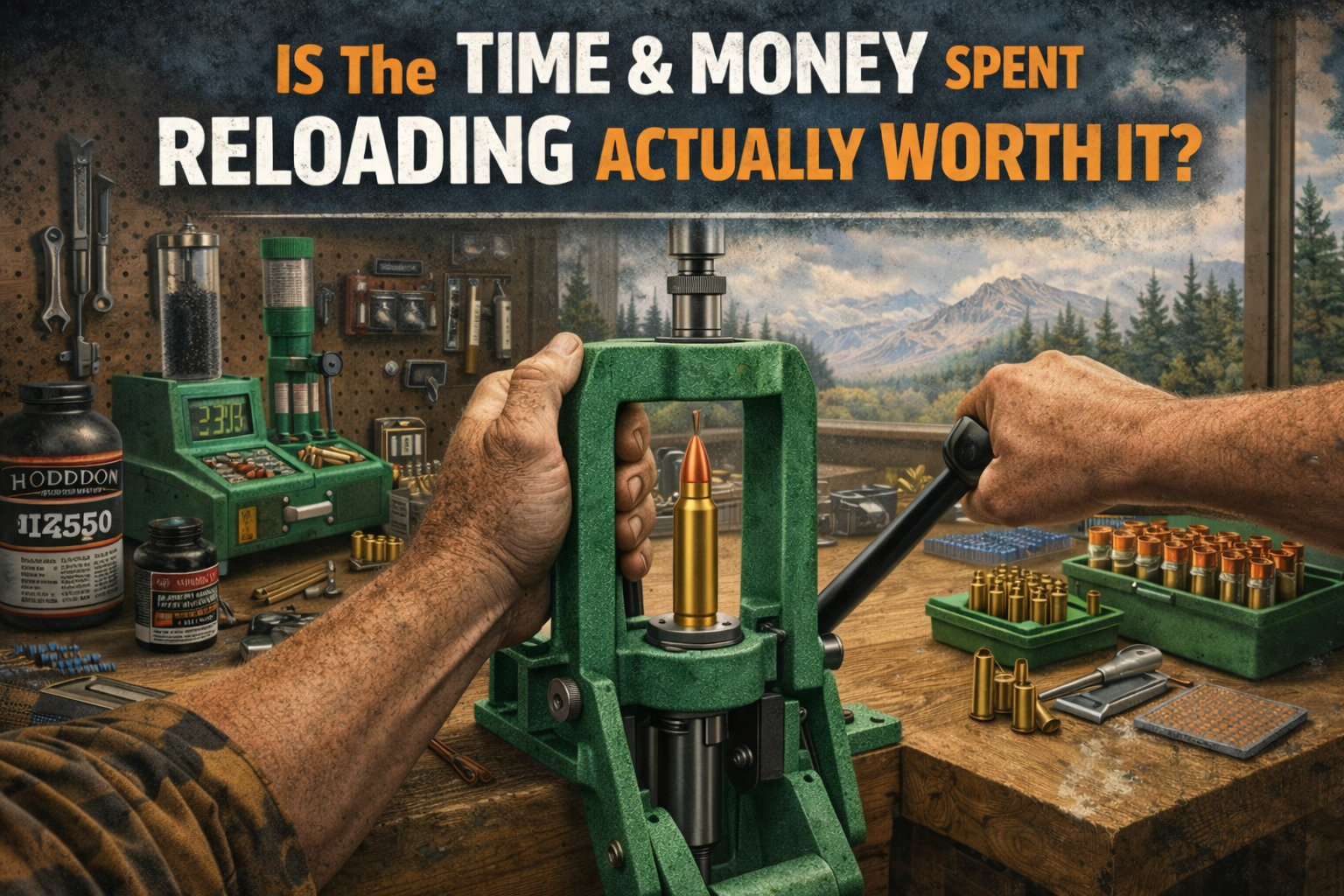
There are plenty of arguments out there that reloading your own ammo is superior to buying your ammo online. The biggest argument for reloading is that it supposedly saves the shooter plenty of money. While this may be true for some, is it really worth the time and effort for average shooters?
For the vast majority of shooters, taking the time to build a reloading bench and reload your own ammo actually isn’t worth it.
Between the high initial investment that goes towards the cost of reloading equipment, the time spent actually reloading rounds, and the convenience of buying affordable ammunition from the factory, buying in bulk is the smarter move for the majority of shooters. Reloading really only makes sense for competitive shooters or those who use extremely rare calibers.
While reloading can look good on paper, the reality is very different once you add up costs and time. Here’s how reloading stacks up against buying quality factory ammo from trusted sources like Velocity Ammo Sales.
TLDR; Bulk Ammo is The Way to Go
The majority of shooters will not save money reloading when you consider how much time they put into it and the cost of a setup. If your goal is to save money on ammo, buying bulk ammo is the way to go for anyone shooting less than 10,000 rounds a year. You can check out our bulk ammo pages here, and if you don’t believe me, just keep reading.
The Real Costs of Reloading
Many shooters assume reloading is cheaper from the start, but the initial buy-in is anything but light.
Costs of Startup Equipment: If you have your sights set on creating your own reloading bench, be ready to invest some serious start-up cash into the necessary equipment that every handloading station requires. This includes, but isn’t limited to, presses, dies for every different caliber you plan on reloading, powder scales, case tumblers, calipers, and an up-to-date reloading manual.
Costs of Recurring Components: Just because you purchased all of your startup needs, doesn’t mean your bank account is in the clear yet. Things like powder, primers, and brass are going to be regular purchases for you, and the more you reload, the more you will spend on these components. Don’t believe the hype when someone tells you that these parts are immune to industry shortages either.
Investing Your Free Time: Sure, there are certain presses and other expensive equipment that can reduce the time you spend reloading, but don’t get it twisted. No matter how you look at it, reloading is a time consuming process, and not everyone wants to sacrifice their free time to sit at their bench and pull a lever for hours on end. Purchasing your ammo instead, frees up lots of time that you can spend at the range, hunting, or simply with the family.
Unforeseen Costs: No matter how well you consider yourself a planner or time management expert, Murphy’s Law will always rear its ugly head and hit you with unexpected problems that will lead to pulling out your wallet yet again. This is especially true for beginners to the craft. Spilling powder, crushing brass, and seating a round too deeply are just a few mistakes that can cost you unexpected time and money. Best case scenario, you are out a few bucks. Worst-case scenario, you just created unsafe ammo that isn’t fit to fire.
Basic Reloading Equipment & Costs
Reloading requires several purpose-built tools and a few nice-to-haves. Below is a practical list with ballpark costs so you can see the upfront investment before you commit.
| Equipment | Purpose / Notes | Approximate Cost |
|---|---|---|
| Reloading Press | Single-stage for precision/learning; progressive for high-volume production. | $200 – $1,500+ |
| Dies (per caliber) | You need a die set for each caliber you plan to load. | $30 – $120/set |
| Digital Powder Scale | Digital scale for precise powder measurement. The more precise the scale, the more it’s going to cost. | $40 – $300 |
| Powder Measure / Powder Dispenser | Guarantees faster and more consistent powder charges. Essential to prevent overcharges. | $40 – $300 |
| Case Tumbler / Case Cleaner | Cleans carbon and other debris from fired brass before reloading to improve reliability. | $50 – $200 |
| Primer Tool / Prime Bench Plate | Different types of tools for seating primers consistently, which reduces the chance of misfires | $25 – $150 |
| Calipers & Micrometer | Measuring tools for overall length and case dimensions. Helps prevent issues at range | $30 – $120 |
| Case Trimmer & Chamfer Tool | Trims and deburrs rifle brass that has been used multiple times to ensure correct length of the case. | $60 – $200 |
| Bullet Puller | Used to remove bullets from assembled rounds for recovering certain components or to disassemble an unsafe round. | $20 – $60 |
| Manufacturer’s Reloading Manual | Required compilation of literature containing safe load data and official procedures. | $20 – $40 |
| PPE & Safe Storage For Materials | Includes eye protection, gloves, ample lighting, and secure storage that separates parts like primers and powder. | $20 – $200 |
| Consumable Materials | This includes powder, primers, brass, and bullets. Prices will fluctuate with supply and demand, especially during shortages. | Variable / ongoing |
Rough total startup cost (basic single-stage setup for one caliber): $500 – $1,000
Rough total startup cost (production/progressive setup): $1,500 – $3,000+
What Reloading Actually Involves
Every veteran shooter and hunter can agree that reloading has a certain DIY mystique that has crossed their mind at least once. It makes the process a holistic one. You’re not just buying the ammo and pulling a trigger; you’re literally building the ammo yourself, round by round.
For some, there’s an obvious appeal here. Handloaders are drawn to the idea of creating custom loads for their rifle, or tailoring recoil and velocity to their exact preferences. On paper, it sounds like there are some advantages to going this route; but there’s a catch that most shooters don’t think all of the way through…
Reloading requires more than a passing interest, it requires a time-consuming devotion and interest in the process. You’re not just tinkering in the garage from time to time; you’re going to have to deal with precision measurements, explosive components, and hours upon hours of bench work that most shooters aren’t willing to sacrifice out of their busy lives.
Time Spent During The Reloading Process
Below is a typical walkthrough of some of the basic reloading steps and how long they take. (Note: this is intentionally non-procedural. Make sure to always consult a reloading manual for exact steps and safety data.)
| Step | Time Estimate | Description/Notes |
|---|---|---|
| Collecting & Sorting Brass | 30–60 minutes / batch | Gather spent cases and sort them by caliber and condition. Discard damaged brass to avoid creating unsafe loads. The time this will take depends on the volume of reloading you plan to do. |
| Cleaning & Inspecting | 30–90 minutes | Tumble-clean casings and inspect for excessive wear that will make the casing unusable. |
| Resizing & Depriming | 30–90 minutes | Resize cases to your particular specs and remove any spent primers. |
| Trimming & Chamfering (rifle brass) | 20–60 minutes | Trim the cases to length based on your reloading manual specs. This is a required step for many rifle cartridges. |
| Priming | 20–60 minutes | Seat new primers using a tool or press. This step can be quite tedious and requires focus for consistent seating. |
| Powder Charging | 30–90 minutes | This step requires the most caution. Dispensing more or less than the min/max powder charge into each case can lead to a malfunctioning round that can cause injury to the shooter or anyone else in the vicinity. Repeated precision checks are necessary to avoid any unsafe rounds. |
| Bullet Seating & Crimping | 30–120 minutes | Seat bullets to correct overall depth, crimp if needed. Depending on your type of press, this step can take a considerable amount of time. |
| Final Inspection & Packaging | 20–60 minutes | Use this final check to verify your handloads for overall length, primer seating, and any visual defects that could suggest a faulty round. Be sure to label and box finished rounds for safe storage. |
Depending on your equipment and experience in reloading rounds, you can expect anywhere from several hours (progressive press, experienced operator) to multiple full weekends (single-stage press or hobbyist pace).
Does Reloading Actually Save You Money?
It’s hard to put an exact number on how much you could save reloading any particular round because there are so many variables. It especially depends on how much ammo you need to reload or buy. This doesn’t even take into account the equipment you will need to purchase just to get your setup rolling.
Say you’re loading a common round like 9mm. On paper, you might save a few cents per round by reloading instead of buying factory. Even if you are saving 10 cents per reloaded shot and you burn through a thousand rounds a year, that’s only $100 saved.
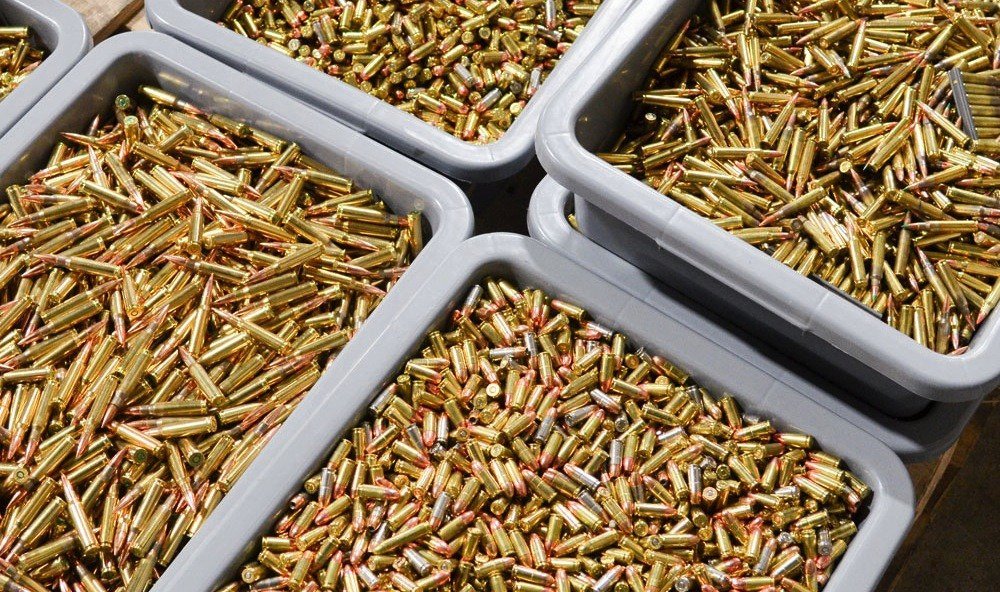
Now, compare that to buying a bulk case of 1,000 rounds of 9mm online. The price drops significantly compared to single 50-round boxes at a local shop. At Velocity Ammo Sales, you can purchase 1,000 rounds of 9mm for as low as 23 cents a round. Suddenly, the cost difference between reloading and factory bulk ammo narrows, especially when you consider the hours it will take to reload 1,000 rounds on your own.
For bigger cartridges like .223/5.56 or .308, the savings can look bigger on paper. But again, factory bulk orders usually trim the difference down to where the time and risk of reloading don’t justify the hassle.
You can browse just about any internet forum to find out that the savings are minimal and don’t usually include the time spent or the investment in getting your reloading bench set up. One particular post I read claims to only save $20 per 1,000 rounds of handloaded 9mm vs. purchasing them.
Who Benefits From Reloading?
Reloading your own ammo certainly isn’t a completely pointless endeavor. There are a few groups of shooters who do actually benefit from reloading their own rounds.
Competition Shooters: Precision rifle competitors or USPSA shooters sometimes need custom loads tailored to exact specifications that can’t necessarily be bought in any firearm store. For them, reloading means customized rounds. Not to mention, these are the shooters who can go through tens of thousands of rounds every year.
Niche Calibers: If you’re firing something obscure that isn’t likely to be found on any sporting goods store shelf, like a wildcat cartridge or a caliber that’s no longer popular and isn’t sold on the mainstream market, reloading might be your only affordable way to keep shooting.
Handloading Hobbyists: There are plenty of shooters out there who genuinely enjoy the process of handloading their own ammo that they get to use at a later date. For these folks, spending time at their reloading bench is a great way to spend some time between hunting seasons, when the weather makes the outdoors less enjoyable.
Outside of these small groups of shooters, there aren’t really too many groups out there that will find any significant benefits by reloading their ammo instead of just buying it in bulk from a top online store.
Why the Majority of Shooters Should Buy Their Ammo
For most people, purchasing ammunition from an online supplier is the most convenient way to get the ammo they need. Handloading, while a rewarding and cost-effective option for some, does not match the consistency and reliability of factory ammunition due to limitations in home quality control.
On the other hand, buying ammunition online from a trusted retailer is quick and easy. A simple click can place an order for bulk ammo, and the rounds will be delivered to your door, usually at no additional shipping cost.
The number of varieties available is virtually limitless, with options for hunting, self-defense, or simply plinking. Factory ammunition also offers peace of mind in terms of safety and reliability, as it has been subjected to stringent testing and quality assurance. Velocity Ammunition Sales provides all these benefits and more, delivering quality ammunition that works every time, without the hassle and risk.
The Real Value of Your Time
For most of us shooters who work full-time, weekends are next to sacred. Spending time at the range, in the woods, or with your family is much more enjoyable than spending your limited free time at a reloading bench performing repetitive tasks.
As we stated earlier, competitive shooters can justify the grind of handloading because those custom loads might win them matches. But if you’re a casual hunter or someone who goes to the range a couple of times a month, your time is better spent shooting than loading.
Think of it past the basic economics of saving a penny or two, think of it as an opportunity cost. Every hour you spend reloading is an hour not spent improving your shooting skills, enjoying the outdoors, or teaching the next generation of shooters what’s really important. As outdoorsmen, what are we doing if we aren’t spending as much time outdoors as possible?
Does Reloading Solve Ammo Shortages?
Ammo shortages happen from time to time, and these shortages are one of the favorite arguments that handloaders like to bring up.
In theory, yes, you would think that when the ammo shelves start to go bare, handloading your own rounds would be a great way to skirt ammo shortages. Though in reality, that’s not exactly true.
When ammo shortages hit and everyone starts to panic, what do you think is the first thing everyone is going to go out and buy? You guessed it, the consumable ingredients that are required for handloading.
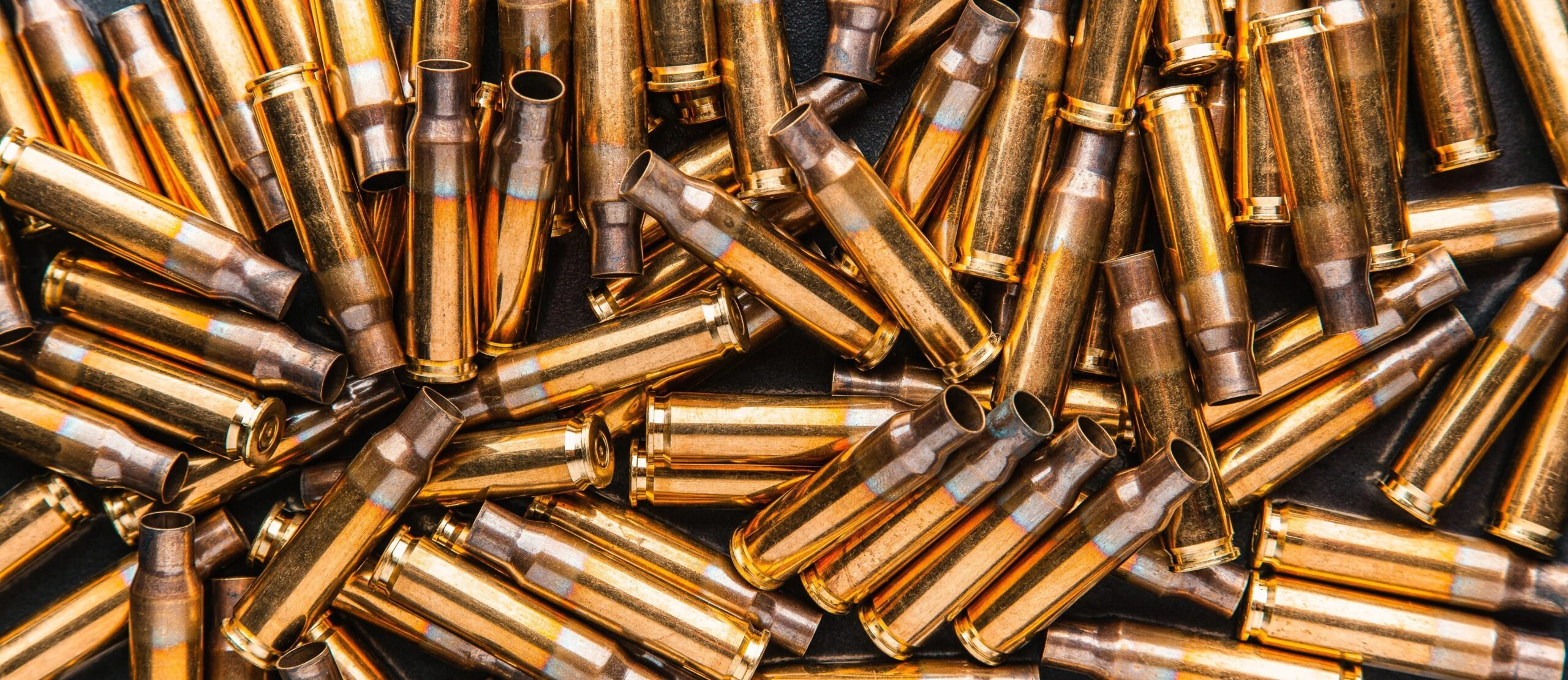
It never fails that primers and powder are the first items to disappear from shelves. In fact, it’s not unheard of for these components to often vanish faster than factory ammo because reloaders panic and rush to stockpile supplies.
If you’re serious about staying prepared, bulk-buying factory ammo ahead of time is a much more reliable and convenient solution. It’s always better to stock up during times of plenty instead of waiting with the rest of the masses when shelves go bare.
The Bottom Line – Reloading Vs. Purchasing Factory Ammo
Reloading can make sense if you’re a competitive shooter chasing every ounce of precision, or if you run a rare cartridge that is impossible to find. However, for 90% of gun owners, it simply isn’t worth the time, money, or risk.
Factory ammo, when bought in bulk, delivers the consistency, convenience, and affordability that almost all shooters need. Instead of investing hundreds of hours into pulling a press handle and thousands of dollars in setting up a reloading bench, put that energy into training, hunting, or making memories outdoors.
Reloading Vs Factory Ammo FAQ’s
Q: Do You Actually Save Money Reloading Ammo?
Sometimes on a per-round raw-cost basis, especially for high-volume shooting or specialty loads, but once you add your time and equipment costs and compare to cheap bulk factory prices, most shooters see little or no net savings.
How Long Does It Take to Reload 1000 Rounds?
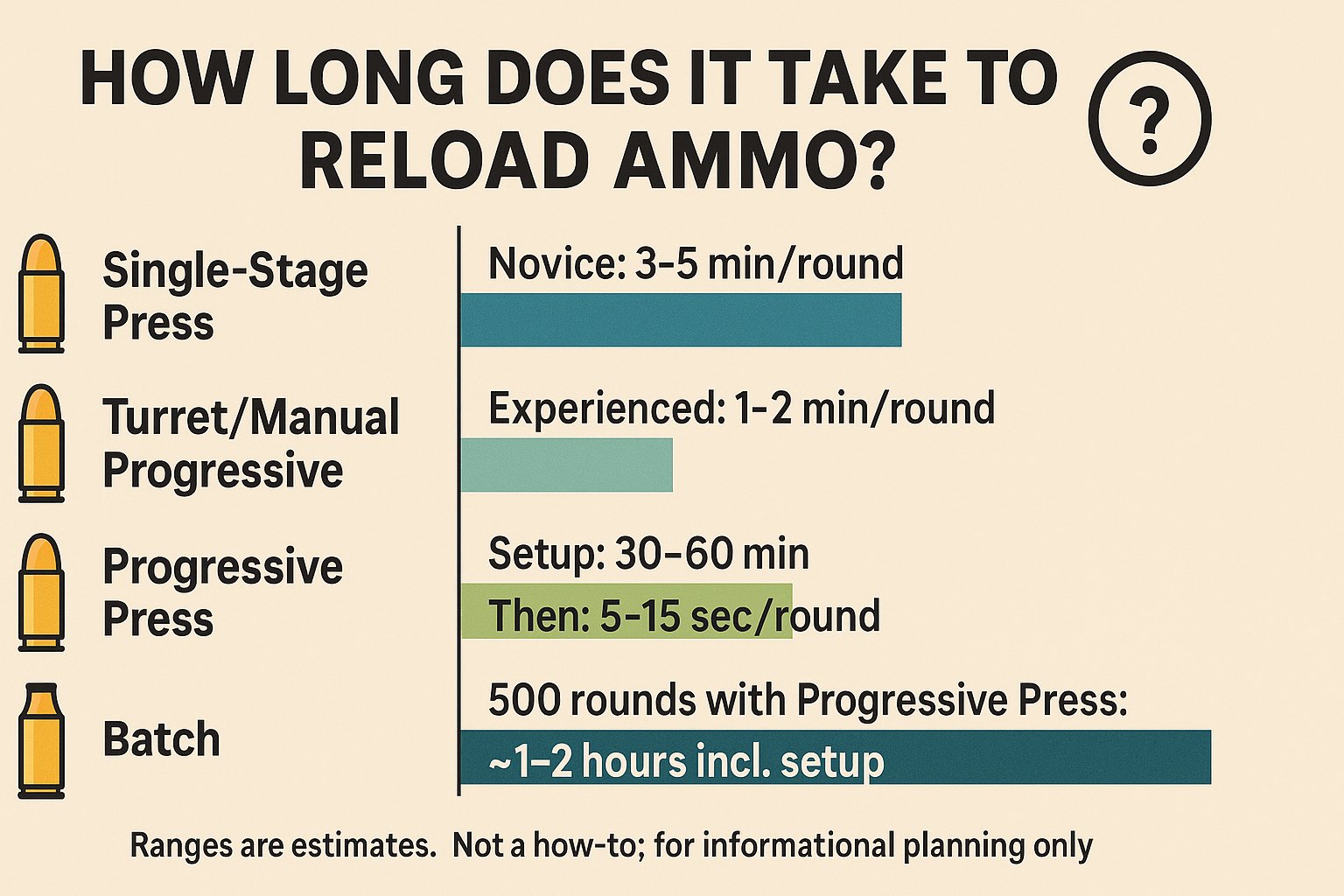
Reload time depends on the press you use. A single-stage press takes 3–5 min/round; a turret/manual progressive press takes ~1–2 min/round; and a progressive press (after 30–60 min setup) takes ~5–15 sec/round.
How Many 9MM Bullets Will 1 Pound of Powder Make?
You can make roughly 1,400–1,750 rounds of 9mm Luger per pound of powder, depending on charge size (≈4–5 grains/round).
Is a Reloading Kit Worth It?
If you want custom loads, precision, or you reload large volumes a reloading kit can be worth it. A kit is probably not worth the money if you value your time highly and only shoot occasionally.
Is Reloading Cheaper Than Factory Ammo?
Reloading can sometimes be cheaper for super users or niche loads, but for the average shooter, when you factor time and kit costs, factory bulk ammo is often as cheap or cheaper.