Prefer audio over written content? Listen to the article here:
The firearms industry is a place of nuance, detail, and information layered within other information. Your experience with firearms can be as shallow or as deep as you want to go, and everyone from a hunter sighting in a rifle every year to a three gun competitor can jump into that pool of knowledge.
Closer to the deep end of that pool of knowledge is where different ammunition types swim. I’m not just talking about caliber, but variations within a caliber that can mean the difference between a functioning gun or a bulged barrel that renders your gun useless.
Which brings me to our topic today, +P and +P+ ammunition. Should you, or even can you, use it in your handgun? The short answer is: read your owners manual to know if you CAN shoot it from your pistol. The long answer will depend on your knowledge and preference, which I hope to help with here.Hello world.
The ABCs of +P
Let’s start by first talking about what +P and +P+ ammunition are, because understanding what they are and their purpose can help decide if either one is right for you.
In short, +P and +P+ are designators for intentionally overpressured ammunition. You might have heard of overpressured ammunition in terms of a double charge or some other mistake that adds too much gunpowder to the case, which can be harmful to your gun and dangerous to the shooter.
In this case, though, +P rounds are made intentionally by the manufacturer to increase the velocity of a given round. Additional powder is added, but it’s done in a way that meets SAAMI pressure standards, ensuring that that overpressure is consistent and, most of all, safe to use.
While you’ll most often see 9mm +P on the shelves, SAAMI also recognizes .38 special +P, .38 Super Automatic +P, and .45 Automatic +P rounds. SAAMI reports are available here on their website where you can see how the +P round compares to the parent cartridges, but typically +P rounds gain 50-100 feet per second.
That additional velocity is really the point of +P rounds because it’s meant to improve the performance of personal defense rounds. The additional velocity helps increase penetration and stopping power, giving you a performance boost without having to change firearms or calibers.
So if +P is an over–pressured round, does that mean +P+ is more over-pressured? Yes, it does. It’s actually that simple. To steal a line from Dan Carlin’s Hardcore History, +P+ ammunition is just like +P, only moreso.
+P+ is ammunition which exceeds the SAAMI spec of +P, which in 9mm is 38,500 PSI. As of 2026, there is not currently a pressure rating for +P+ from SAAMI, only that it exceeds the rating of +P.
+P, or Not +P, That Is the Question
So you’re standing in the ammunition aisle of your local box store and you’re not quite sure yet if +P ammo is right for you. Most retailers won’t accept returns on ammunition, so you better be sure the box you’re holding is the right one for you.
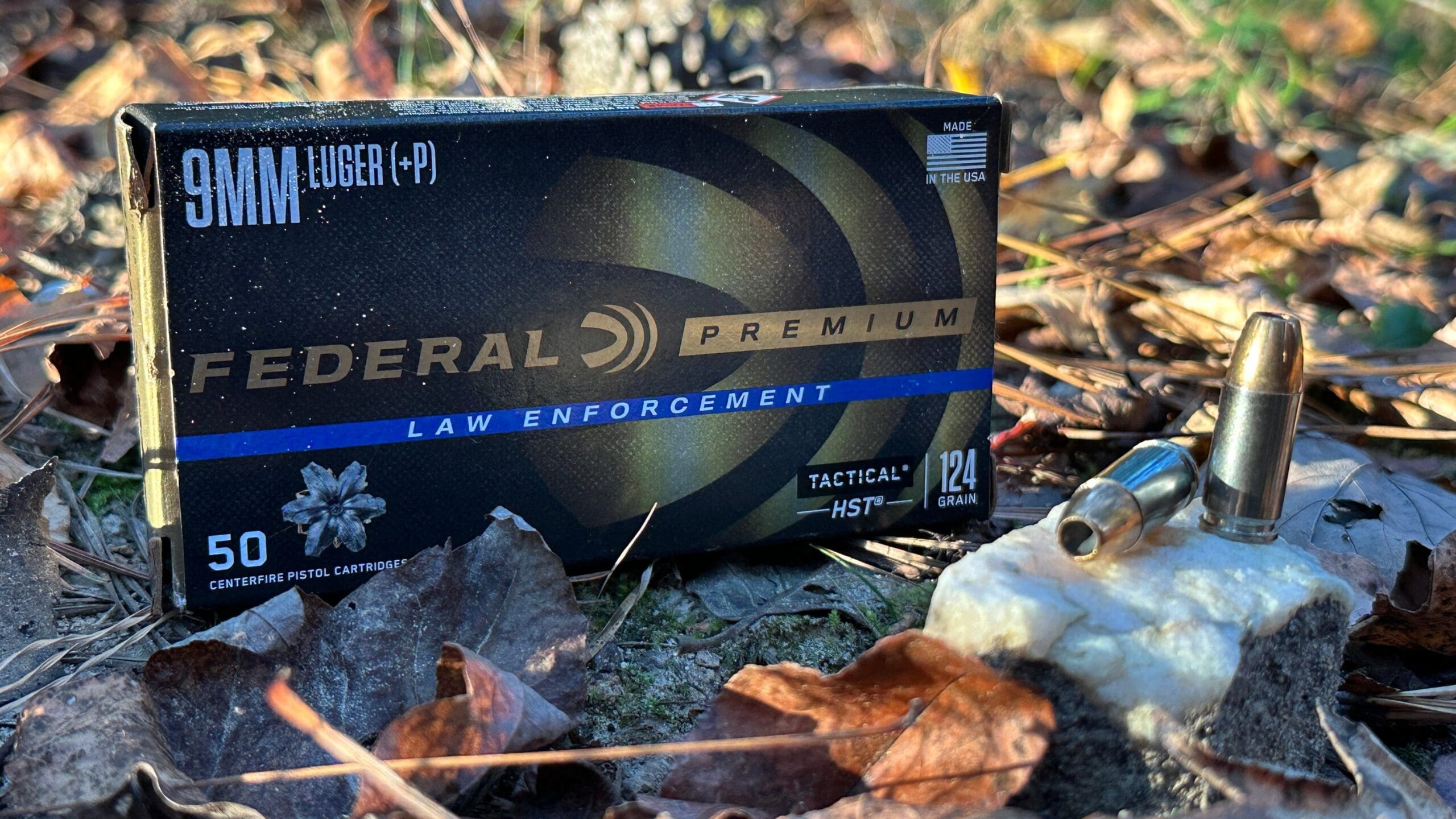
As far as determining if a box of ammo is +P or not, it’s pretty easy; it says it right there next to the cartridge name. Take, for instance, this box of Federal Premium LE (Law Enforcement) 9mm Luger +P. You can see the +P designation next to the caliber in the upper left corner of the box.
Federal makes a non-+P variant of this round that, you guessed it, doesn’t have the +P designation next to the cartridge name. Other than reading the ballistics information, that designator is the only way you’d know the difference in the rounds until you fired them.
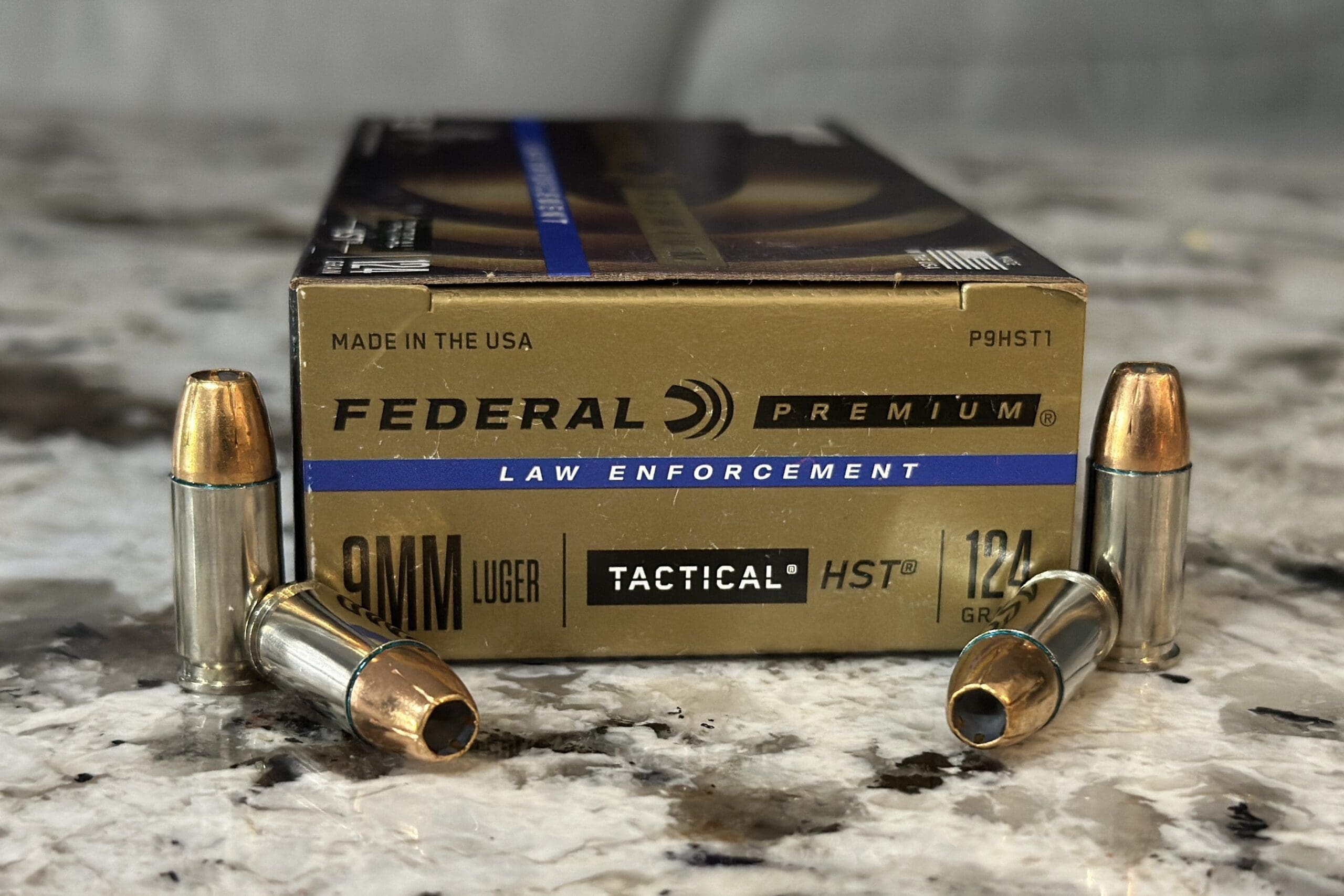
Again, it’s important to read and be able to understand a box of ammunition so you know not only what caliber, bullet type, or case material you’re buying, but also the load, velocity, and energy of that round. I’d give this advice to any shooter, but especially a new one just becoming familiar with the world of ammunition.
Why Would You Choose +P or +P+ ammunition?
Is overpressure ammunition just a marketing ploy, or does it have a tangible benefit? Why would you, as a shooter, want to buy +P or +P+ ammunition over a standard defense load?
Energy – How Much Does +P Really Help?
As I mentioned before, +P and +P+ ammunition are designed to increase the velocity of the parent round so that a given projectile will have a higher muzzle velocity than that of a standard load. On its own, that fact may not mean much, but using an equation we all know, we can illustrate the difference.
K = 1/2 mv^2., perhaps the most recognizable equation we have, tells us that Kinetic energy (energy in motion.) equals One half of the mass multiplied by velocity squared.
In terms of ballistics, it means that the energy of your round is a product of the weight and the speed of your projectile. Change one of those two variables, and you affect the energy.
So, if you increase the pressure of the cartridge and therefore the velocity of your bullet, you increase its muzzle energy. The faster your bullet goes, the more energy it will have when it gets to your target.
More energy on the target means better penetration and expansion of your bullet, better known as stopping power.
If you are a fan of the physics and want to know more about ballistics, this article here is a must: Internal External & Terminal Ballistics [What Truly Matters]
The Federal 124 grain 9mm comes in a standard and a +P variant, like I mentioned before. The +P version of the round adds 50 feet per second (1,150 vs 1,200) to the velocity, which translates to 32 foot pounds (364 to 396) of energy.
A 4.34% increase in velocity yields an 8.79% increase in energy, not a bad deal considering it doesn’t involve a step up in caliber. In fact, you can usually find +P ammunition for the same price as its non-+P counterpart.
+P+ ammunition takes it even further, typically adding another 100 feet per second beyond what +P does for the 9mm. That additional velocity can add up to another 65 foot pounds of energy, an extra 16.41% boost over the +P load.
+P+ is harder to find and is typically only available with a 115 grain projectile, but it can be found with 124 or 147 grain bullets. Combining the additional velocity with a heavier projectile boosts the muzzle energy dramatically, giving an impressive increase in stopping power.
Short Barrel Pistols
Today, it feels like we’re in a compact or micro-pistol golden age, and it’s because we are. Competition for that market segment is through the roof with every manufacturer trying to get a piece of the pie. High-capacity, low profile pistols signal a big leap forward in handgun design.
But let’s not forget that small, concealable handguns have been around for ages. Think of the Walther PPK or snub nose revolver; these little pieces have been used for decades as concealed carry guns, and have been made famous for it with their role in TV and movies.
Short barrel pistols have a few drawbacks, however, due inherently to their size. Among those is that, because of the shorter barrel, a bullet doesn’t have as much room to build up speed and energy as it would in a full-sized gun.
So, +P rounds were introduced to help boost the muzzle velocity of pistol calibers out of short barrels. While the bullet still doesn’t have a lot of time in the barrel, the higher initial powder charge gives it a speed boost over standard pressure rounds.
If your main goal is using the best cartridge for concealed carry, you need to check out this article: What is the Best 9mm Self Defense Cartridge for EDC?
Coming full circle, this is especially pertinent today when a huge segment of the handgun market is made up of 3” or shorter barrel pistols. If you’re worried about the energy loss associated with that micro-nine tucked in your waist band, fear not. A +P or +P+ round might be just the pill you need.
Drawbacks to +P and +P+ Ammo
Staying on the physics theme, the second law of thermodynamics basically says that you can’t win. Energy always has to go somewhere and it cannot be created nor destroyed. Hence we have never figured out perpetual motion machines.
That doesn’t change here and now it’s up to you to decide if the benefits of +P or +P+ ammo outweigh the downsides for a small carry gun.
A Little More Snap
Naturally, there’s going to be an increase in felt recoil when you add more powder to a cartridge that’s otherwise the same. For some shooters this may not be a problem or could be something they get accustomed to, especially if you’re using a full-sized handgun.
For more recoil sensitive shooters, or for someone carrying a smaller platform gun, the added recoil can be a real negative though. Practicing on a static range with a standard 115 grain load out of a Glock 17 is one thing, but pairing a +P or +P+ round with a micro-nine can really make a difference in felt recoil.
Personally, I don’t have a problem with shooting +P ammo. Then again, I’m a pretty average sized man with no disabilities in my hands or arms that make recoil management an issue. I can name several people in my life who I would not recommend overpressure ammo for because of the additional recoil.
I would, at the very least, recommend someone getting used to shooting standard loads first before buying a box of +P as their carry ammo. With enough practice on standard ammo, the additional snap of an overpressure load becomes a little more manageable.
Finding & Paying For +P or +P+ Practice Ammunition
Which brings me to my next drawback, and that’s the availability of +P or +P+ FMJ practice ammunition. To really get the idea of what kind of extra recoil an overpressure load brings, you have to shoot it, and plinking with your carry ammo can get pretty expensive.
Not that you have to do a full range session to get the hang of +P, but I suggest running a couple of drills to get the feel of it. How the additional recoil affects your sight picture, and bringing your sights back on target is something you need to practice so that it’s not a surprise in the heat of a self defense scenario.
Saying that, a 50 round drill with the aforementioned Federal 124 grain 9mm +P is going to set you back, on the low end, about 50 cents per round. That’s $25 just to go through a few magazines. Not ideal from a budget perspective.
The lack of FMJ rounds isn’t a deal breaker for me, though. If you’re good about rotating your carry ammunition and you commit to +P as your choice, you can burn up an old box on the range when it’s time to buy a new one.
If you don’t rotate your carry ammo or don’t know what I’m talking about, you’ve got to check out this article before you have a malfunction: Why You Should Be Rotating All of Your Ammo
Firearm Compatibility and Wear
It’s not necessarily a drawback, but something to be aware of before you go shopping. Some guns are not designed to handle the additional pressure of +P or +P+ ammunition. To see if it can, check your owner’s manual, the manufacturer’s website, or ask the manufacturer. If it’s unclear either way, it’s probably best to choose a standard pressure round.
While your gun may be able to handle +P ammunition, the extra force produced by an overpressured round can put extra miles on your gun if you shoot it regularly. Springs and other mechanical parts all have a lifespan, and prolonged use of +P or +P+ ammo can wear those parts out faster.
In reality though, most shooters aren’t going to put enough rounds through a gun to cause parts to fail. Can it happen? Yes, but it’s not likely, especially if your use of +P ammo is limited to an occasional magazine to burn through some ammo that’s about to get rotated out.
Decision Time
If we really are in a golden age of concealed carry pistols, I’d also say we’re also in a golden age of ammunition. Advancements and competition in the handgun market have spilled over to ammunition manufacturers, and you’ll find a wide range of interesting and effective options.
Ammunition testers online have also done a huge service, putting different rounds through their paces and seeing which ones perform up to defense standards and which ones do not. With all of the available information on this stuff, it’s hard to make a bad decision if you know where to look.
Throughout my time of carrying a concealed handgun, I’ve gone back and forth between using +P ammunition and not. To be totally honest, if I’m trying to pick between a 124 grain +P round and a 147 grain standard load, my choice is probably going to come down to price.
For now, at least you know what you’re looking at on the shelves of your sporting goods store or in your browser before you click the checkout button. Whether or not you choose to load your magazines with +P is entirely up to you, and making an informed, confident buying decision goes a long way toward making shots count when it matters most.
+P and +P+ Ammo FAQs
Q: What Is the Difference Between +P and +P+?
+P ammunition is loaded to higher pressure within established SAAMI limits, offering a modest velocity and energy increase. +P+ goes beyond those limits with no standardized pressure ceiling, delivering greater performance but with increased wear, recoil, and potential compatibility concerns.
Q: What Is the Benefit of Plus P Ammo?
The primary benefit of +P ammo is increased velocity, which boosts muzzle energy and improves bullet expansion and penetration. This can enhance terminal performance, especially in self-defense scenarios or short-barrel pistols where standard loads may lose effectiveness.
Q: Is Plus P Better Than Hollow Point?
+P and hollow point refer to different characteristics, not competing types. +P describes pressure, while hollow point describes bullet design. Many defensive rounds combine both, meaning you can have a +P hollow point that benefits from improved expansion and increased velocity.
Q: Does Plus P Ammo Have More Recoil?
Yes, +P ammunition produces more recoil due to the increased pressure and velocity. This added “snap” can affect control and follow-up shots, particularly in smaller handguns, making it important for shooters to test and train with it before relying on it for carry.
Q: Is 38 Special +P Stronger Than 9MM?
While .38 Special +P offers improved performance over standard .38 loads, it generally does not surpass 9mm in overall energy and velocity. Modern 9mm defensive ammunition, even in standard pressure, typically delivers greater ballistic performance and capacity advantages.