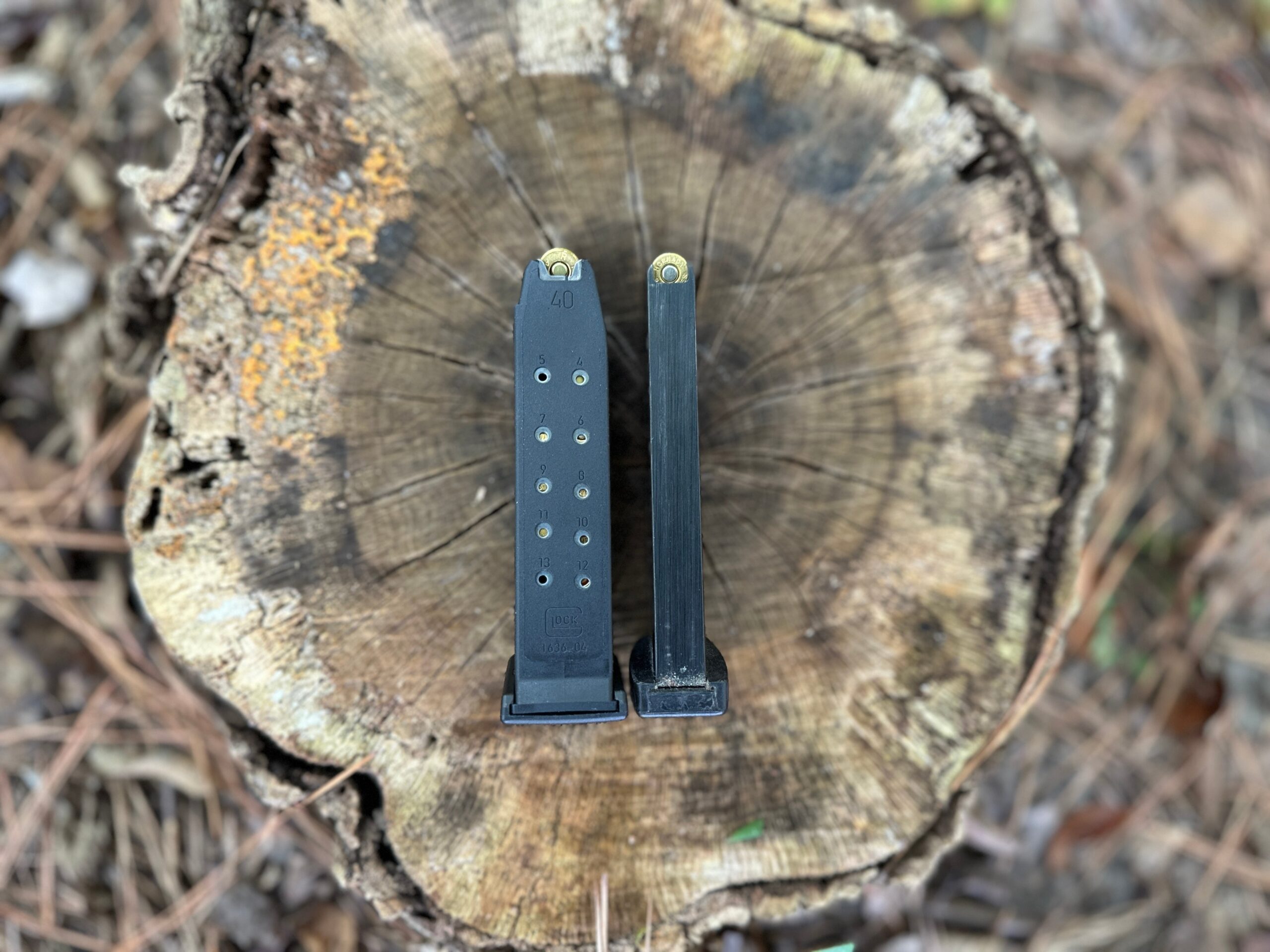
Magazine limits are one of those topics that split the gun world right down the middle. Some folks barely think about them. Others find out the hard way that crossing into a new state with the wrong magazine can get them a hefty ticket. Whether you agree with them or not, these restrictions aren’t going away anytime soon.
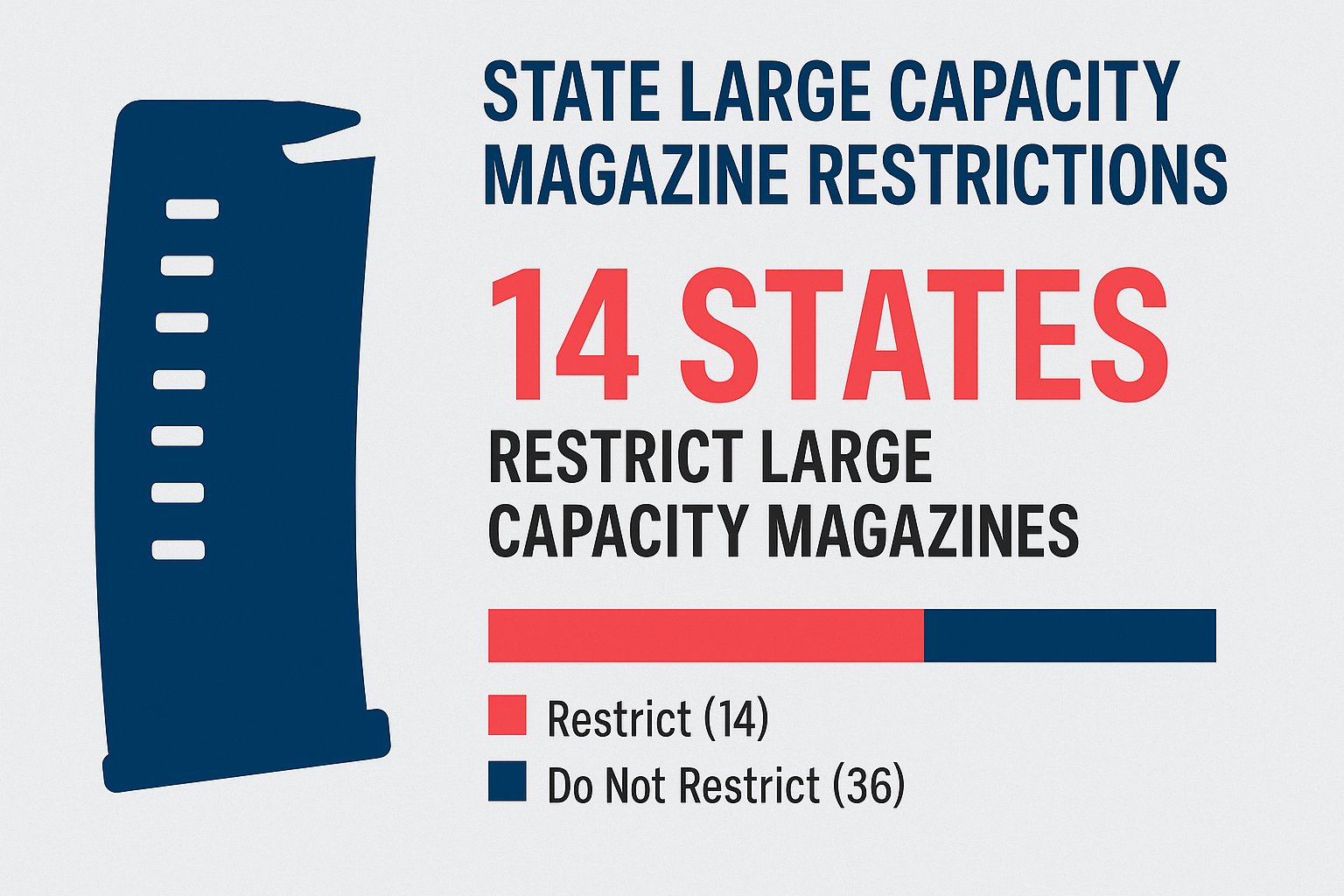
As of 2025, fourteen states plus the District of Columbia restrict firearm magazine capacities, the most common limit for states that have legislation on the topic hovers at 10 rounds, though a few allow 15 or 17 rounds, while 36 states do not have laws surrounding Large Capacity Magazines at all. Exceptions exist for law enforcement, hunters, competitive shooters, and grandfathered magazines. Save yourself unnecessary legal trouble by always checking local laws before traveling.
Let’s dive in to see which states enforce Large Capacity Magazines (LCM), how they enforce these laws, why they exist, and what they mean for firearm enthusiasts, from your everyday hunters to your CCW permit holders.
Why Magazine Capacity Limits Exist
Magazine restrictions aren’t new. In fact, the idea has been around for decades. Remember the federal “Assault Weapons Ban” that kicked in back in 1994? That law capped all magazines at 10 rounds nationwide. It expired in 2004, but plenty of states picked up the torch and wrote their own versions of the ban.
The argument behind these laws usually comes down to public safety. Lawmakers love to argue that forcing a shooter to reload more often can reduce casualties in a mass shooting. While this may be true, the other side of the aisle says that’s wishful thinking since an average firearm shooter won’t take more than a few seconds to reload.
For everyday gun owners, it means a constant game of “know before you go.” One minute your pistol or AR is fine, the next you’re over the limit just because you crossed a state or country border. That’s why magazine bans remain such a lightning rod issue in 2025.
States With Magazine Capacity Limits in 2025
Let’s be real: the hardest part of these laws is remembering where they apply. That being said, they could be the difference between you losing your hunting rights or finding yourself on the wrong side of the law. Here’s a quick reference chart, followed by plain-English breakdowns of what those limits actually mean in the real world.
| States With Magazine Capacity Laws | Handgun LCM (Rounds) | Long Gun LCM (Rounds) | Prohibited Acts For LCMs | Grandfathered Rules On Previously Owned LCMs |
|---|---|---|---|---|
| California | 10 | 10 | Among the strictest laws in the US.Prohibited acts: Manufacture, Sale, Possession, Importation | 2023: The federal court denied a ban on LCMs, but it was reinstated in March 2023 |
| Colorado | 15 | 15 | Prohibited acts: Sale, Possession, Transfer | Prior to July 1, 2013, LCMs grandfathered |
| Connecticut | 10 | 10 | Prohibited acts: Purchase, Distribution, Possession, Importation | Partial grandfather provision: residents possessing LCMs before April 2013 were mandated to register with the state by January 2014. |
| Delaware | 17 | 17 | 17-round LCM capacity enacted in August 2022.Prohibited acts: Possession, Sale, Manufacture, Purchase | CCW holders, Law Enforcement Officers, and armed forces members are exempt from these LCM laws |
| Hawaii | 10 | N/A | Only handgun magazines are restricted to 10 rounds. There are no magazine caps related to long guns.Handgun LCM Prohibition: Sale, Manufacturer, Possession, Trade, Acquisition | No grandfathered LCM rules. |
| Illinois | 15 | 10 | The Protect Illinois Communities Act was enacted in January 2023It regulates the distribution and sales of LCMs in the state of Illinois. | LCMs are allowed if possessed before January 2023 and only apply to shooting ranges or on private property with the consent of the property owner. |
| Maryland | 10 | 10 | Prohibited acts: Sale, Manufacture, Purchase, Transfer Possession of LCMs of up to 30 rounds is typically illegal. This doesn’t apply if the magazine was purchased legally out of state and isn’t transferred to a Maryland resident. | Current and retired Law Enforcement Officers are exempt from this rule. 30-round magazines are legal to possess in Maryland, but they aren’t legal to manufacture. |
| Massachusetts | 10 | 10 | Prohibited before 1994:SaleTransferPossession2024 Law surrounding modernizing firearm laws requires residents to register all firearms. | Pre-September 1994 LCMs are allowed, though the state mandates registration of these pre-ban mags. |
| New Jersey | 10 | 10 | In 2018, the capacity was reduced from 15 to 10 rounds. | Not allowed, although certain LCMs holding 11-15 rounds could be registered until July 2019. Exemptions exist for military members, Law Enforcement Officers, and individuals who take part in shooting competitions. |
| New York | 10 | 10 | SAFE Act; 7-round load rule struck down Prohibited acts: Disposal, Transportation, Manufacture Possession | The SAFE Act also removed the exemption for LCMs manufactured before September 1994. |
| Oregon | 10 | 10 | March 2025 Measure 114 reinstated LCM to 10 rounds. | Allowed, formerly possessed or inherited LCMs are excused from the ban. It may only be used or possessed in certain locations or on certain occasions. |
| Rhode Island | 10 | 10 | A law was passed to cap magazines at 10 in June 2022. Magazines of 11 or larger must have been modified, surrendered, or transferred out of state within 6 months of the June 2022 law. | Not allowed, possessing a LCM of over 10 rounds could end up in 5 years in prison plus a $5,000 fine. |
| Vermont | 15 | 10 | Prohibited acts: Possession, Manufacture, Purchase, Import into the state | LCMs are grandfathered in if they were legally owned before April 2018. Law Enforcement Officers and competitive shooters also benefit from this exemption. |
| Washington | 10 | 10 | Capacity of 10 rounds instated in July 2022. As of January 2025, debates over whether this is unconstitutional began. As of March 2025, a ruling has not been made. | Magazines with a capacity of over 10 rounds are illegal as of July 2022. |
| Washington, D.C. | 10 | 10 | Very strict enforcement. Most D.C. residents cannot legally possess ammo.Prohibited acts: Sale, Possession, Transfer | No grandfathered statutes allowed. |
States Without Restrictions On Magazines
That leaves 36 states that have no restrictions relating to magazine capacity. Keep in mind that just because these states don’t have statewide regulations, some of them have local restrictions based on municipality.
| Alabama | Maine | Ohio |
| Alaska | Michigan | Oklahoma |
| Arizona | Minnesota | Pennsylvania |
| Arkansas | Mississippi | South Carolina |
| Florida | Missouri | South Dakota |
| Georgia | Montana | Tennessee |
| Idaho | Nebraska | Texas |
| Indiana | Nevada | Utah |
| Iowa | New Hampshire | Virginia |
| Kansas | New Mexico | West Virginia |
| Kentucky | North Carolina | Wisconsin |
| Louisiana | North Dakota | Wyoming |
Keeping track of these different state laws can get very confusing for the average gun owner.
Take California as an example. If you own a Glock 17, its 17-round mag is flat-out illegal there, no ifs ands or buts. Colorado gives you a little more capacity to work with because of their 15-round limit, but for that 17-round magazine to be legal, it needed to be owned prior to 2013. Delaware, on the other hand, is a state with regulations that allow a 17-round LCM.
Hawaii is quirky, it’s the one state that caps handgun magazine sizes at 10 but doesn’t regulate rifle magazine capacity. To make things even more confusing, Vermont enforces the opposite. Rifles are limited to 10-round mags, but pistols can legally carry 15. Then there are states like Maryland, where you can legally own a 30-round mag, but you can’t buy, sell, or transfer it inside the state. This leads to MD residents buying these LCMs out of state in order to skirt the law.
One thing that can’t be argued is that if you do a considerable amount of shooting on the road, you’d better come correct and educate yourself before you find yourself in legal hot water. State regulations across this great country of ours are far from uniform. Adding local regulations makes understanding the law even more confusing than it already is.
Magazine Limits And Their Effect on Hunters
Most hunters don’t lose sleep over magazine capacity bans. Whether you’re chasing whitetail with your favorite bolt-action rifle or dropping waterfowl with your trusty 12-gauge shotgun, you’re already working under game-specific restrictions, no matter your favorite species to hunt.
That said, there are scenarios where it matters, like predator control. Hog hunters down south running ARs often require 20 or 30-round LCMs for quick kills. Head back to Colorado or California with that setup, and you are setting yourself up to find yourself on the wrong side of the law.
By far the biggest frustration for hunters is consistency when different hunting seasons come in. You spend all year getting comfortable with your favorite firearm, sighted in with a certain magazine, and practicing on the range with that same gear. Swap your loadout for something you haven’t touched in decades, and your balance feels off. Suddenly, you’re fumbling with unnecessary reloads, weighing yourself down by carrying more mags than you’d like on a long stalk, or using a scope that hasn’t been properly sighted in. Not the end of the world, sure, but it’s enough to be a nuisance, and you can see why this subject is such a polarizing one.
How Concealed Carriers Are Affected
If hunters can shrug most of this off, concealed carriers feel it in their pockets every single day. Most carry pistols like the Glock 19, Sig P320, or Springfield Hellcat, ship with mags well over 10 rounds. In mag-ban states, those standard factory mags are now illegal.
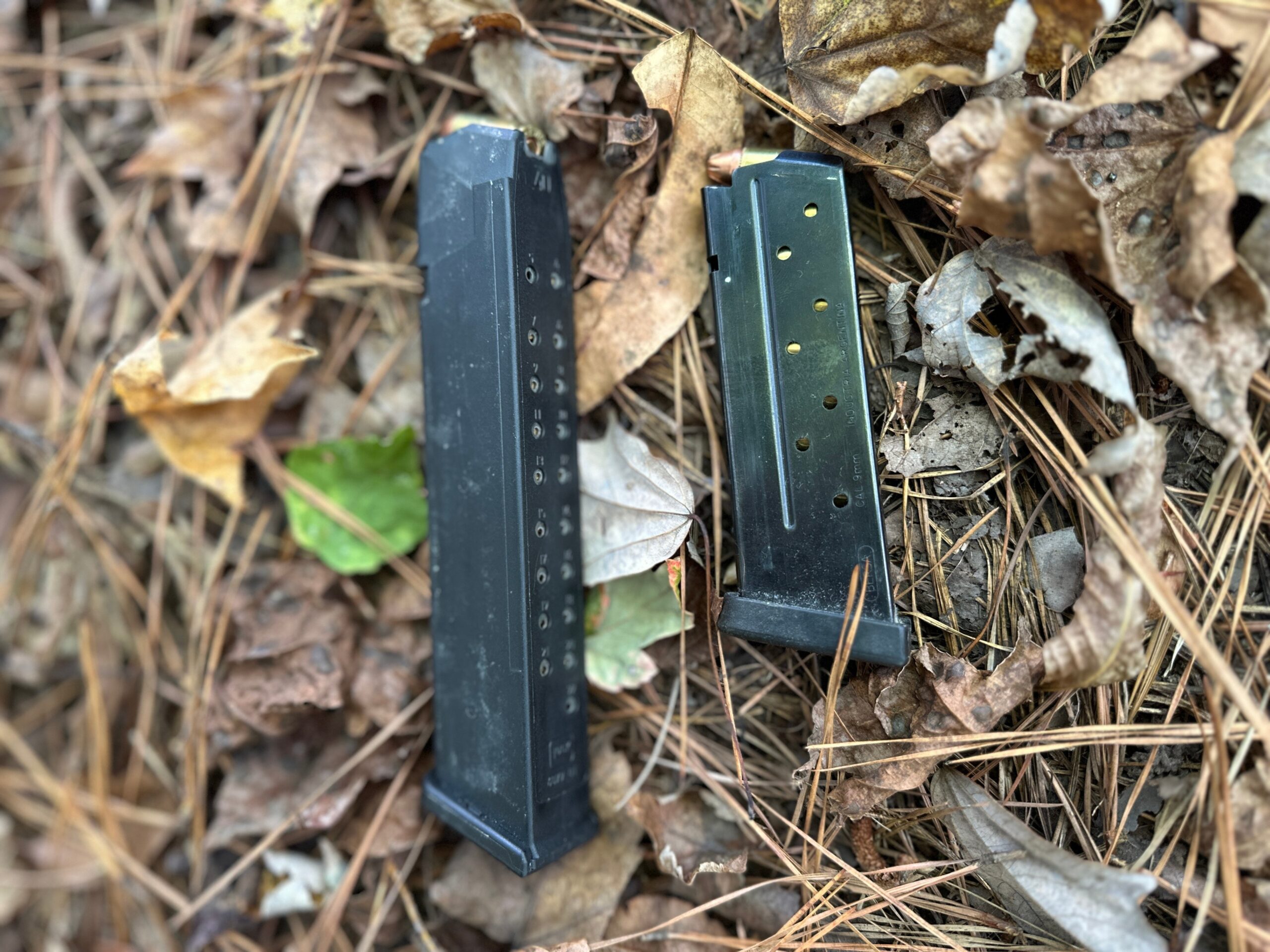
That means you’re either buying special 10-round versions (which often change the grip and feel of the gun) or switching to a slimmer pistol altogether. Neither option is ideal. A lot of shooters find 10-round mags less reliable, and they stick out in ways that make concealment harder.
One slip of the mind where you forget to swap your special CCW magazines before crossing into a restricted state, and you could be committing a serious crime without even realizing it. Practicing your right to constitutionally carry in Missouri and then crossing the border to Illinois is all it takes to find yourself in trouble. For folks who carry for self-defense purposes, that’s not just a headache; it can feel like you’re being forced to compromise your safety by carrying less ammo in the very places you’d want it most.
Legal Trends Surrounding Magazine Capacity
Changing magazine legislation lives in the courtroom just as much as it does in state law books. California’s saga is the best example. In Duncan v. Bonta, the state’s 10-round cap has been struck down, reinstated, and batted back and forth through appeals so many times that gun owners call it the “yo-yo ban.” For one brief “Freedom Week” in 2019, Californians could legally buy standard-capacity mags, only to have the window slammed shut again.
Cases such as The Supreme Court’s 2022 Bruen decision made the ground even shakier for large capacity magazines. The ruling told inferior courts that they couldn’t just rubber-stamp gun laws by pointing to public safety issues. Whether or not you agree with this, courts instead have to show that a law fits within the nation’s history of firearm regulation and our Second Amendment rights. Up until this point in time, there isn’t much historical precedent for capping ammo counts. That argument is now the backbone of nearly every magazine ban challenge we see.
Another example is Oregon’s Measure 114, which has been tied up in court for more than two years now. Other states are watching closely to see the outcome, knowing the next Supreme Court case could either green-light capacity limits for large capacity magazines or strike them down nationwide for the foreseeable future. Until that day comes, responsible gun owners are stuck navigating a convoluted system of states’ rights where what’s perfectly legal in Arizona can make you a felon in New Jersey.
Knowledge Is Power, and Educating Yourself Is the Best Defense
Magazine limits affect all firearm users to varying degrees. While local hunters generally don’t need to worry about large capacity magazines as much as concealed carrier permit holders and traveling sportsmen, they affect us all to varying degrees. Educate yourself on your destination’s magazine capacity laws, swap out your mag, buy a state-compliant version, or you could be potentially facing a serious weapons charge. It’s that simple to fall into, and it’s that simple to avoid.
The most frustrating part of this subject is how often these rules change, based upon the political leanings of any given state. One court blocks a ban, another reinstates it, and gun owners are left scratching their heads on what to do. In 2025, the disarray of large capacity magazine legislation still stands strong: fourteen states and the District of Columbia choose to create laws on magazine capacity, while the rest of the 36 states don’t seem to care as much.
Your safest play in today’s landscape? Always double-check the laws where you’re headed. Stock up on a few state-compliant magazines in your gear bag if you’re planning on crossing borders. It might feel like a hassle at first, but it’s a whole lot easier than finding yourself in court trying to explain yourself in front of a judge.