Prefer audio over written content? Listen to the article here:
We’ve all done it. Sat around and argued for hours about what you felt was the ideal setup to protect yourself and your family. When it comes to firearms, the AR-15 platform has earned the title of powerhouse because of how versatile and reliable it can be.
Not to mention that you can customize an AR to fit almost any situation you can imagine.
One of the biggest questions you will encounter when discussing home defense is what caliber to run? You want stopping power, you don’t want too much over-penetration, but you also need to be able to handle your weapon in close quarters.
The following cartridges .223 Remington, 5.56 NATO, .300 blackout, 6.8 SPC, and .450 bushmaster will help limit liabilities when engaging targets in close quarters, while they each offer unique benefits as well.
Top Picks: Home Defense Cartridges in an Ar-15 Platform
Quick-reference list of standout loads by cartrdige.
-
Most Affordable
-
Best Overall
-
Best for Suppressed Use
-
Best Balanced Power Upgrade
-
Maximum Stopping Power
In this article we will cover all of these different cartridges and how they can be used for AR-15 home defense. Long-range target shooting is cool and all, but home defense is about neutrality and safety inside your own home. Let’s take a look at ballistics, pros/cons, and everything else in between.
Why Choose an AR-15 for Home Defense
It is becoming more and more popular for folks to opt for AR-15 platforms for home defense over handguns and shotguns. They have unique perks that fit real-life needs.
Many are choosing AR-15s because they have less recoil and are easier to wield for beginners and smaller framed adults. This means quicker, more accurate follow up shots with less skill compared to handguns and shotguns. Its ergonomic design shines in tight spaces around the home.
More rounds in the magazine mean less reloading. With 30 round magazines, AR-15s outpace shotguns and handguns, which is crucial for multiple threats. No pumping and less mag changes keeps you in the fight. Better to outgun an intruder than having to reload at a crucial moment.
AR-15s also tend to be more accurate up close, where most home defense situations take place. They have pinpoint stability over handguns and tighter spreads over shotguns. This reduces collateral risks inside of the home.
AR-15s are light weight and nimble compared to shotguns. They are customizable for things like lights or optics for low-light use, when they are most likely to be used. Proper loads also beat buckshot on over-penetration.
Ultimately, the AR-15s blend of ease, higher capacity magazines, and precision makes it a top pick for home defense compared to handguns or shotguns, but everyone has to make the right choice for them and what they feel comfortable with in their own homes.
Understanding Home Defense Needs in an AR-15
Before we jump into the specifics of different cartridges, let’s chat about what makes a cartridge “ideal” for home defense. In a typical house, engagements happen at under 25 yards, often much closer.
You want something that stops a threat fast, but doesn’t punch through multiple walls, risking the lives of innocent people in your family and neighborhood.
Over-prenetration is a big concern. High velocity rounds can rip through drywall like butter. That is why we prioritize bullets that expand or fragment on impact. Hollow points or soft points are key for these cartridges as they dump energy quickly.
For more on reducing over penetration risk, check out our related article titled How to Avoid Over-Penetration in Home Defense Scenarios.
Recoil matters too. Low recoil means faster follow up shots. Don’t forget suppressors either. They pair well with many of the AR-15 platform cartridges in this article to protect your hearing indoors. We will also be sure to touch on terminal ballistics, like how bullets perform on soft tissue.
Finally, legality. Ensure that your choice complies with your state regulations. See Bullet Design Laws by State – What You Can and Can’t Have for more details.
.223 Remington: the Tried and True
The .223 is reliable, cheap to shoot, lightweight, and carries enough power for home defense.
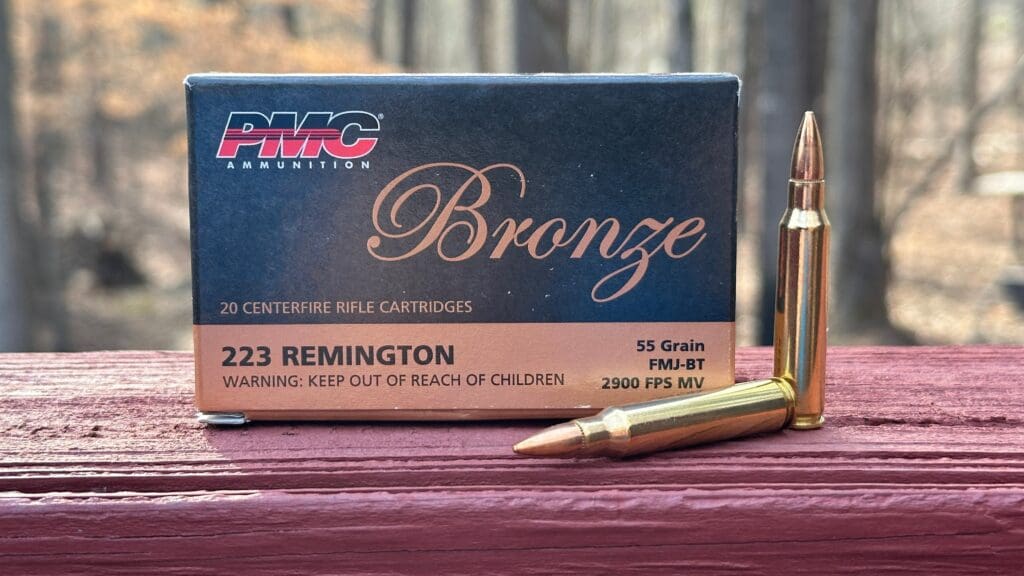
Ballistically, the .223 will shoot bullets weighing between 40 and 77 grains at approximately 3,000 fps out of a 16 inch barrel. For home defense purposes you will be shooting in the 55-62 grain range.
Hollow points such as the Hornady Critical Defense round are designed to fragment upon impact, producing large wound channels with less risk of over-penetration. Tests show about 12-16” of gel penetration consistently. Ideal stopping power without risk of exit wounds.
Pros: Very manageable recoil allowing for rapid follow up shots. Ammo is plentiful and ideal for small/average built shooters as well as close quarters.
Cons: Risk of over-penetration if using ammo that doesn’t expand (FMJ). Make sure you’re ONLY buying defense ammo and bullets that expand.
When buying ammo buy in bulk. A great choice would be something like the Hornady Critical Defense 55 Grain FTX (200 Rounds). They are an industry standard, and you can’t go wrong with them.
Shoot light? The bullet will expand quicker.
Shoot heavy? The bullet will penetrate deeper.
If you want to know more about grain weights, check out this guide: How Does Bullet Weight Actually Affect Performance.
Home Defense Shootouts have shown the .223 to be effective at stopping threats due to the large amount of yawing and tumbling the round experiences when it hits living tissue.
Not the most powerful option out there, but it’s enough stopping power for the majority of homes. Just remember to stay away from FMJ rounds and pick loads known for expansion.
Ideal Home Defense Caliber For: Beginners new to the AR-15 or smaller stature individuals that may struggle with heavier recoil. Its low recoil allows you to place fast accurate shots on target. Perfect for those that live in tiger urban apartments and don’t want to worry about over-penetration.
Use hollow points for safe and effective stops in hallway lengths or small rooms.
5.56 NATO: the Military-Grade Upgrade
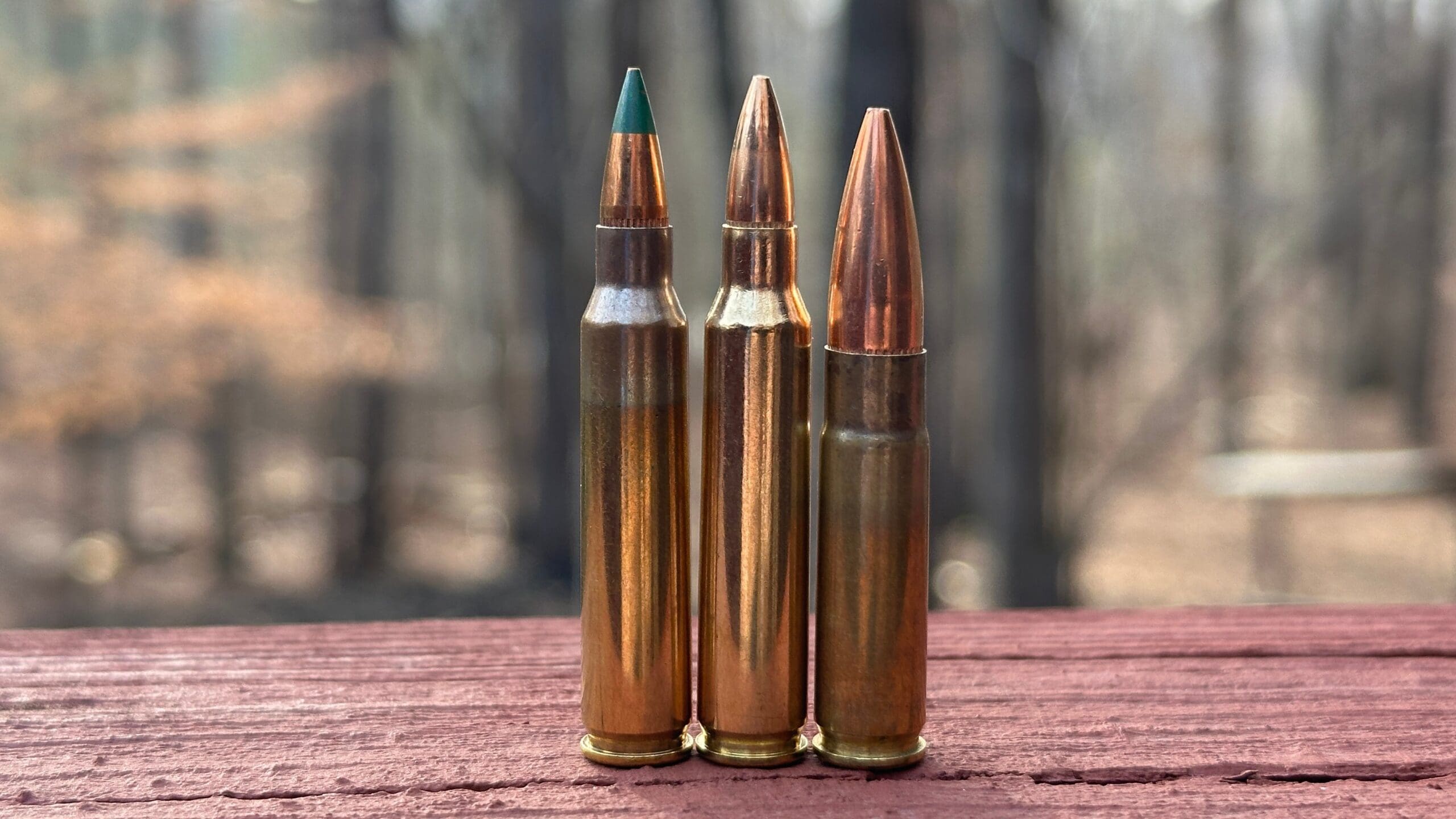
Similar to the .223 but not identical, the 5.56 NATO is loaded hotter for military use, which offers slightly higher pressures and velocities. ARs labeled as 5.56 NATO can usually fire .223 Remington, but not always the other way around; check your gun’s specifications to be sure.
For home defense, the 5.56 shines with loads like 62 grain bonded soft points or green tips. Black Hills 62 grain Dual Performance is a fan favorite as it expands reliably and minimizes wall punch throughs. Terminal ballistics show rapid energy transfer with fragmentation in lighter grains.
Pros: More power than .223, reliable feeding in ARs, and widely available.
Cons: Slightly more recoil and potential for over-penetration if not using defense style ammo.
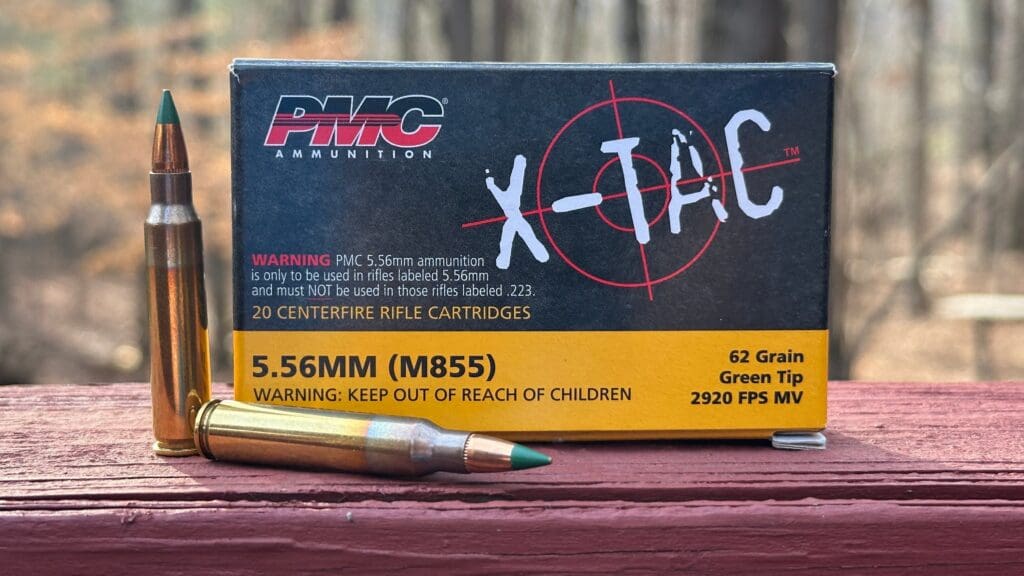
There are abundant bulk options, like PMC X-Tac 62 Grain Green Tip (1000 rounds) for practice, then switch to your defensive mag for home defense.
This cartridge is rooted in military service, meaning it is battle tested. If you are tuning grains, read Best 5.56 NATO Grain for Your Use [Full Guide].
Compared to the .223, the 5.56 NATO has a bit of a velocity edge which is better for barrier penetration but has similar home risks for penetration.
Ideal Use: The 5.56 NATO is great for military buffs or those with a lot of range time. They will appreciate the hotter round’s reliability and power edge over the .223. It is perfect for homes with longer sight lines, like suburban homes. It also handles barriers well but be sure to use defensive ammo to curb over-penetration risks.
.300 Blackout: the Suppressor-Friendly Powerhouse
Now we are talking about versatility! The .300 Blackout (AAC) was designed for AR-15s, using the same magazines but delivering .30 cal punch. It’s a game-changer for home defense, especially the subsonic loads.
Subsonics (around 220 grains at 1,000 fps) are quiet with suppressors, reducing both blast and flash. They hit like a truck up close, with deep penetration but less over-penetration than the supers. Supersonics (110-125 grains at 2,200 fps) offer more range if you think it’s necessary.
Pros: Excellent for short barrels, low noise, and heavy bullets for more stopping power.
Cons: Ammo is a bit pricer and subsonics need careful cycling. They sometimes jam.
Ballistics wise, it mimics a 7.62×39 but fits ARs perfectly. Ideal for urban homes where sound matters.
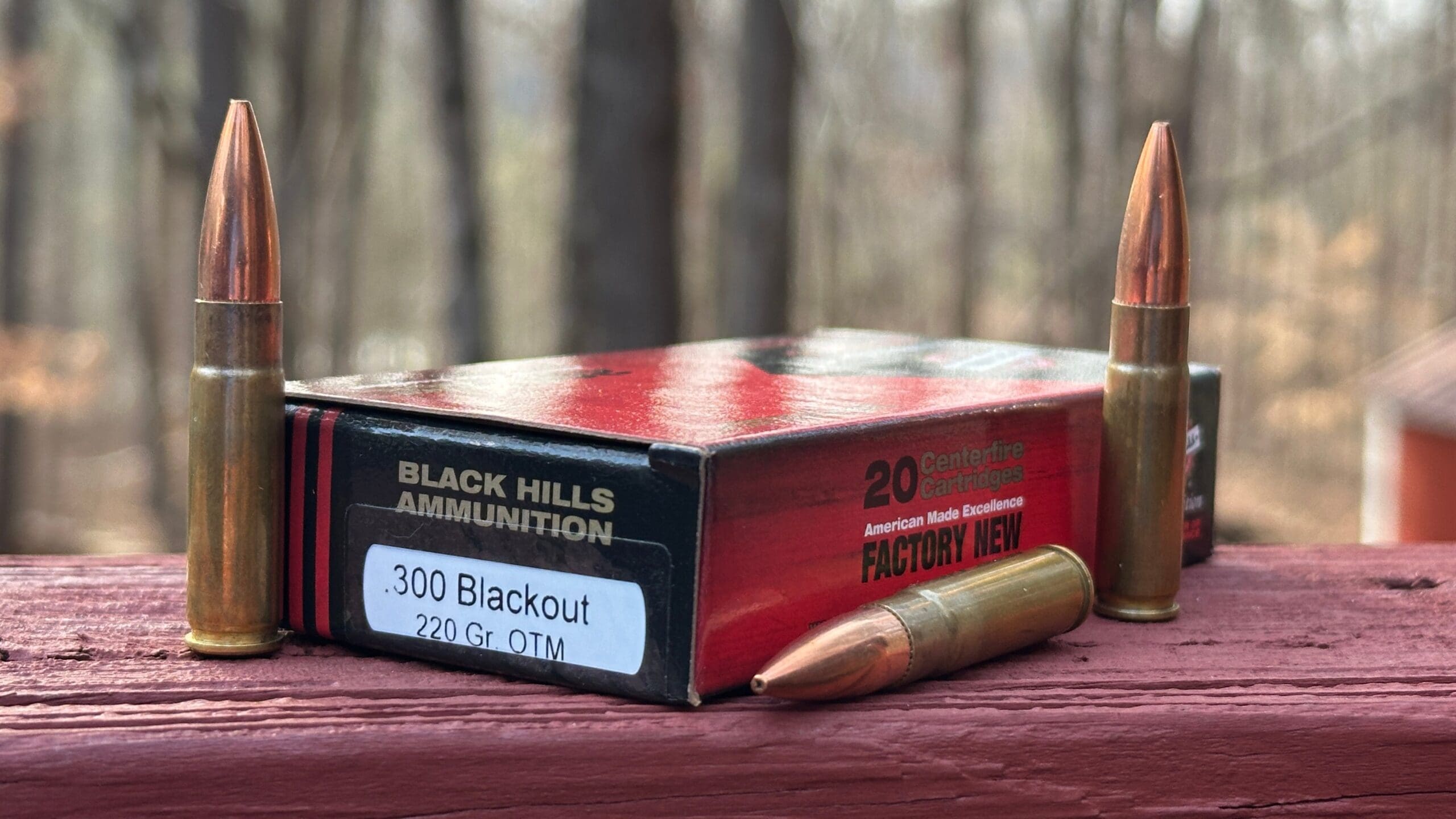
Though it is hard to find in bulk, it is worth the price to stock up on smaller boxes.
In tests, the .300 BLK subs expand well, creating wide wound channels. This would definitely be the choice if you are going with a suppressed AR setup.
Ideal Use: Suppressor fans and night owls, this is the cartridge for you. Subsonic cartridges keep things quiet, protecting your ears indoors. This is best in urban or apartment settings where knockdown power is wanted without added noise or over-penetration in tight quarters.
6.8 SPC: the Balanced Performer
If you are seeking more oomph than the 5.56 without going full big-bore, the 6.8 SPC (Special Purpose Cartridge) is going to be your new best friend. Developed particularly for close-quarter military use, it is perfect for home defense in an AR-15 platform.
Bullets range from 85 to 120 grains at 2,500 to 2,800 fps. This offers better barrier penetration and terminal effects than the .223. Hollow points like the 110 grain expand reliably, dumping energy rather quickly.
Pros: Hits harder at shorter ranges, less over-penetration with proper loads and great for medium threats.
Cons: Less common ammo and requires specific uppers and magazines for your AR-15 platform.
Ballistics show that it outperforms the 5.56 in wound ballistics while staying controllable. This would be a great pick for home with longer sight lines.
For more on the ballistics, see Internal External & Terminal Ballistics [What Truly Matters].
This cartridge delivers 44% more energy than the 5.56 NATO and is great in short barrel setup with a very mild recoil.
Users love the 6.8 SPC’s reliability in AR conversions, so if you are considering upgrading your AR-15 home defense platform, this could be a great choice!
Ideal Use: This is for those who want more punch than the 5.56 without the big-bore recoil, suiting intermediate shooters looking for an upgrade. This excels in homes with medium distances like backyards or larger, open concept rooms of houses. It offers solid terminal effects with controllable handling.
.450 Bushmaster: the Big Bore Beast
For those that are wanting maximum stopping power, the .450 Bushmaster turns your AR into a thumper. It is a straight-walled cartridge for states with strict hunting regulations, but excels just as much for home defense. This would be a great dual purpose cartridge option.
The 250-300 grain bullets at 2,000-2,200 fps deliver over 2,000 ft-lbs of energy on impact. Way more than the 5.56! Hollow point bullets in the .450 have massive expansion, stopping threats cold with a minimal number of shots.
Pros: Devastating at close range, low over-penetration due to the energy dump on impact.
Cons: Heavy recoil, limited magazine capacity, and more expensive.
Think of it like a .45-70 in AR from, which is ideal for rural homes. This cartridge is definitely not for everyone, but if power is your priority, the .450 Bushmaster will get the job done. It recoils like a 12 gauge slug, but muzzle brakes can help negate some of this.
Ammo availability varies for the .450 Bushmaster, but it’s worth the hunt to find it.
In survival scenarios, the .450 Bushmaster is definitely a multi-tool that appeals to many.
Ideal Use: This is for the multi-use specialist. Great for big game hunters or rural residents needing maximum stopping power for self-defense or in case a bear breaks in. It is ideal for more wide-open properties and large estates, but would be overkill for apartments and smaller homes.
ARs are Made for Defense
The top AR-15 platform home defense cartridges come down to the .223 Remington, 5.56 NATO, .300 Blackout, 6.8 SPC, and the .450 Bushmaster.
Whichever cartridge you might choose, choose the one that brings the most benefit to you and your unique situation. Each brings something unique to the table. Whether you prioritize low recoil or raw power, there is an option for you.
Be sure to always train with what you plan to use and consider bulk ammo purchases for reliability and useful stock to practice with.
Home defense is a very personal situation due to the uniqueness of each home and family setup. Be sure to test your setup at the range and remember that the best cartridge is the one that you are proficient with.
Home Defense AR Cartridges FAQs
Q: What Is the Best Ar-15 Caliber for Home Defense?
Ultimately, you want a caliber that is easy to control, reliable, and helps minimize overpenetration. 5.56 NATO or .223 Rem are going to be the best choice for most shooters. There’s low recoil, easy ammo availability, and plenty of great defensive ammo options when you know what to look for.
Q: Is 5.56 or 223 Better for Home Defense?
They’re nearly identical ballistics-wise, with 5.56 NATO having marginally better velocity/performance. In terms of real world home defense applications, there isn’t much difference; defensive loads chambered in .223 Remington will work just as well as their 5.56 NATO counterparts. This is especially true with modern defensive rounds that are specifically engineered for reliability and terminal performance.
Q: What Is the Best Length for an AR-15 for Home Defense?
Shorter is almost always going to be better for home defense, but you don’t want your barrel to be too short. Somewhere in the range of 10” – 11.5” will allow for easy maneuverability while indoors but still maintain velocity, especially when you’re using the proper ammunition.
Q: What Is the Best 5.56 Home Defense Ammo?
Ideally you want something soft point, bonded, or barrier blind tip. Full metal jacket (.308/winchester jacketed soft point, etc.) rounds are far too likely to overpenetrate when fired from an AR-15.
Q: What’s Better, 55 Grain or 62 Grain for .223 REM / 5.56 NATO?
Both will work well for home defense, but I find 62 grain bullets to have marginally better penetration and bullet stability (especially out of shorter barrels). Truthfully, the bullet weight is less important than picking a quality defensive load.