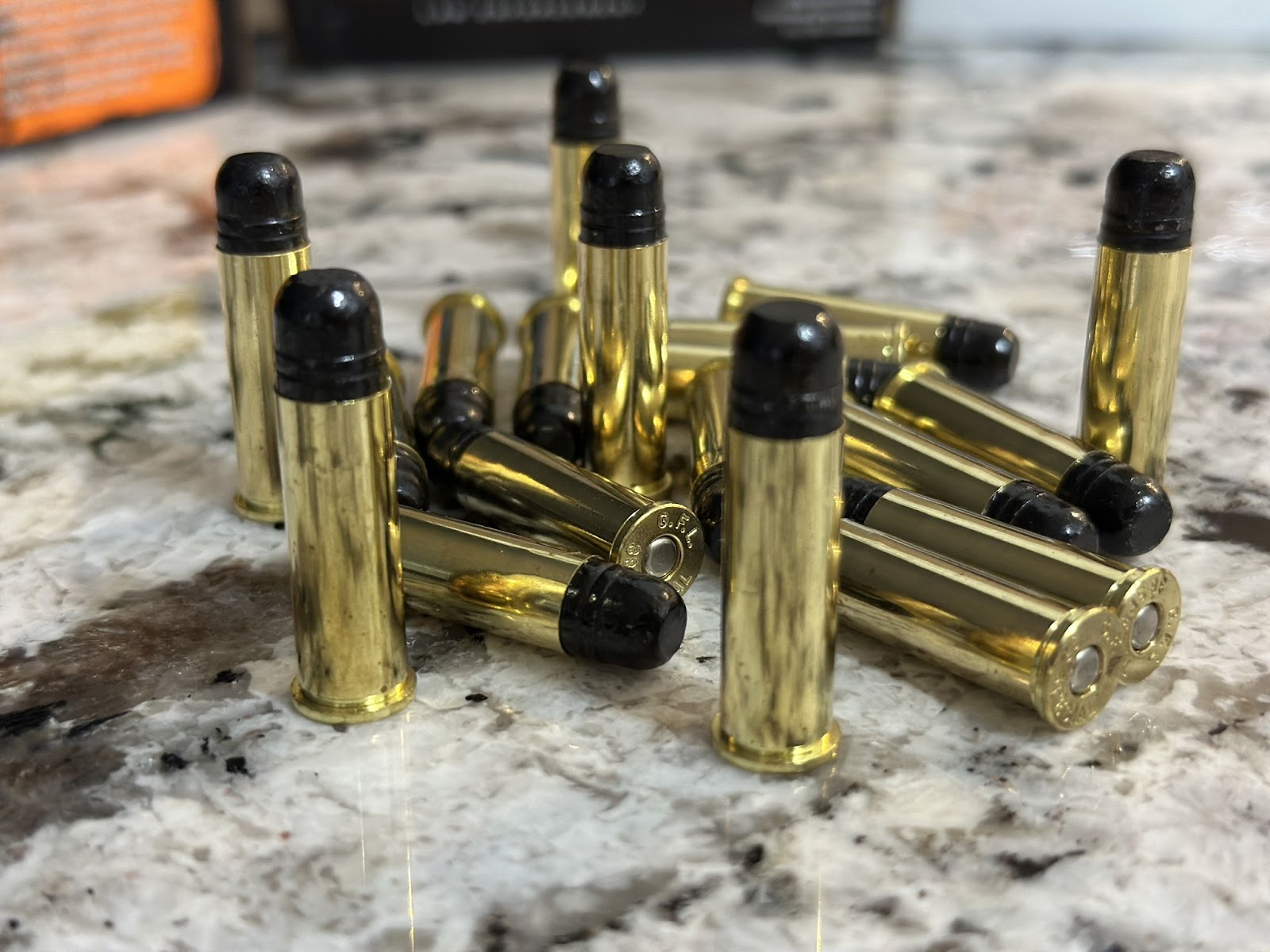
Cowboy Action Shooting (CAS) is a fun sport for those that like to have a good time with period accurate firearms. While you are restricted to single action revolvers, lever action rifles, and lever or break action shotguns, your ammunition is limited too. Still, picking the right ammo for the job is important. Due to just how restricted this sport is, there is less room to differentiate yourself from the competition with your hardware alone. Picking the right ammunition for all three types of firearms is going to be a crucial part of your loadout, and today I’ll walk you through your best options.
The first thing you should do before picking out your box of ammo is read the rule book for the Single Action Shooters Society (SASS); you will find ammunition specific rules on page 26. Although I will quickly review it here if you don’t feel like sifting through a big PDF…
Overview of Cowboy Action Shooting Ammo Requirements
Reviewing the requirements for main matches, the first thing you will see in the regulations on ammo are the power factor and velocity limits. Your ammo must go at least 400 feet per second (fps), and revolvers cannot exceed 1000 fps; rifles can go up to 1400 fps. On top of that, your centerfire cartridges need to be between .32 and .45 caliber, and percussion calibers will be between .36 and .45.
The rule book also lists some common revolver cartridges that we can use if you need a place to start:
- 32-20
- .32 Magnum
- .357 Magnum
- .38 Special
- .44 Magnum
- .44-40
- .45 Colt.
- 9 mm
- 10 mm
- .45 ACP
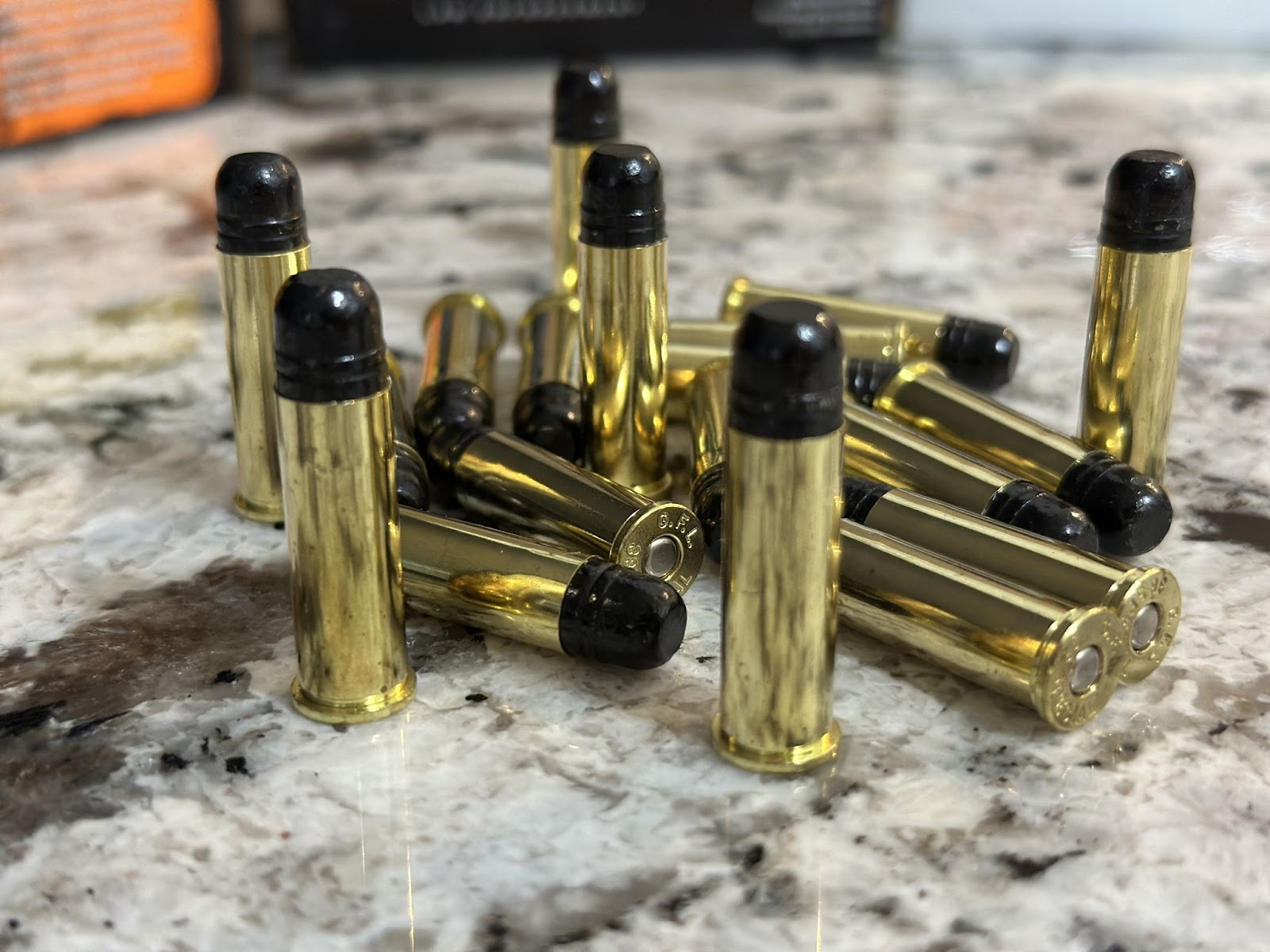
The biggest thing to know about your ammo is that your cartridges cannot be jacketed, semi-jacketed, hollow points, plated, or gas checked. They must be all lead, but they can be coated with Moly-Disulfide or polymer. So you can’t take just any 9 mm FMJ off the shelf and go to a Cowboy Action Shooting competition. This all makes sense though, as the targets are only 7 to 10 yards away for most events, so spalling is a big safety concern. Plus, all lead bullets are more period accurate to pre 1900 and the spirit of the game.
Rifle ammunition is limited to revolver cartridges, with some caveats. Your bullet can be .32 to .45 caliber, with special exceptions made for 25-20 and .56-50. In the same spirit, 30-30 and .38-55 are specifically outlawed. Your rifle targets will be 13 to 50 yards away, but the same rules apply to the bullets, they must be all lead.
Shotguns are a little different. You can have number 4 or smaller birdshot, and all of your shot must be lead. Again this helps with spalling while you are shooting targets 8 to 16 yards away. No matter what shotgun you use, you can only ever have two shells loaded at a time. This keeps tube fed lever action shotguns on the same plane as side by side double barrels.
Many shooters will use reduced recoil shells here since the target isn’t so far away, and magnum and high velocity shells are specifically outlawed. You can’t do any funny business with your shells, crimping them or sizing them down; they are picky about that. The majority of shotguns must be at least 20 gauge, up to 10 gauge. Slide action or pump action shotguns must be between 16 and 12 gauge.
Choosing Cowboy Action Shooting Revolver Ammo
As you saw above, you have a handful of options for revolver cartridges. Although by and far the most common is 38 special. If you are just getting started in the sport, .38 special is a great palace to start. You can even buy a revolver in .357 and be able to shoot both cartridges if you want more options. All and all, there are plenty of resources for either buying or reloading .38 special and you’ll find plenty of shooters familiar with it at an event if you have questions.
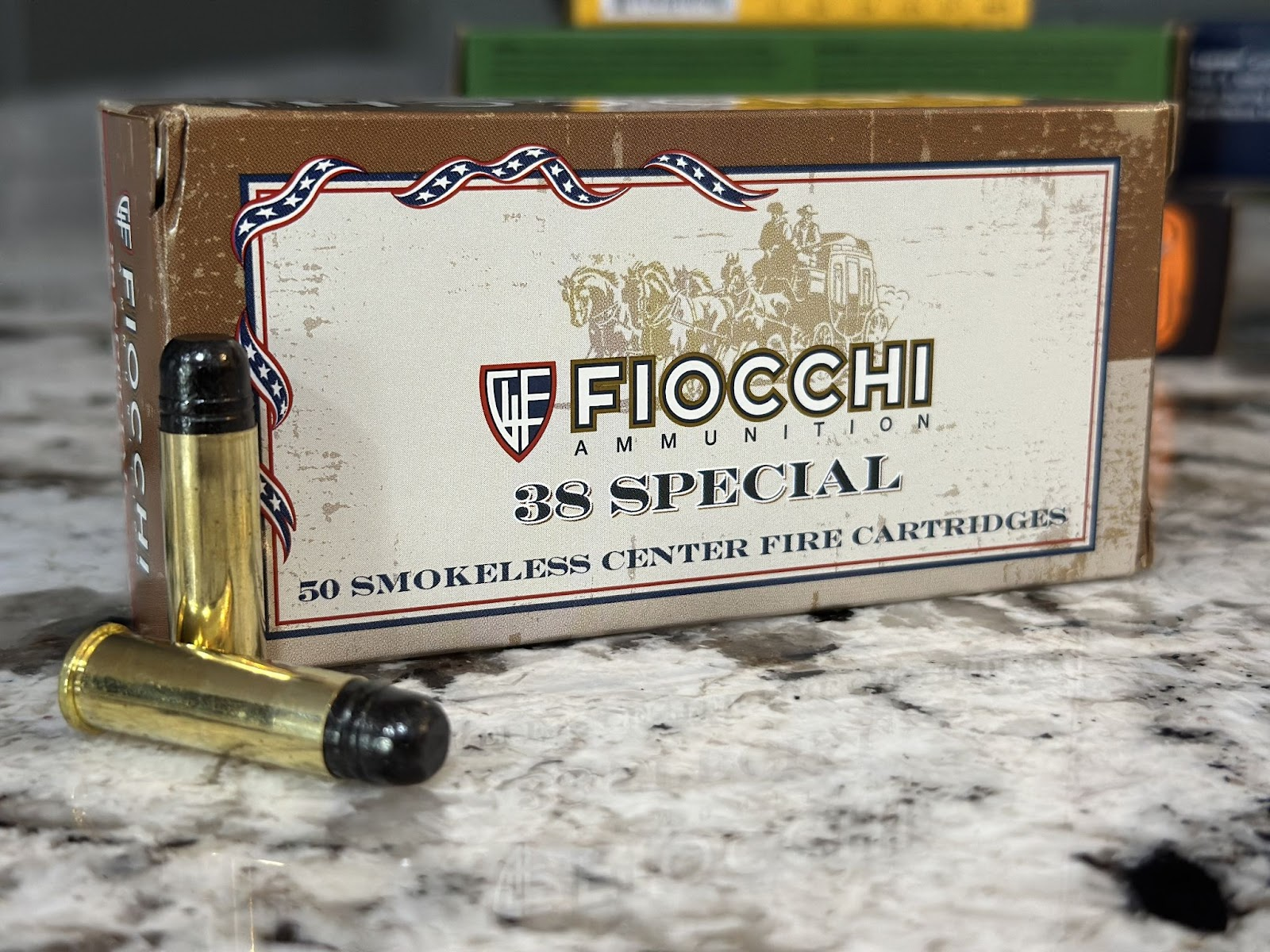
Fiocchi Cowboy Action 158 Grain Lead Flat Point 38 Special
Fiocchi makes a great box of 38 special for you to try out. This box is specifically made for Cowboy Action Shooting, so you can be sure that it adheres to all the normal rules. You will notice a coating on the bullets, which is legal since its polymer. This coating helps reduce leading in your barrel, fouling, and smoke compared to exposed lead bullets.
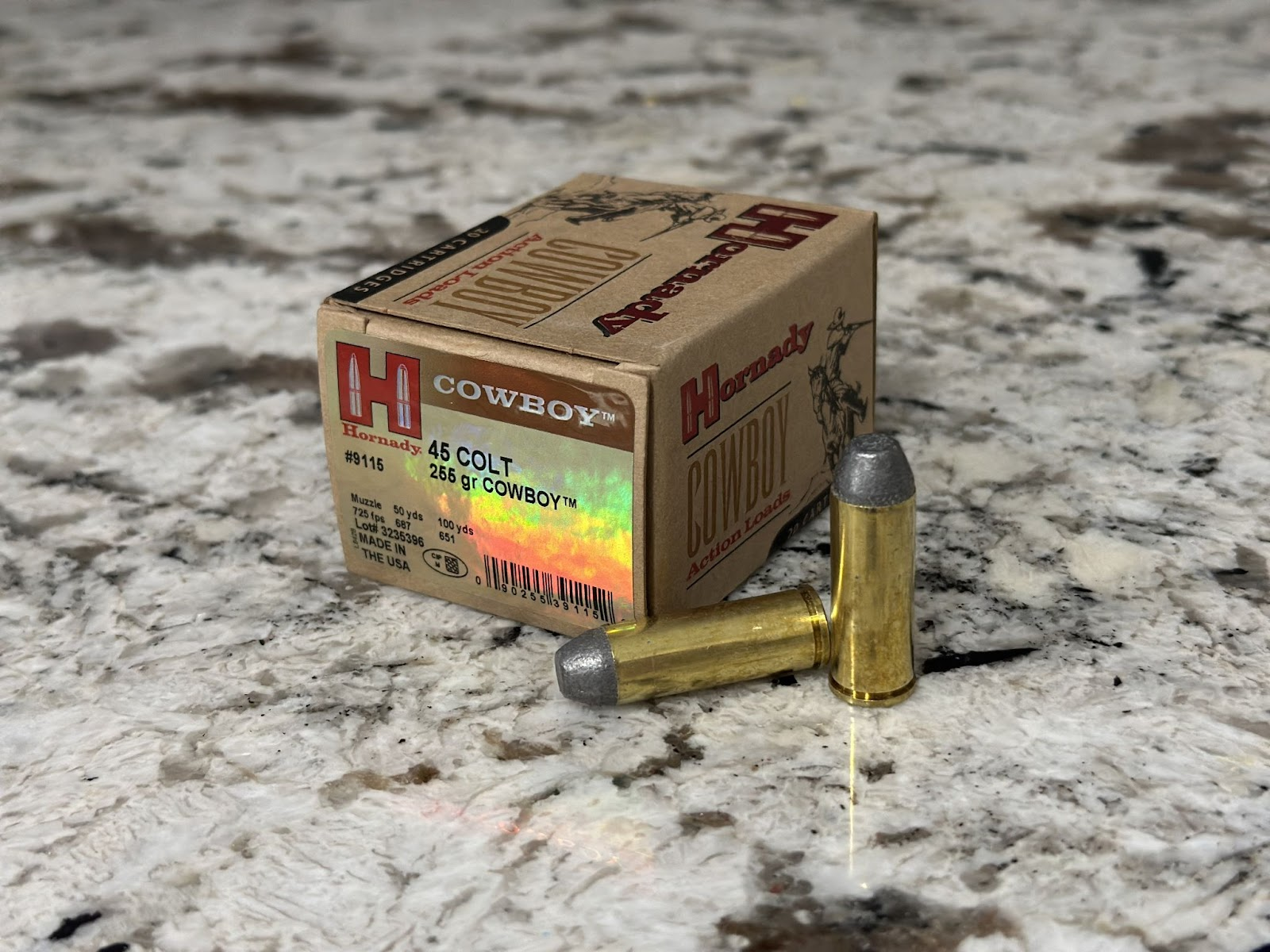
If you want more of a boom or authentic caliber, you can go for 45 Colt instead of .38 special. This is a very popular cartridge in the sport, and it is often duly used in the rifle category. It is slightly longer than the .38 special, but much bigger in diameter. You are also shooting a bigger projectile; Although, you are generally well within the required bullet speed specifications when you are using 45 Colt.
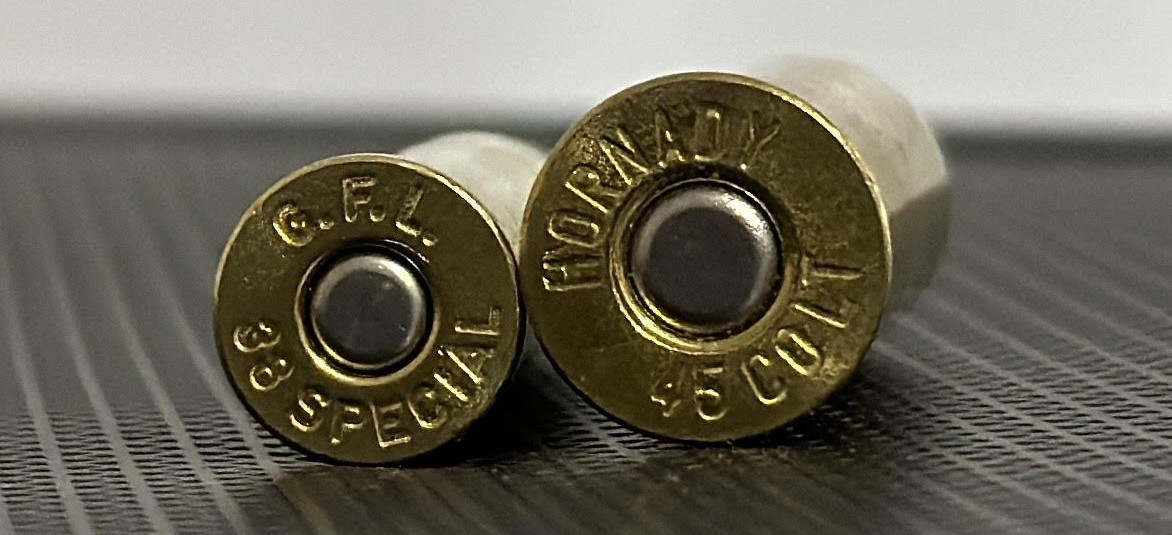
Both the .38 Special and 45 Colt are popular choices for CAS revolver ammo, and both of them will treat you well as you are just getting started in the sport.
Choosing Cowboy Action Shooting Rifle Ammo
For all the same reasons we have already seen, the .38 Special is popular for CAS rifle shooters too. It has super light recoil out of a rifle, is readily available, and is relatively affordable. Although cartridges like .357 magnum and 45 colt are also popular in rifles. One cartridge that is more popular for rifles than it is for revolvers is the .44-40 Winchester. It is a historically accurate cartridge that was made for both rifles and handguns. The .44-40 powered the Winchester Model 1873, which eventually became the “gun that won the west” according to George Madis, the author of The Winchester Book and similar titles.
No matter what cartridge you pick for the rifle stage, you need to consider a few things to make sure you can perform your best. The first being OverAll Length (OAL) of your cartridge. This is very important for period accurate firearms to ensure they feed correctly. Some rifles even require a particular bullet shape to feed correctly. While your .38 Special revolver may accept any type of design, the same will not be said for rifles. So make sure you know what your rifle requires before checking out with that bulk order of ammo.
Choosing Cowboy Action Shooting Shotgun Ammo
For main matches, shotgun loads have to be number 4 shot or smaller. Since you are not really concerned with hitting targets that hard, plenty of shooters choose to use even smaller and lighter loads like number 7 shot. The majority of shooters will choose to go with a 12 gauge shotgun. You will see three main types of shotguns at a Cowboy Action Shooting event, a lever action, pump or slide action, and a classic side by side double barrel. Notably, over-under shotguns are not allowed, as they are not period accurate.
Most shotgun shells you see on the shelf today do not qualify for CAS, but if you specifically look for cowboy loads or trap / target loads, you can usually find what you need. These are going to be light all-lead loads that are within the 1400 fps velocity limit for shotguns.
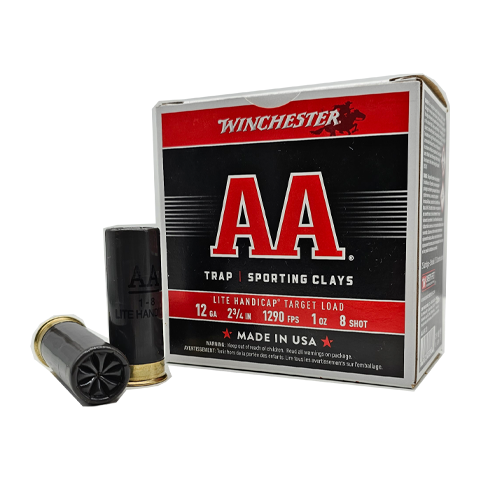
One great example is the Winchester AA 12 gauge Lite Handicap Target Loads. These are widely used among clay shooters, and it also checks all the right boxes for Cowboy Action Shooting events. You’ll get one ounce of number 8 shot lead with a muzzle velocity of 1290 fps; that is within the 1400 limit, and it’s plenty enough to knock down steel targets you commonly see in CAS matches. While these low brass loads are lighter than what you would use for duck hunting, they are a bit more powerful than the featherweight cowboy-specific loads you can find.
The Right Ammo For Your Loadout
If you are worrying about picking the perfect cartridges for your Cowboy Action Shooting match, it doesn’t exist. As long as your ammo falls within the rules of the game, then you are good to go; there are no wrong answers. While there are some cartridges that are more popular than others, there is no “best” option. Plus, as you mature in the sport, you will want to try a variety of firearms and cartridges; that is part of the fun!
Although as a beginner, it is just fine to start off with the most popular cartridges. You will not be the only shooter using a .38 Special for both revolver and rifle stages. If you want to get more power from a period accurate cartridge, the 45 Colt is a fun one to use too. Sticking with basic shotgun shells is a good call too. No matter what you pick, make sure you practice, and prepare for all aspects of CAS before toeing the line.