Prefer audio over written content? Listen to the article here:
Shotguns are a versatile weapon that can shoot a wide array of loads ranging from tiny birdshot pellets to 1-ounce chunks of lead. Two of the most common shotgun load types are buckshot and slugs. These are both commonly used for self-defense and hunting big game.
Buckshot is a type of shotgun load that contains anywhere between 28 and 8 large, round BBs or pellets in a 12-gauge load. Slug loads, on the other hand, have one large projectile that typically weighs around 1 ounce in 12-gauge and 3/4 ounce in 20-gauge loads.
While both types of loads can be effective, their typical uses are different. Buckshot is best suited for close-range shooting, while a specific type of slug known as a sabot can be shot accurately at distances exceeding 200 yards.
TLDR; Best Choice for Hunters
If you are using a shotgun for hunting, stick with buckshot if you plan to keep shots within 50 or so yards. Buckshot will be easier to get on target and retains a ton of power at close range. Our go-to buckshot is the Federal 9 Pellet Flite Control 00 Buckshot, and it works extremely well.
If you plan on shooting farther than 50 yards with a shotgun, you will want to use a slug. Rifled slugs do well, but tend to be less accurate over 100 yards. If you are pushing shots out to ranges near 200 yards, you will want a sabot slug like the Brenneke Super Sabot 1-1/8 oz Slug.
TLDR; Best Choice for Self Defense
Self defense scenarios are nearly always at closer ranges. For this case, buckshot works the best. It has a ton of knock-down power and makes it easier to hit a target with a spread of large BBs. The Panzer Defense Lequian Special HV 9 Pellet 00 Buckshot is our top choice for self defense.
Shotguns are very versatile. If you want to read more about general use cases of different loads, check out our other article: Shotgun Shells Explained: Birdshot vs. Buckshot vs. Slugs
When to Use Buckshot
Buckshot is primarily used for self-defense and hunting. Buckshot consists of larger BBs or round lead balls inside a shotgun shell. Similar to birdshot, it shoots a handful of pellets, and the further the target is, the wider the pattern will be. Therefore, buckshot is best used at close range.
Hunters use buckshot for close-range predator hunting, especially when hunting in heavily wooded areas. Additionally, in some states, particularly in the southeastern United States, buckshot is still used for hunting deer, and is often the load of choice during deer drives.
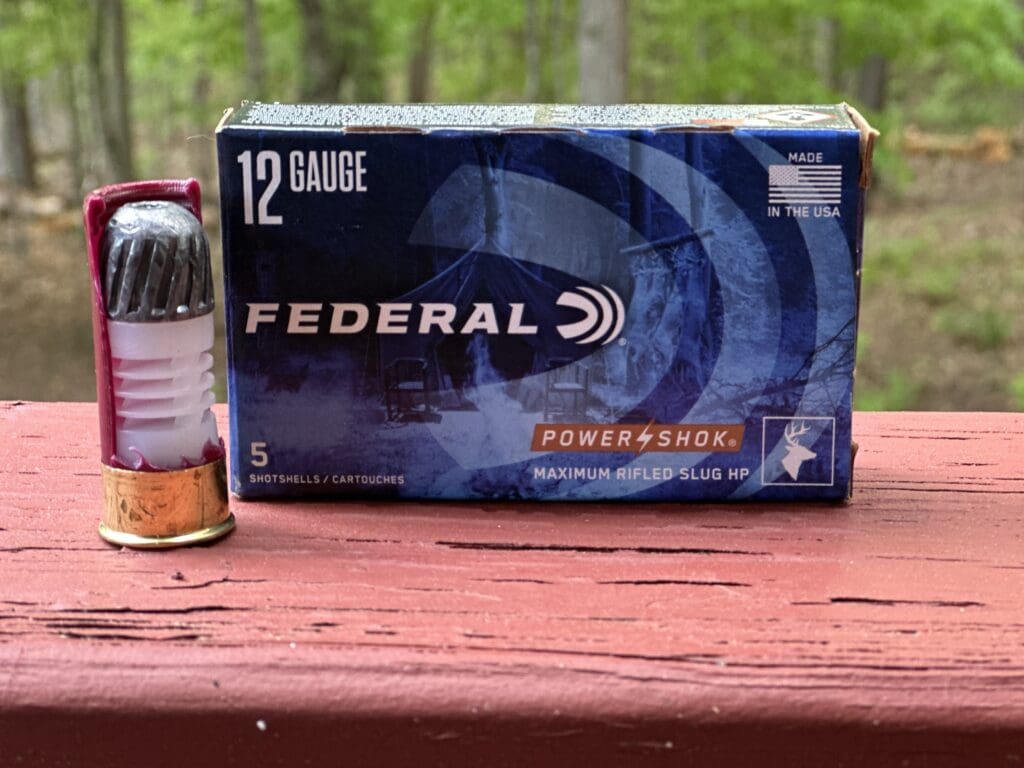
One of our favorite buckshot loads for deer hunters is the Federal 9 Pellet Flite Control 00 Buckshot because of its improved energy transfer and exceptional stopping power.
Because buckshot shoots multiple large round balls, it gives hunters a better chance of hitting the vitals than when using a single slug in thick brush or for quick shots.
While it’s possible to use for bears and other especially large game, it’s a worse choice than slugs. These animals are thick, and small pellets can have a hard time penetrating.
When using buckshot for self-defense, especially in urban areas, be careful of overpenetration. For example, 00 buckshot can go through up to four sheets of drywall.
If you do like buckshot for self defense, the Panzer Defense Lequian Special HV 9 Pellet 00 Buckshot is a customer favorite.
If you want to learn more about shotguns loads specifically for self defense, we wrote an entire article on it here: The Best Shotgun Loads For Self Defense
Different Buckshot Sizes
There are various types of buckshot loads with different amounts of powder, lengths of shell, and numbers and sizes of BBs. Certain types are better at some tasks than others, so it’s important to know what differentiates them.
Most people have heard of 00 buck, which holds 9-15 pellets, .33” in diameter, and weighs 53.8 grains a piece. The number of BBs in a shell is determined by its length. For example, 2 ¾ inch shells hold fewer BBs than 3-inch shells.
Below is a table of the different buckshot load sizes with the estimated number, diameter, and weight of the pellets in standard 12-gauge loads. Note, you get a higher number of pellets in magnum 3 or 3.5-inch loads.
| Buckshot Size | Number of Pellets | Pellet Diameter (in) | Individual Pellet Weight (gr) |
|---|---|---|---|
| 000 | 8 | .36 | 70 |
| 00 | 9 | .33 | 53.8 |
| 0 | 10 | .32 | 49 |
| 1 | 12 | .30 | 40.5 |
| 2 | 14 | .27 | 29.4 |
| 3 | 20 | .25 | 23.4 |
| 4 | 27 | .24 | 20.7 |
Larger pellets will penetrate more deeply, but smaller pellets will make it easier to hit your target. Keep that in mind when you pick out a box of buckshot.
Effective Range of Buckshot on Game
As we discussed earlier, buckshot is best suited for relatively close-range situations. The rough maximum effective range for 12-gauge 00 buckshot is 50 yards.
However, this distance can vary substantially depending on your shotgun’s barrel length, which load you are using, and your choke. Additionally, even if you can achieve a good pattern beyond 50 yards, it’s essential to consider the energy of the pellets and the resulting penetration.
For big game like deer, it’s best to err on the side of caution and set your limit to around 40 yards if you have a good pattern. To kill a deer, the pellets must penetrate deeply enough to hit the lungs and heart, so impact energy is crucial here, even if you have a good pattern further out.
When to Use Shotgun Slugs
Shooting slugs is as close as you can get to turning a shotgun into a rifle. Shotgun shells loaded with slugs are the precision ammunition of the shotgun world. While often not as precise as a rifle, at under 200 yards, they can usually get close.
Shotgun slugs are typically used for one purpose: hunting large game, such as deer and elk, and bears.
Shotgun slugs are essentially single, large pieces of lead that are sometimes copper-plated. Most 12-gauge slugs are around 1 ounce, while 20-gauge slugs are typically closer to 3/4 of an ounce.
They are commonly used in the Midwest for deer hunting. They are highly effective for hunting, especially when fired from a rifled barrel, which helps stabilize the slug and extends its range.
In addition to hunting, shotguns are often used for self-defense in grizzly bear country or when tracking wounded bears. Those familiar with shotguns can shoulder and fire in under a second, and shoot follow-up shots in rapid succession. It’s a common choice for hunting guides out west.
Additionally, a 1-ounce slug can produce anywhere from 2,400 ft lbs to over 3,000 ft lbs of energy at the muzzle. You will struggle to find a harder hitting load on another platform.
Different Types of Shotgun Slug Loads
There are two main types of shotgun slugs, rifled and sabots. The slug you need to choose depends on whether you have a rifled or smoothbore shotgun barrel. If you are using a rifled barrel, you need to use sabot slugs, and rifled slugs if you have a smoothbore barrel.
A smoothbore barrel is just like it sounds; the inside walls of the barrel are smooth. Compare this to a rifled barrel, which has angled grooves running the entire length of the barrel. Because rifled slugs are shot from smoothbore barrels, they have the rifling built into them to help stabilize the bullets during flight.
A great rifled slug to use for hunting is the Federal Power Shok rifled 1 oz slug. It has a ton of knock-down power, and it lays deer down quickly.
On the other hand, sabot slugs are fired through rifled barrels. Sabots lack rifling but may have some grooves on the outside of the bullet for aerodynamics. A sabot looks like a large rifle bullet and is often copper-jacketed.
If you want to learn more about the differences in rifled and sabot slugs, we wrote an entire article on it that you can read here: Rifled Slug Vs Sabot Slug [A Decisive Comparison]
Swapping Barrels if You Need It
One of the biggest perks of shotguns is that they can be purchased with two barrels: a smoothbore barrel for birdshot and buckshot, and a rifled barrel for use with sabot slugs.
If your shotgun didn’t come with a rifled barrel, many shotgun manufacturers also sell aftermarket slug barrels. Remington and Mossberg, two of the largest shotgun manufacturers, commonly sell packages with both barrels, and they sell additional slug barrels for purchase.
Swapping barrels is not always required. If you want to hunt with a shotgun and live in a state that has harsh centerfire rifle laws, then it may be worth it to get a rifled barrel and load up some sabots.
For deer hunters, check out the Brenneke Super Sabot 1-1/8 oz Slug. These things are made to knock down deer at serious shotgun distances. They are honestly a super interesting bit of ballistic science, and not a bit of it is wasted in the field.
Sighting in and Effective Range With Slugs
When using a shotgun with slugs like a rifle, it’s important to sight it in. However, smoothbore barrels often don’t have adjustable sights and typically only have a bead.
Many hunters use the same barrel with rifled slugs that they use for upland game or waterfowl with birdshot. That said, some smoothbore guns are fitted with a red dot or scope.
Rifled shotgun barrels typically have adjustable sights and can be fitted with a scope. Regardless of what barrel and sight setup you have, it’s important to practice and ensure that you are hitting where you are aiming.
Additionally, if planning to shoot at a longer range, it’s important to learn your bullet drop. Slugs can drop off quite quickly compared to typical rifle cartridges.
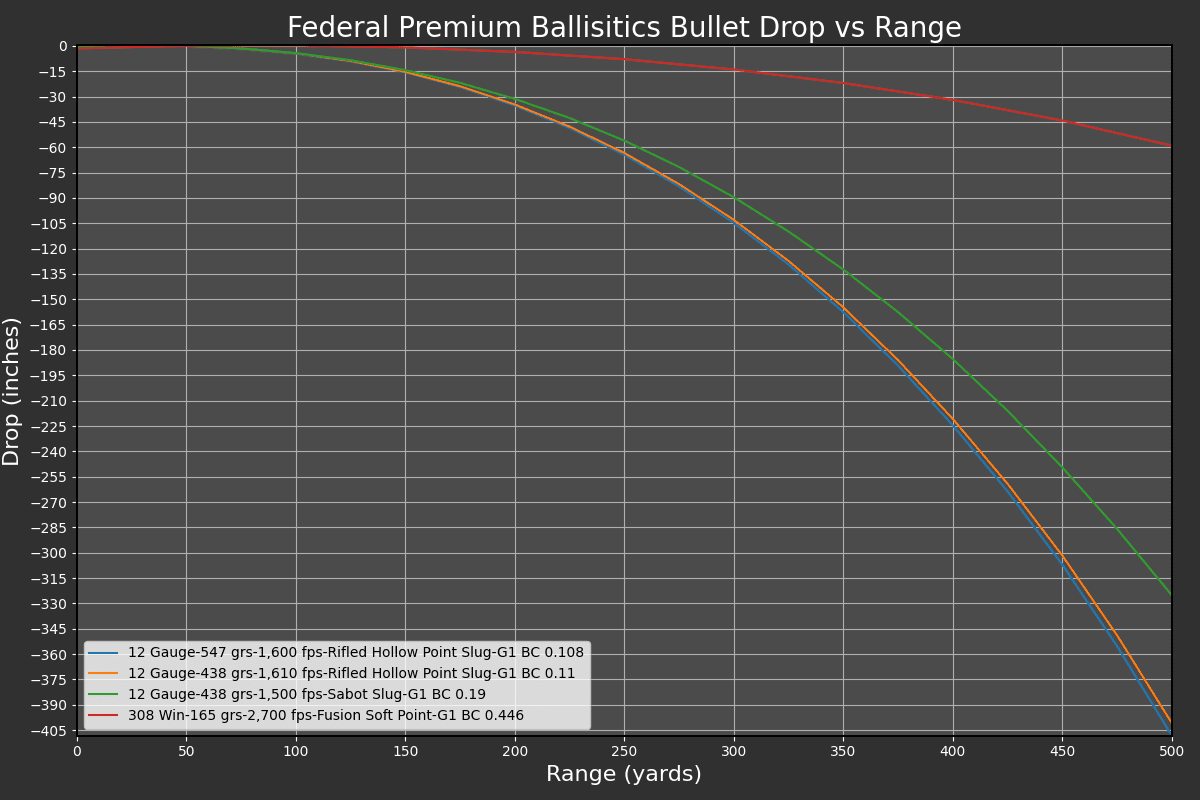
Shotgun slugs, even high-end ones, tend to lose velocity and drop quickly. For example, a Hornady 300-grain SST slug sighted in for 100 yards will drop roughly 10 inches at 200 yards. Additionally, some slugs may drop up to 3 feet at 200 yards with a 100-yard zero!
Target practice will help you determine your gun’s effective range. Some guns just flat out shoot better than others. If you’re not getting the accuracy you hoped for, try shooting different brands of slugs. Often, a gun will prefer one type of ammunition over another.
Use Slugs Sparingly
When compared to buckshot, sabot slugs are more effective for hunting big game at longer distances and for self-defense from bears.
However, they are still not on par with a high-powered rifle like the .300 Win Mag, so remember to keep your shots within 200 yards with sabots and 50 yards or so with rifled slugs. Additionally, when hunting thick cover or shooting fast-moving targets, slugs may be subpar to buckshot.
While extremely effective on deer and for self-defense from bears, shotgun slugs should seldom be used for home defense, especially when near other houses or when other people are in your home.
Slugs retain a significant amount of energy and are more than capable of penetrating many walls while retaining lethal force. There’s just too much risk of collateral damage, so either buckshot or a pistol with self-defense rounds should be chosen for this purpose instead.
Over-penetration is a huge deal for self defense. If you are worried about it, we wrote a full article on it with everything you need to know: How to Avoid Over-Penetration in Home Defense Scenarios
Choose the Load That Matches the Job
Buckshot has as much right to exist as slugs do, but there are times and places for each. If you’re hunting deer in thick cover or considering loads for home defense, then buckshot is the smart choice. It patterns quickly, packs a punch at close range, and allows a little more margin for error on quick shots.
If range is a factor, a slug is the best choice. An effective rifled or sabot slug will turn your shotgun into a short-range rifle, able to humanely and cleanly kill deer at greater than 100 yards, and deliver the terminal ballistics to stop a potentially deadly threat like a bear in its tracks.
The takeaways:
- Under 40–50 yards, buckshot is the best choice.
- Beyond 50 yards or for shooting in open country, use slugs.
- For home defense, buckshot is the safer, more practical choice.
Pick your load to fit the situation, know your effective range, and practice with the load you’re going to carry. That’s how responsible hunters and shooters make confident, ethical shooting decisions in the field.
Buckshot vs Slug FAQs
Do You Hunt Deer With Slugs or Buckshot?
Both, but slugs are preferred for accuracy and ethical kills out past 50 yards. Buckshot is fine for thick woods or driven hunts inside 50 yards.
Should I Use Slugs or Buckshot for Home Defense?
Buckshot is a much better home-defense option. It has enough penetration to be effective, spreads a little to increase hit probability, and has less over-penetration risk than a slug in an occupied home or neighborhood.
Does Anyone Actually Use Buckshot for Deer?
Yep, loads do. It’s especially common in thick cover, close-range shots, or states with shotgun-only deer restrictions. Buckshot patterns effectively inside 40–50 yards with a good choke.
How Far Out Is Buckshot Accurate?
12 gauge 00 buckshot typically patterns well to around 40–50 yards. Past that, the pattern opens up, and the pellets have too little energy for guaranteed ethical penetration on big game.
What Is the Lethal Range of 12 Gauge Buckshot?
Pellet energy and penetration determine lethality, but 00 buck is usually considered reliably lethal inside 40–50 yards on deer-sized game, assuming good patterning and placement in the vital zone.