Crossing state lines with firearms in today’s world can be a nightmare and a literal legal minefield. Knowing how to travel safely across state lines with your firearms should be of the utmost priority for gun owners. Ignorance isn’t bliss when it comes to gun laws, so claiming you didn’t know is not going to pass as a sufficient excuse if you happen to break one. So let’s get you educated to keep you and your guns law abiding.
Crossing state lines with firearms requires compliance with the Firearms Owners’ Protection Act (FOPA) and state laws. Ensure firearms are unloaded, locked, and stored separately from ammo. Check permit reciprocity, state regulations, and TSA rules for air travel to stay legal and safe.
Find out what you need to do for your travel situation so that you and your guns stay compliant with your travel and every state you might visit.
The Firearms Owners’ Protection Act
The Firearms Owners’ Protection Act of 1986, known as FOPA, is a federal law that amended the Gun Control Act of 1968, which helped to relax some federal firearm restrictions. Most importantly, for the context of this writing, was the amendment that allows for transportation across state lines where possession may have otherwise been illegal.
While FOPA also covered things like interstate sales, record keeping, and dealer regulations, our main focus here is firearm transportation. FOPA provides limited protection for transporting firearms across state lines.
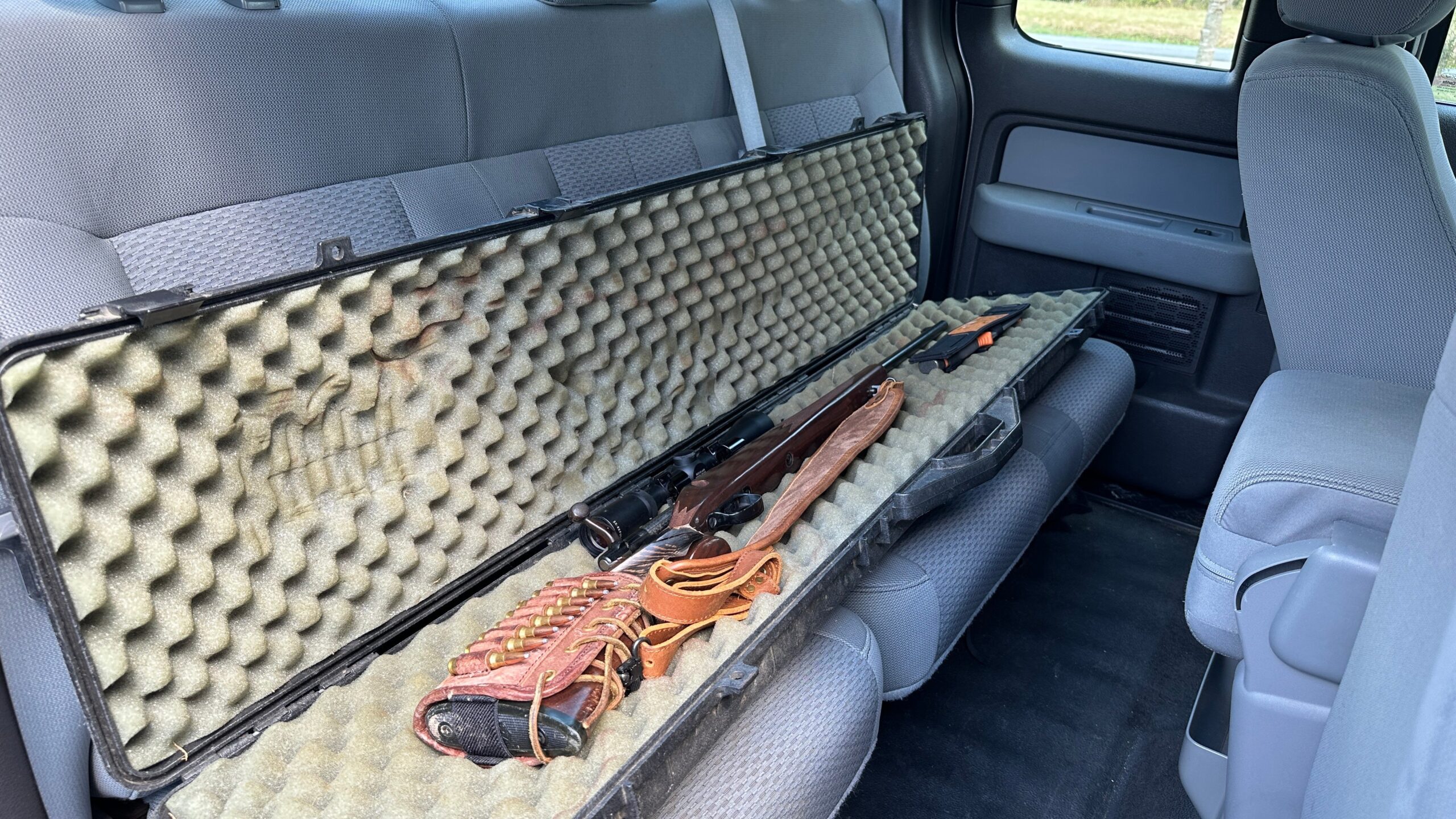
FOPA allows individuals to travel with firearms as long as they are unloaded and cased between locations where they can be legally possessed by the person, regardless of state laws along the route. Therefore, the firearm needs to be unloaded, stored in a locked container, and inaccessible from the passenger compartment as best as possible. Ammunition must also be stored separately in a locked container.
Travel must also be considered continuous or “in transit” during this time. Extended overnight stays in stricter states could cause issues of legality if a situation were to arise.
Now, that is an extremely basic understanding of transporting firearms via FOPA, but it sets the foundation for the rules, regulations, and laws that firearms owners’ need to follow. If you want to read the entirety of the FOPA, you can check it out here on Congress’ Official website, or catch this YouTube video explaining everything there is to know about it.
FOPA is your best friend when traveling between states, but it is not going to cover everything. Every state you go to is going to have different laws, but there are some general rules you should follow.
State Laws: Know Before You Go
Every state’s laws are going to be different, and yes I know that could possibly be fifty different sets of rules and regulations that you have to follow, depending on where you travel. Still, it is your responsibility as an ethical firearm owner to know those state laws before you travel to or through each state.
While we aren’t going to cover state by state (that would be a lengthy article itself!), we can hit on the basics that you should definitely know before you travel. You have very lenient gun law states like Texas and Arizona on one end of the spectrum and very strict gun law states like California and New York on the other end.
Here are key things to know for each state:
- Permit Requirements: This goes most for concealed carry permits if you are an everyday carrier.
- Restricted Firearms: Some states specifically ban or restrict certain firearms and accessories from being permitted in their state.
- Transport Rules: States may vary in their own transport rules for firearms, stipulating how they should be unloaded, locked, and stored in a specific manner.
- Local Ordinances: Smaller local areas such as cities and counties may have additional and more strict laws. Be sure that if you are going to one of these that you look deeply into their gun laws.
While these aren’t the only things that you should consider and research before traveling, these should get you started and possibly send you down a useful rabbit hole that could one day keep you in the know.
Let’s also keep in mind that in today’s political atmosphere, laws and regulations are constantly changing and adapting to our ever-changing society. Whether you believe it’s good or bad, it is your responsibility to keep up-to-date with these laws and regulations. Just because you read it once, doesn’t mean it will be like that forever. Stay current.
Refresh yourself before every trip or periodically throughout the year. For instance, if you take frequent trips or yearly trips to other states with your firearms, it would be good for you to pay close attention to those states and their firearm legislation. I know, I know, it can be tedious and boring, but you will be thankful in the long run if a law changes before your trip that you would have broken.
Do your homework and do it often to keep you up-to-date with all the state laws that you might interact with on your travels.
State Conceal Carry Reciprocity
Each state has its own conceal carry laws, rules, and regulations that must be followed. While some states recognize other states’ conceal carry permits, there are others that don’t. More and more states are enacting constitutional carry, but you still need to make sure you know everything you can about carrying in a given state before you take off.
A good place to check out which states reciprocate your permit is to go to websites like handgunlaws.us that give updated reciprocity maps that can help you plan your route or know if your destination state is a reciprocity state to your home state. In my opinion, the maps are the easiest way to see the most important laws; it is all the info you need for concealed carry in one place.
So if you are planning a trip across the country where you are driving, let maps like the one described above help you know the conceal carry laws for each state that you plan to drive through or stay in. This can really save a lot of headache if you were to get pulled over for speeding. The last thing you want to do is turn a speeding ticket into several more citations (or worse) for improper transportation of your firearm.
One mess up could create a lot of problems for you and your ability to conceal carry in the future. You don’t want to take a chance on that, so make sure you do your homework really, really well.
Traveling With Firearms Through Air
While most of us will be transporting our firearms on the ground via a vehicle, you will likely need to fly with a firearm eventually. To some of us, the thought of that might be enough to make us sick to our stomach. Although, if you follow a few simple rules, it really isn’t all that bad.
We wrote an entire article about flying with a firearm that you need to read before heading to the airport; read it here.
The Transportation Security Administration (TSA) actually makes the rules and regulations for flying with firearms and ammunition really simple. It sounds impossible on the surface, but the task of flying with firearms and ammunition is not as huge of a hassle as you may expect.
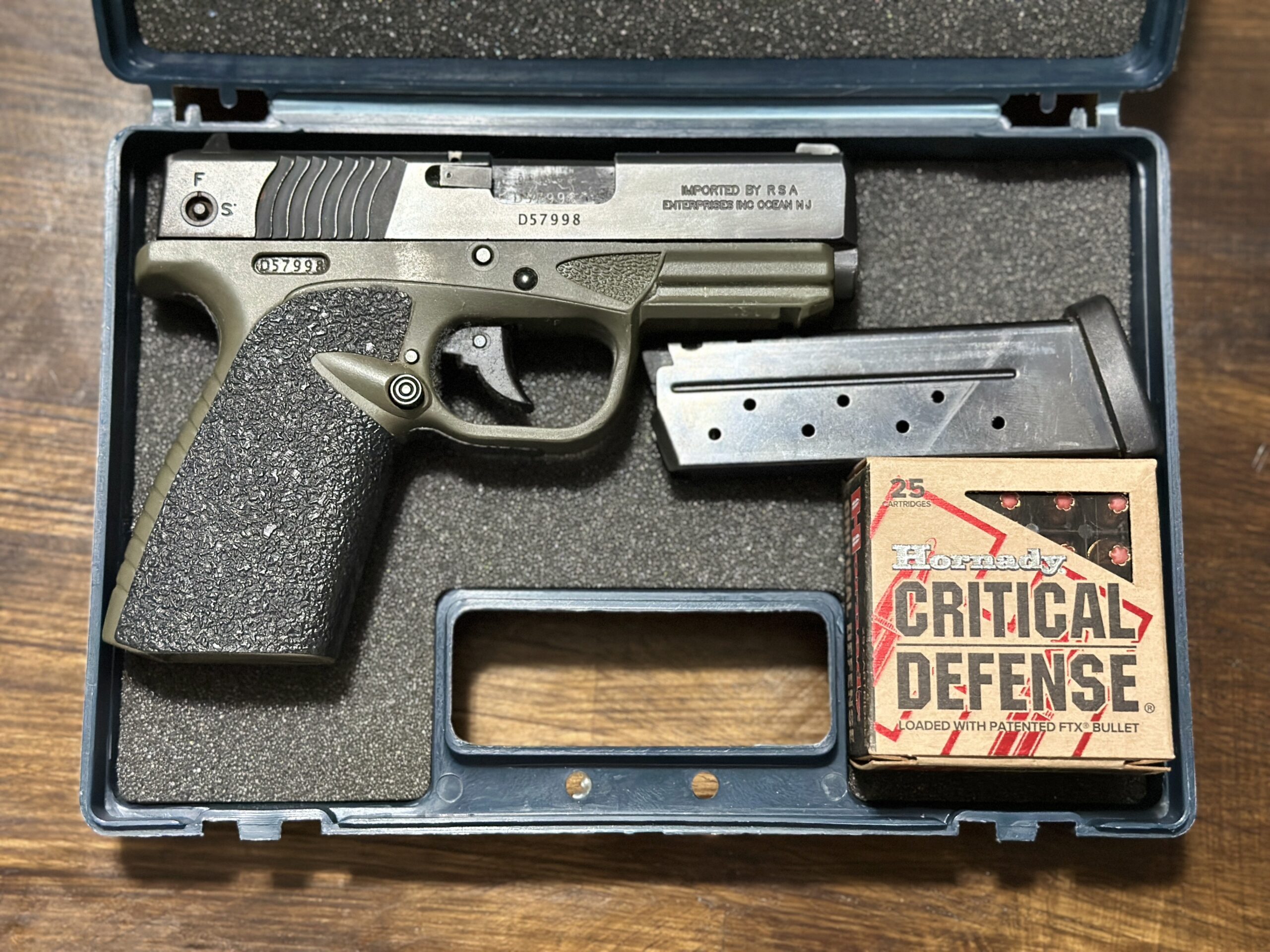
For a quick run down, TSA allows you to transport unloaded firearms in a locked hard-sided container as checked baggage only. It must be declared when checking your bag. All local and state laws must be complied with on the way to the airport and at the airport. Basically, have your firearms ready to be checked before you even leave for the airport.
Anything that is firearm related needs to be in checked baggage. Nothing should be in your carry-on luggage. That includes magazines, clips, bolts, etc. Ammunition is also prohibited in carry-on luggage and must be in checked baggage. All ammunition must be transported in hard-sided cases as well and can be in the same container as the unloaded firearm. However, they must be inside of a wood, plastic, or metal box that is designed to carry ammunition.
While this seems like a lot of rules, the actual rules on the website are extremely short and to the point. There is also a phone number to call to help make sure you are compliant with airport and airline rules and regulations before you get there.
We highly suggest you be as thorough as possible when planning to fly with your firearms to avoid what could turn into hefty fines and felony charges.
Best Practices For Crossing State Lines With Firearms
While we have already hit on some of the key factors you should know about crossing state lines with firearms, let’s put the whole picture together so that you have everything covered.
Plan your route carefully: Know exactly where you plan to go and what cities and towns you will be passing through. If possible, avoid states with strict firearm laws. Also make sure that you are at a minimum, FOPA compliant in your travels.
Research & Stay up-to-date: Check for specific firearm laws in every state and/or major city that you might pass through in your travels. Be up-to-date with ever changing laws and leave nothing up to chance because you “looked the last time you traveled that way”.
When in doubt: If you are ever in doubt about a law or how you should properly transport your firearms, always stick with the strictest firearm laws and regulations that you will encounter on your route. Remember, claiming ignorance when it comes to the law is not an excuse. It is your responsibility to know.
Secure Storage: Be sure to invest in quality, lockable gun cases to ensure that your firearms are properly stored for all state and federal compliance. That goes for your ammunition as well. And once they are locked in cases, stow them as far away from the passenger compartment of the vehicle as possible. This could be the trunk of a car, the bed of a truck, or the furthest back storage area of an SUV.
Have Documentation: Be sure to have any and all pertinent documentation should you get stopped and have to identify yourself. This might include your concealed carry documents, your general drivers license, and anything else that you might have to show proof of ownership of the firearms you are transporting.
If you get stopped: Be upfront with law enforcement should you get stopped along your travels. Keep your hands in visible and calmly inform the officer that you are legally transporting your personal firearms and that they are unloaded and locked. If you are traveling through reciprocity states for concealed carry, also disclose your carrying situation at the moment while keeping your hands in plain view and not making any subtle movements.
Sorry to make you sound like a criminal in this section, but better safe than sorry. If you follow these bullet points and cover all your bases, your travels should be hassle free and smooth riding. Just be sure to cover all your bases.
Safe Travels
Now that you are well versed in the responsibilities you have as a firearm owner that is crossing state lines with said firearms, be on your way following the letter of the law. As long as you are up-to-date with current firearms laws where you will be traveling and you follow the guidance mapped out above, you should have no issues. Safe travels!