Prefer audio over written content? Listen to the article here:
If you have ever swapped barrels on your AR-15, grabbed a pistol caliber carbine, or compared notes with a buddy at the shooting range, you have probably noticed that the same box of ammo can feel and perform differently depending on the firearm.
This is because barrel length can play a huge role in how ammo performs. It shapes everything from how fast the bullet flies to how flat it travels, how much energy it delivers to its intended target, and even how the gun handles in your hands.
Barrel length impacts bullet velocity by giving the powder more or less time to push the bullet. Longer barrels translate to flatter trajectories, more retained energy downrange, and improved long range performance, while shorter barrels trade velocity for better maneuverability and lighter weight.
Understanding these trade offs lets you match your firearm perfectly with your ammo choice for consistent, real world results. Whether you are a weekend plinker buying ammo in bulk, a hunter heading into the woods, or someone setting up a reliable home defense firearm, getting a handle on how different barrel lengths affect performance can help you squeeze the most out of every round.
It is not complicated once you break it down. Better results at the range, smarter ammo choices, and more confidence in your setup is all worth it.
So let’s jump in and check out exactly how barrel length affects bullet velocity and performance.
The Basics: What Barrel Length Really Means for Everyday Shooters
Barrel length isn’t rocket science. It is simply the measurement from the chamber to the muzzle of the firearm, usually listed in inches.
It is far more than cosmetic, however. It directly controls how much time and space the propellant gases have to work on the bullet.
Picture lighting a firecracker in a short tube versus a long tube. In the longer tube, the expanding gases keep pushing longer before everything exits.
That extra push creates more speed. Once the powder is mostly burned though, extra length starts working against you through friction and drag.
This concept matters largely when you are deciding on ammunition for your firearm. You want to find what performs best in the length of barrel that you are shooting.
It is finding the difference in why the same 55 grain 5.56 feels different in your buddy’s 20 inch rifle versus your own 16 inch rifle. Barrel length is almost always the main reason. It affects velocity, energy, trajectory, and even how the gun feels when shooting.
The Simple Science Behind Velocity Gains
When the trigger is pulled, the primer ignites the powder. That creates a massive volume of high pressure gas that forces the bullet down the barrel.
The longer the barrel, the longer those gasses stay trapped behind the bullet, accelerating it forward.
It is pretty straightforward physics: Force over time and distance. Shorter barrels let gases escape earlier as muzzle blast and flash, which wastes some of the energy created.
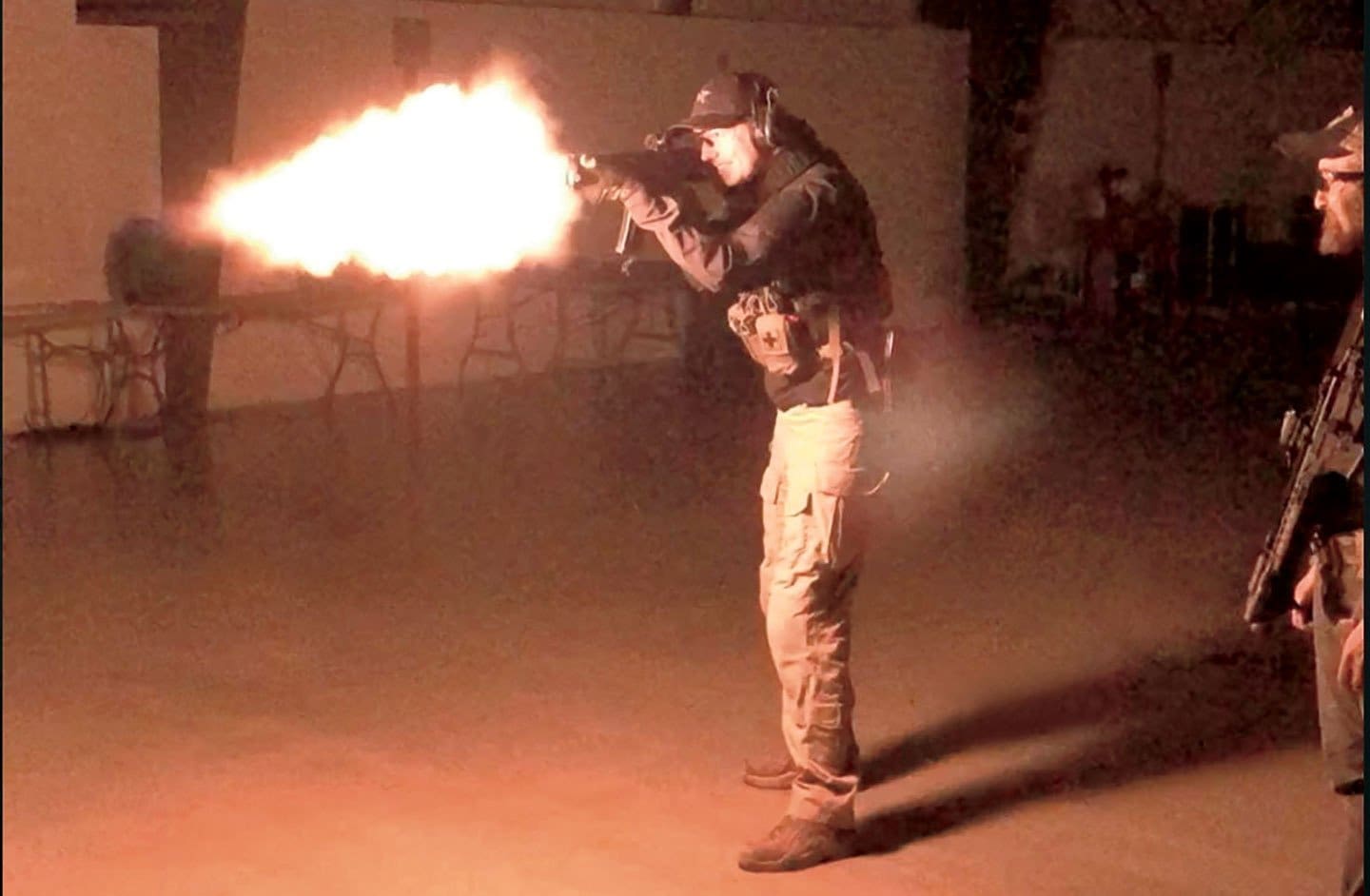
That is why compact guns often sound louder and have more visible flash compared to their longer counterparts.
Real gains in velocity aren’t infinite, though. Most rifle powders burn completely somewhere between 18 and 24 inches depending on the load. Beyond that point, you mainly add unneeded weight and create slight friction losses.
In reality, barrel length and the ammunition work together in unison to create the velocity. The wrong ammo with the wrong barrel can cause performance issues.
Real World Velocity Data Across Popular Calibers
Let’s dive into some of the numbers so that you can see exactly what happens with different length barrels. For the 5.56 NATO, velocity climbs steadily up to around 20 inches in barrel length.
A quality 20 inch barrel often pushes a 55 grain load near 3,100-3,300 fps. A common 16 inch barrel delivers roughly 2,900-3,100 fps. Drop to a shorter 10.5-11.5 inch barrel and you are looking at 2,500-2,700 fps.
That is a meaningful difference of roughly 20-50 fps per inch in the typical range, with bigger drops in the shortest barrels.
Take a look at the chart below for differences in muzzle velocity compared to barrel length for a 5.56 NATO.
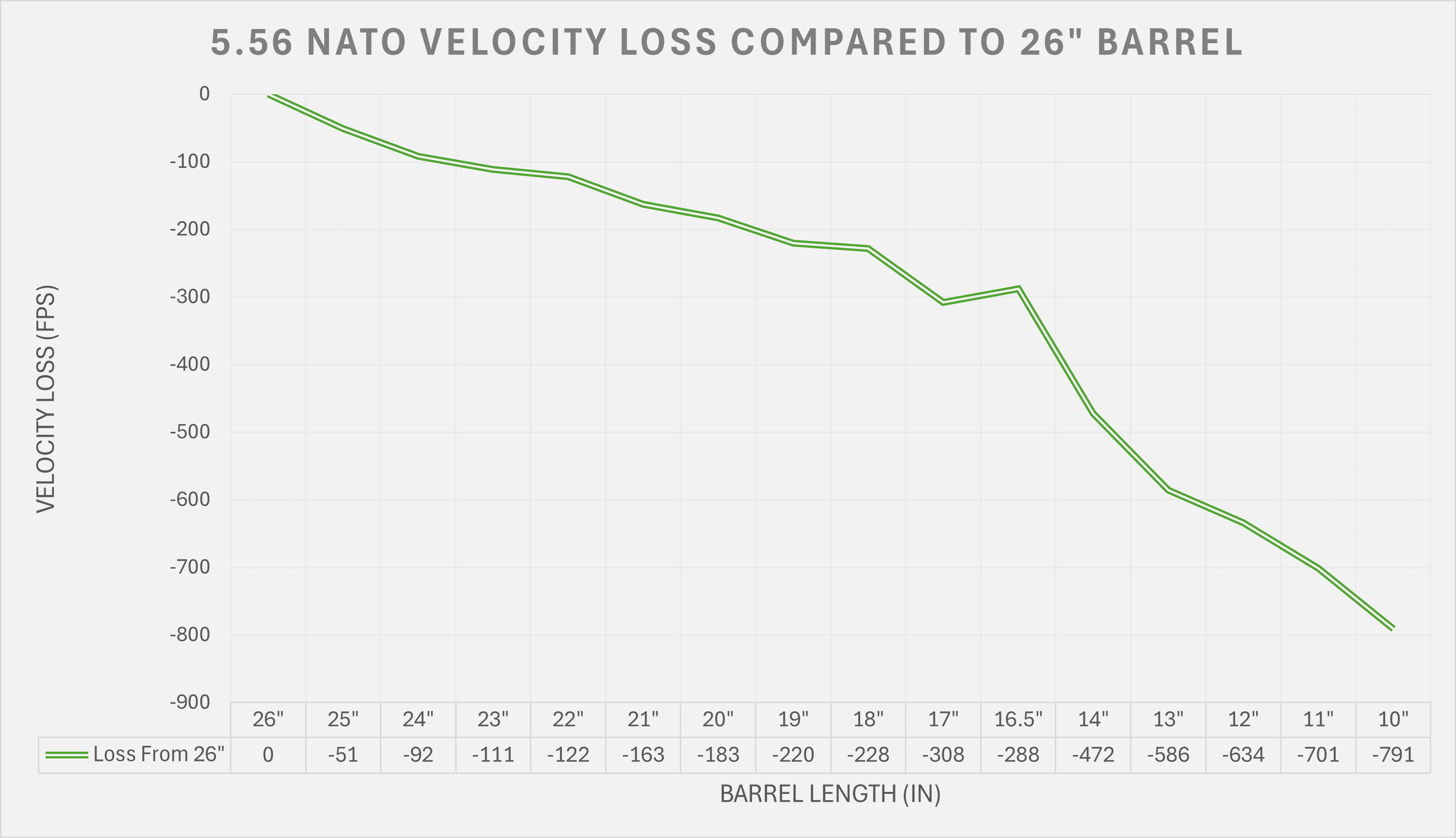
Ballistics data from Gun Builders Depot
A bigger round, like the .308 Winchester shows gentler losses, mostly due to the amount of powder in the round. Cutting from 28 inches down to 16.5 inches typically costs about 20-25fps per inch on average across common loads.
A solid 20 inch barrel with a .308 still achieves close to advertised velocities for 150-168 grain bullets, making it extremely versatile.
Even pistol calibers benefit from longer barrel lengths. Standard 4 inch, 9mm handguns run 1,100-1,250 fps with typical loads.
Move to an 8-12 inch carbine barrel and you gain 150-300+ fps, easily turning 9mm into a much flatter, more capable round.
All of this data comes from extensive chronograph testing done by Gun Builders Depot. Your exact results will depend on specific ammo, barrel twist, temperature, and altitude, but the overall trends tend to stay very consistent.
How Velocity Influences Trajectory and Downrange Energy
Higher muzzle velocity creates a flatter trajectory as it travels at a faster speed. A bullet leaving the muzzle at 2,900 fps drops far less over 300 yards than one at 2,500 fps.
That means easier aiming and more forgiving holdovers.
Energy is even more dramatic because it increases with the square of velocity. Small speed gains deliver noticeably harder hits. This matters more for hunting (better expansion) and defensive ammo (more reliable performance).
As we explore in our detailed article Internal External & Terminal Ballistics [What Truly Matters], velocity sits at the heart of what actually happens when the bullet arrives on target. Longer barrels simply give you more of this valuable resource.
Effective range grows with more velocity. Military and law enforcement testing showed longer 5.56 barrels maintaining lethal performance farther out, which is why classic M16s used 20 inch barrels.
Accuracy Considerations: Length, Stiffness, and Real Results
Many shooters assume that longer barrels are automatically more accurate. Unfortunately, it is not that simple.
A longer barrel can offer a longer sight radius with irons and a flatter trajectory for easier long range hits. However, shorter barrels are often stiffer, which can reduce harmonic vibrations and sometimes produce tighter groups, especially from a rest.
Real accuracy comes from the full system. This would include barrel quality, twist rate, ammo match, and the shooter’s skill.
Competitive shooters frequently settle on 16-18 inch barrels as the sweet spot. They deliver enough velocity without the extra weight and length that can slow down movement in 3 gun or practical rifle matches.
Recoil, Muzzle Blast, and Practical Handling Trade Offs
Longer barrels often feel softer in recoil because the bullet spends more time in the bore, which spreads out the impulse of the shot being fired. Gasses exit more forward, which reduces muzzle flip.
Shorter barrels shine in maneuverability. They are lighter, quicker to shoulder, and excel in tight spaces.
Think home defense in hallways, vehicles, or dense brush while hunting. The trade off is increased blast, flash, and sometimes sharper recoil from unburned powder.
Many owners add muzzle devices or suppressors to tame short barrel downsides. The choice often comes down to the primary use of the firearm or preference.
Optimal Barrel Lengths for Different Shooting Scenarios
Let’s get down to the nitty-gritty. These are the perfect barrel lengths for different uses.
Home Defense and Close Quarters
10.5-11.5 inch barrels dominate here. They clear doorways easily and go well with 5.56 or pistol caliber ammo. Velocity is lower, but most indoor encounters happen well under 50 yards where muzzle velocity matters much less.
General Purpose, Shooting Range, and Light Hunting
16 inch barrels are the modern standard for these purposes. They stay legal without extra paperwork in most places, balance velocity and handling perfectly, and work great with several different calibers of rifle ammunition.
Long Range Precision and Hunting
18-20+ inch barrels maximize velocity and energy for longer range shots. They shine past 300 yards and help heavier bullets retain speed and penetrate the target better.
Check out our guide Best .308 Grain for Your Use [Full Guide] for load recommendations.
Competition and Dynamic Shooting
13.7-16 inch barrels often win for competition shooting in events like 3 gun competitions. They have enough speed for mid-range targets, yet are light enough for fast transitions and working through obstacles.
Matching Ammo to Your Barrel
Lighter bullets (55-62 grain in 5.56) love longer barrels for maximum speed. Heavier bullets (77 grain match) perform well even in shorter barrels because they hold momentum better.
Read our article on How bullet Weight Actually Affects Performance for an in depth look at ammo performance.
For long range work, explore our article on How Ballistic Coefficients Effect Long Range Shooters. High ballistic coefficient bullets shine with the extra velocity from longer barrels.
For 9mm fans running a carbine with a longer barrel should our article on the Best 9mm Subsonic Ammo is a must. The longer barrels keep subsonic ammo quiet and effective.
Buying your ammo of choice in bulk lets you experiment affordably. Grab cases of different grains and test them in your exact barrel to find out what works best.
Additional Factors That Interact with Barrel Length
Your barrel is more than just a tube of steel. There’s a lot of physics going on and we can tweak quite a few things to change how it performs in the field.
Twist Rate
Faster twists stabilize heavier bullets but can over spin lighter bullets in very long barrels. Slower twists in short barrels can sometimes limit bullet choices. Some cartridges prefer particular twist rates too; so make sure to research the best twist rate for your specific cartridge
Gas System Length
Shorter barrels often use carbine or pistol gas systems. This affects reliability and felt recoil more than pure velocity.
Suppressors
Adding a suppressor can change back pressure and effectively “lengthen” the system. This can result in recovering a bit of lost velocity while also taming blast.
Temperature & Altitude
Cold weather or high elevation usually reduces velocity slightly. Longer barrels can help offset this, but it is important to pay attention to and remember for hunters.
Common Myths About Barrel Length
Since we can change so much to affect how the barrel behaves, there’s a lot of preconceived myths out there that you’ve probably heard of before.
Myth 1: Longer is always better (head out of the gutter…). Past the powder burn point, you just add weight and get minimal gains in return.
Myth 2: Short barrels are wildly inaccurate. Quality short barrels can be extremely precise. Velocity loss is the bigger practical issue with shorter barrels. Although if you go super short (like sub-eight inches on a rifle cartridge), you’re going to start spreading out your shots.
Myth 3: You lose 50 fps per inch. Real world averages are closer to 20-30 fps per inch for rifle calibers in normal lengths. Extremely short barrels lose more.
Myth 4: Barrel length changes everything about terminal performance. It affects velocity, but bullet construction and weight still drive expansion and penetration the most.
Testing your own setup is the best way to separate myth from reality.
How to Test Barrel Length Effects Yourself
If you really want to get technical, you can buy or borrow a chronograph, which is surprisingly affordable if you are going to use it frequently.
Fire the same bulk ammo lot through different lengths if possible or fire groups of different ammo through the same size barrel. Be sure to document each setup or ammo used.
Track velocity, group sizes at different yardages, and felt recoil.
The same thing can be done without a chronograph. It takes a little more feel and will be less precise without knowing the velocity, but the group sizes and felt recoil should be able to give you enough feedback to find your overall preference for your firearm.
Put It All Together for Better Shooting
Barrel length is one of the most important choices you can make when building or buying a firearm. It directly influences velocity, which cascades into trajectory, energy, effective range, and handling characteristics.
Matching your barrel length with the right ammo can make all the difference in the world when it comes to your firearm performance.
Longer barrels will reward you with more speed and reach, which is ideal for hunting or precision work. Shorter barrels reward you with agility and convenience, perfect for defense or fast paced competition.
The “best” length is the one that matches your actual needs and pairs well with your ammo of choice.
So next time you are planning a firearm build or looking to restock your ammo, think about your barrel first.
Grab a few different grain weights in bulk, head to the range, and measure the difference yourself. You will quickly see what works and what doesn’t for your barrel length of choice.
You won’t be sorry that you gave some other weights of ammunition a try, even if it is just for peace of mind. Better to know first hand!
Barrel Length Bullet Velocity FAQs
How Does Barrel Length Affect Bullet Velocity?
Barrel length determines how long expanding gases push the bullet before it exits the muzzle. Longer barrels generally produce higher velocities, while shorter barrels lose speed as gases escape earlier, reducing acceleration and overall energy delivered downrange.
Is There an Ideal Barrel Length for Maximum Velocity?
Most rifle cartridges reach near-maximum velocity between roughly 18 and 24 inches, where powder burn is largely complete. Beyond that range, added length offers minimal gains and may even introduce slight friction losses, making extra barrel length less beneficial.
Do Shorter Barrels Reduce Accuracy?
Shorter barrels do not automatically reduce accuracy. In many cases, their increased stiffness can limit vibration and produce tight groups. Accuracy depends more on barrel quality, ammunition, and shooter skill than length alone, though velocity loss can affect long-range performance.
How Much Velocity Is Lost Per Inch of Barrel Length?
A common real-world estimate for rifle calibers is about 20 to 30 feet per second lost per inch when shortening barrels within typical ranges. Extremely short barrels can experience larger drops due to incomplete powder burn and increased energy loss at the muzzle.
Why Do Longer Barrels Improve Downrange Performance?
Higher velocity from longer barrels leads to flatter trajectories and greater retained energy. This improves effective range, reduces bullet drop, and enhances terminal performance, making longer barrels especially useful for hunting, precision shooting, and engagements at extended distances.