Prefer audio over written content? Listen to the article here:
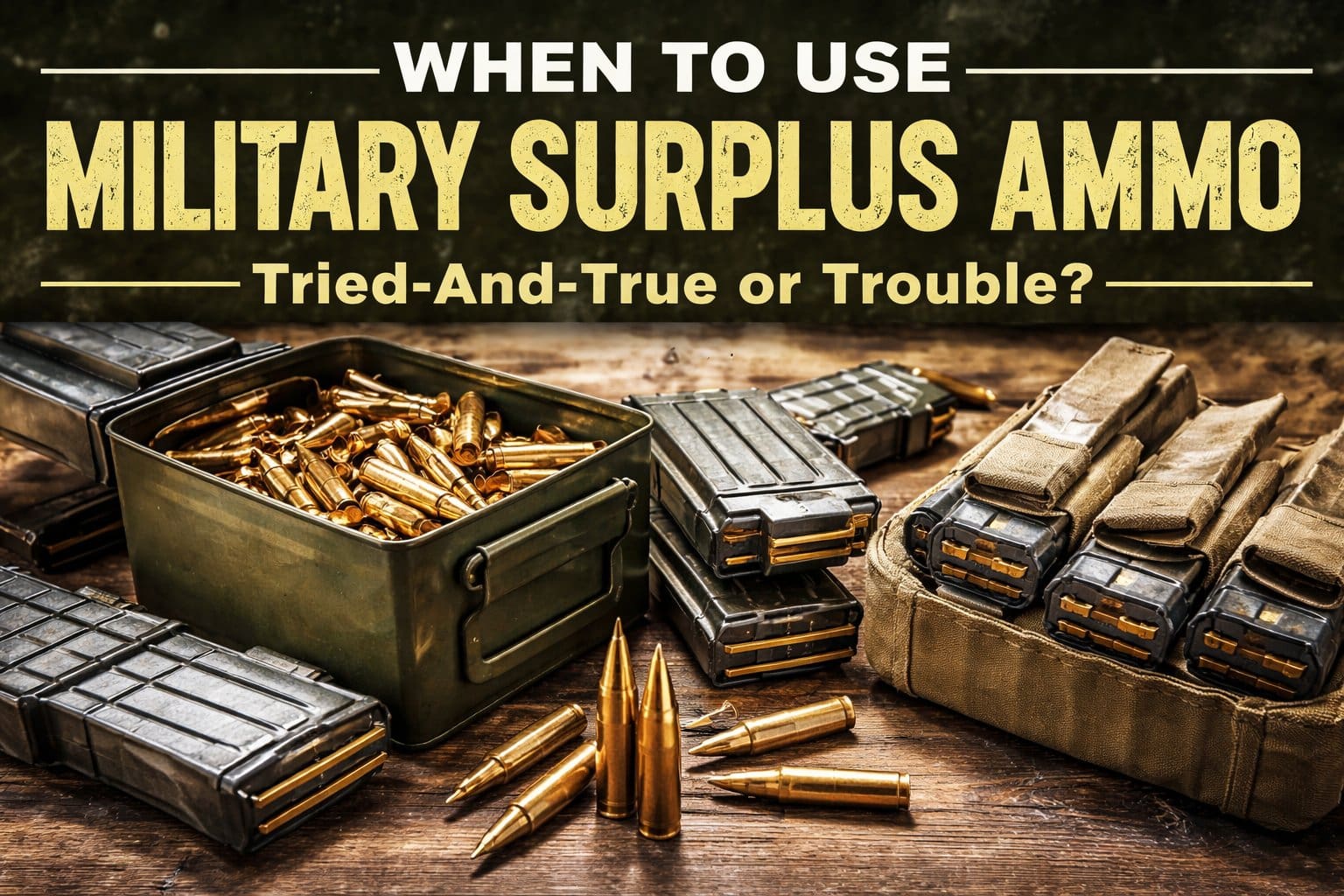
If you have ever scrolled through ammo listings and spotted those classic green spam cans, metal ammo cans, or bulk crates of military surplus rounds, you are probably already a bit familiar with their appeal.
They are often priced way lower than new production ammo, and the nostalgia factor of surplus ammo is real.
The question remains, however…is surplus ammo a smart buy or does it come with more headache than what it is worth?
Let’s answer that!
Military surplus ammo offers a cost-effective option for range practice and casual shooting, delivering solid reliability in many cases. However, corrosive primers, FMJ bullets, and potential inconsistencies make it unsuitable for high-stakes uses like hunting or self-defense situations.
Let’s take a deeper dive into military surplus ammo and find out where it shines and when it’s better left on the shelf.
What Exactly Is Military Surplus Ammo?
If you aren’t familiar with military surplus ammo, it is exactly how it sounds. They are rounds that were originally produced for military use that are now sold to civilians after being phased out or declared excess.
These surplus rounds often come out of countries like the United States, Russia, Yugoslavia, Romania, and Greece.
You will see them packed in sealed “spam cans”, ammo cans, or crates that sometimes hold hundreds or thousands of rounds inside of them.
Popular calibers can include 7.62x39mm, 5.56x45mm NATO, 7.62×51 NATO, and .30-06 Springfield.
Most are loaded to military specs, meaning they prioritize reliability and long storage life over precision or expansion. The military usually wants more bang for their buck without having to use them as frequently.
So when they are phased out or labeled excess, they hit the open civilian market at usually heavily discounted prices.
The Big Appeal: Why Shooters Love Surplus Ammo
Let’s be brutally honest, low prices are the main draw of military surplus ammo. Surplus ammo can generally cost half or even less than comparable newly manufactured rounds. That is a crazy discount!
That makes surplus ammo perfect for high-volume shooting without breaking the bank. When you can find it, surplus ammo is often available in massive quantities due to how it is packaged for military use.
This makes it ideal for stocking up for the long-term.
Many surplus rounds perform surprisingly well for plinking, target practice, or training drills. They are also highly sought after for those firearm enthusiasts who are drawn to military grade and military surplus firearms.
Nothing like shooting surplus ammo through a surplus firearm!
If you are shooting an AK, SKS, or AR-15 on a regular basis, surplus can keep costs down while still getting you out to the range on a more frequent basis.
For more tips on making smart bulk purchases, check out our guide on Bulk Buying Ammo for Competitive Shooters: When It Makes Sense.
The Downsides: What Can Go Wrong?
For all the great things that military surplus ammo has going for it, it isn’t perfect. Age, storage conditions, and military priorities can create a number of issues.
Some batches have corrosive primers that leave salt residues in your barrel. Steel-cased rounds, common in the 7.62x39mm, can be tough on extractors and harder to reload.
Quality varies. Older aged lots of military surplus ammo might have duds or inconsistent velocities.
Steel-core projectiles like in some of the Soviet and Russian rounds are banned at many shooting ranges due to backstop damage or fire risk on steel targets.
A word of advice, always make sure you know what you are purchasing and always inspect the cans before buying.
Once you make your purchase, it is advised to check the ammo as well to see their condition before use.
Corrosive Primers: the Cleaning Catch
Many surplus rounds, especially older Russian, Yugoslavian, or pre-1957 U.S. ammo, use corrosive primers containing potassium chlorate or other similar salts.
After firing, these tend to leave residues that attract moisture and can cause rust if not cleaned quickly. Non-corrosive primers are standard in modern ammo and most newer surplus ammo that is not as detrimental to the firearm itself.
To identify ammo with corrosive primers, just assume that anything with Berdan-primed military surplus is going to be corrosive unless labeled differently. Boxer-primed surplus ammo is usually safe.
If you do end up shooting corrosive ammo, clean your firearm immediately after use.
Flush it with hot, soapy water, dry thoroughly, then oil the bore and action to help get rid of all the corrosive residue that could cause serious damage.
It is a lot of extra work, but it will prevent serious damage from happening.
If you don’t tend to clean guns right away or aren’t willing to put in the extra cleaning work, steer clear of surplus ammo with corrosive primers.
Bullet Design: FMJ Vs. What You Need
Most military surplus ammo is loaded with full metal jacket (FMJ) bullets.
FMJ rounds are designed for reliable feeding and penetration through clothing and/or light barriers. This is great for combat, which it is designed for, but not ideal for hunting game or self-defense.
FMJs tend to over-penetrate without expanding, leading to smaller wound channels and less stopping power. That sounds weird considering their use, but the rules of warfare between countries is different and a whole other topic of discussion.
For hunting, most states ban FMJ for big game due to ethical concerns over a quick kill. In self-defense, you want controlled expansion, reliable terminal ballistics, and stopping power.
Dive deeper into why this matters in our article Internal External & Terminal Ballistics [What Truly Matters].
Best Uses: Range Days & Fun Shooting
Military surplus ammo shines at the range and is perfect for plinking, zeroing rifles, or running drills without worrying about every penny with every trigger pull.
Many shooters use it to train with their military surplus rifles or to keep costs low during high-volume shooting sessions.
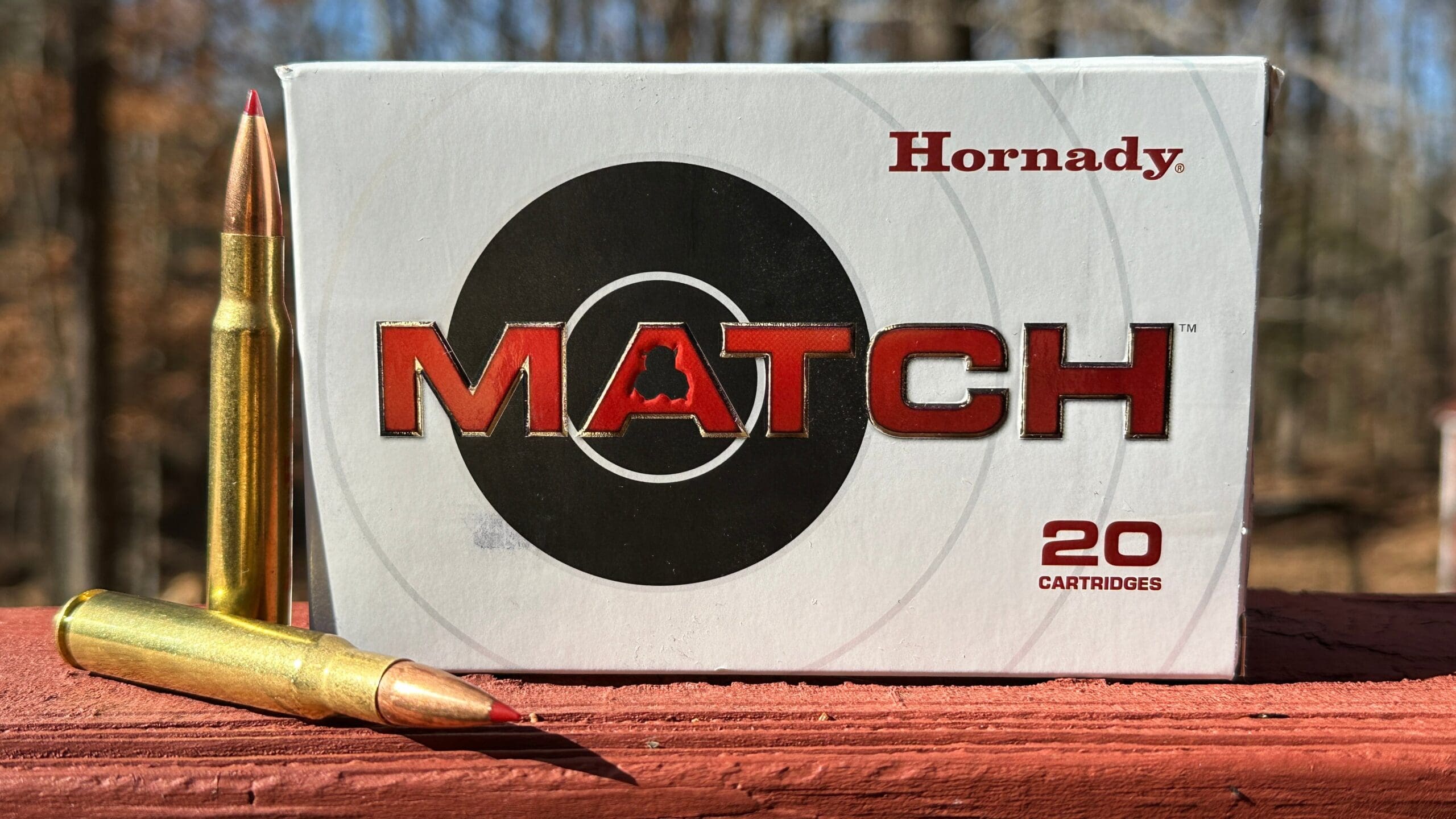
If you are practicing for competition or just enjoying a day at the range, military surplus ammo is often a solid choice. Pair it with our tips in Match Ammo vs. Practice Ammo: What’s Worth the Extra Cost? to decide when to splurge on premium rounds versus going cheaper.
When to Skip It: Hunting & Self-Defense
Here is the bottom line with surplus ammo: it isn’t ideal for situations where failure is not an option.
For hunting, FMJ bullets don’t expand reliably, which can lead to poor terminal performance, longer tracking of wounded game animals, and suffering of said wounded game animals. Many regulations prohibit FMJ for ethical harvests anyways.
In self-defense, you need consistent ignition, reliable expansion, and proven performance under stress. Older surplus can have age-related issues, and cleaning corrosive residue isn’t practical in a defensive scenario.
Stick to new production ammo from trusted brands for hunting and self-defense.
Safe Handling & Storage Tips
Always inspect surplus ammo for damage, corrosion, or other issues before use.
Be sure to store it in a cool, dry place like any other ammo. Those sealed cans help, but be sure to check it periodically.
Just like any other ammo, be sure to rotate your stockpile to keep things as fresh as possible. In this case, probably smart to use surplus ammo before you use your newer manufactured ammo.
For more information on these topics check out Why You Should Be Rotating All of Your Ammo and Buying & Storing Bulk Ammo Effectively [A Step-By-Step Guide].
If you are into reloading and using surplus ammo to gain more brass (which is a great idea), make sure you follow our guide here: Brass Care for Habitual Reloaders.
Wrapping It Up: Choose Smart
Military surplus ammo can be a fantastic value for fun range time and high-volume practice sessions. It is tried-and-true for many shooters who understand all its quirks.
But for hunters or self-defense, the risks that military surplus brings in the form of corrosive primers, FMJ limitations, and potential inconsistencies, makes it more trouble than it is worth outside of the shooting range.
If you do venture down the military surplus ammo rabbit hole, be sure that you know your cases, inspect your ammo, and keep your firearm clean.
Save some valuable money and enjoy the nostalgia of shooting military surplus ammo at a shooting range.
At Velocity Ammo Sales, we have got both surplus deals and reliable new production options to fit your needs.
Military Surplus Ammo FAQs
What Is Military Surplus Ammo?
Military surplus ammo refers to cartridges originally manufactured for military use that were later sold to civilians after being declared excess or outdated for service. They are often packaged in sealed cans or crates and commonly include calibers like 7.62×39, 5.56, or .30-06.
Is Military Surplus Ammo Good for Range Practice?
Military surplus ammo is often a solid option for range practice because it is typically much cheaper than new production rounds. Many shooters use it for plinking or training drills where high volume shooting matters more than match-level precision.
Does Military Surplus Ammo Use Corrosive Primers?
Many older military surplus cartridges use corrosive primers that leave salt-based residue inside the firearm after firing. If not cleaned quickly this residue can attract moisture and cause rust. Prompt cleaning with water and proper lubrication helps prevent long-term damage.
Can You Use Military Surplus Ammo for Hunting or Self-Defense?
Military surplus ammo is generally not recommended for hunting or self-defense. Most surplus loads use full metal jacket bullets designed for penetration rather than controlled expansion, which reduces stopping effectiveness and may also violate hunting regulations in some areas.
What Should You Check Before Buying Military Surplus Ammo?
Before buying military surplus ammo, check the packaging and cartridges for corrosion, dents, or damage that could affect reliability. It is also wise to confirm whether the ammo uses corrosive primers or steel-core bullets, which some shooting ranges prohibit.