Prefer audio over written content? Listen to the article here:
Choosing the right ammunition for concealed carry and personal protection is a decision that gets more complicated the more you learn.
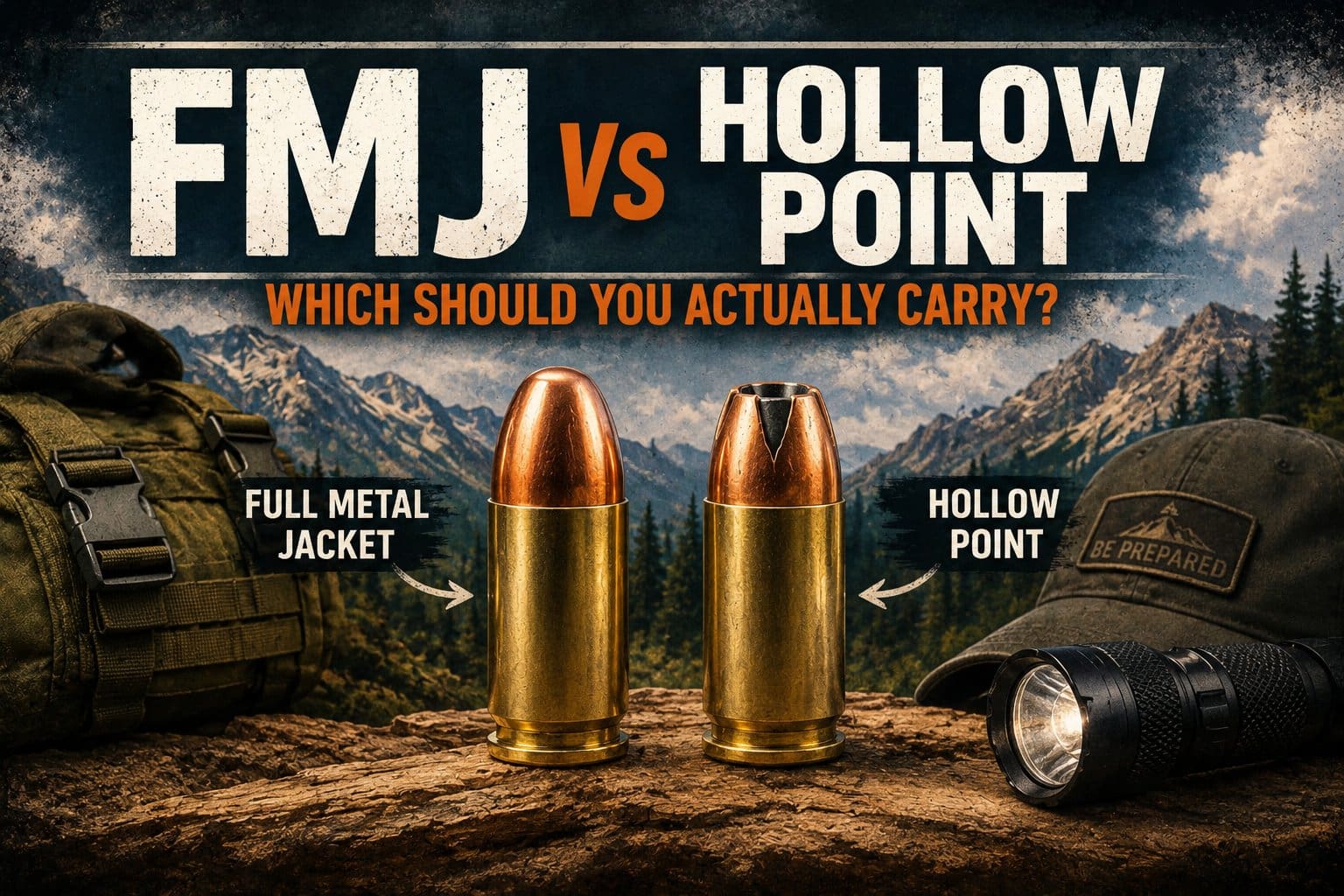
The first decision you have to make is whether you want to carry full metal jacket (FMJ) or hollow point (HP) ammunition.
At the end of the day, either ammunition is going to hurt and likely end the attacker’s life, but that doesn’t mean you want just any cartridge. Obviously, we all want the most effective cartridge we can get.
Understanding the differences between them helps you make the most informed decision you can on which ammunition to buy to protect yourself and the people you love.
The Breakdown of FMJ Versus Hollow Point Design
Full metal jacket ammunition is what it sounds like, a soft lead bullet encased in a metal jacket, which is usually made of copper. These bullets are meant to be cheap and simple. They are often good at penetrating and are usually the default go-to bullet design for our military.
A hollow point bullet is one that has a hollow core in the tip of the bullet instead of a solid nose like the FMJ.
This hollow core allows for the bullet to expand when it impacts a target, creating a greater dispersal of energy and more significant damage.
Historically, FMJ ammunition has been the most reliable, as it’s been designed to feed smoothly and fly further distances.
Hollow point ammunition started with soldiers altering their own bullets by cutting an “X” shape into their FMJ ammunition because of it increasing the expansion effect in a target.
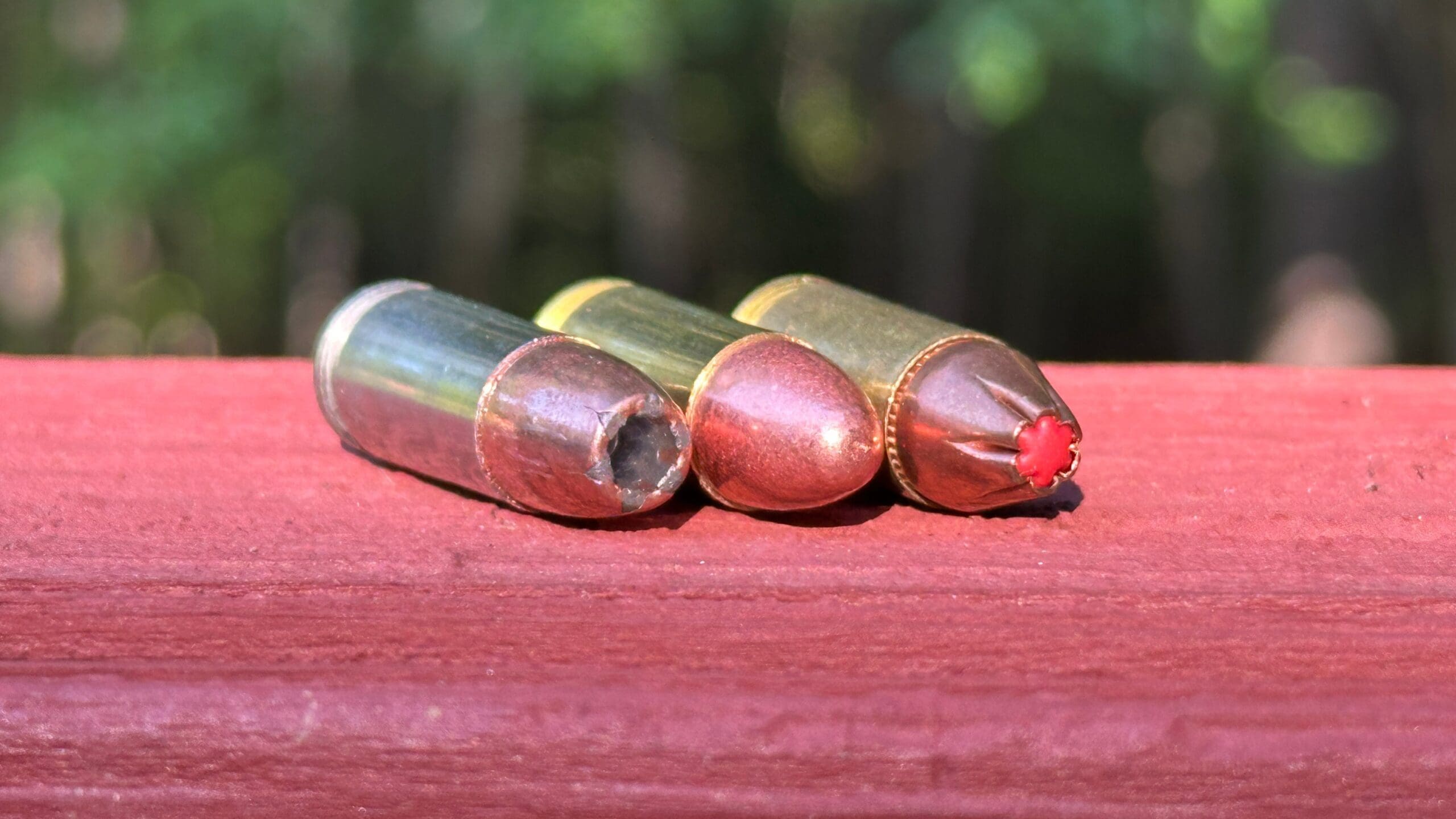
Modern hollow points are a much more reliable ammunition than the homemade kind from decades ago, so the difference between feeding and misfires are more negligible than they used to be.
That doesn’t mean you can skimp on quality though.
FMJ Performance & Self-Defense Use
FMJ ammunition is the most common choice for target practice, because it is usually the cheapest. When applied in a self-defense context, there are a few features to keep in mind if FMJ is what’s in your concealed carry weapon.
These bullets are designed to maximize penetration in a target, and within a certain boundary, can often over-penetrate and go straight through that target.
The main issue with over-penetration is the risk of a bullet hitting another human after exiting the assailant in question. I find that with common 9mm and 45 ACP FMJ rounds, over-penetration is a real risk.
If you’re really worried about over-penetration, we’ve got an entire article about how to avoid it here: How to Avoid Over-Penetration in Home Defense Scenarios
On the opposite side of this metaphorical coin, extra penetration power can have benefits, especially in a situation if you’re trying to neutralize a threat hiding behind a door, a wall, even in a vehicle.
In colder weather, extra penetration can also be helpful because it takes extra force to get through thick clothing and outerwear.
The standard Blazer 124 grain FMJ This is a great round that many of us have used for decades. If you’re looking for a cartridge to carry or maybe for the range, this one will do the job perfectly.
Hollow Point Performance in Self-Defense
Hollow-point ammunition was designed to neutralize a threat quickly, that’s no question.
It has unparalleled terminal ballistics as far as the objective damage it inflicts on a target compared to FMJ, and you generally want that extra stopping power in a life or death situation in close quarters.
When a hollow point bullet mushrooms, it maximizes energy transfer to a target and behaves very differently after it hits a target than an FMJ would.
This mushroom behavior minimizes the risk of over-penetration, thus minimizing the threat of injuring someone else other than the target you’re engaging.
If you really wanna get into the science of how a hollow point works, you’ve got to check out this article: Do Hollow Points Actually Make a Difference in Self-Defense?
Penetration Vs Expansion Tradeoffs
There is always a balance between penetration and expansion. A bullet needs to penetrate deeply enough to reach vital areas, but not so much that it creates unnecessary risk beyond the target.
On the other hand, you need to expand enough to dump its energy into the target and not just keep carrying through and put all that energy into the next concrete wall.
Well-designed hollow point ammunition is built to balance these bullet behaviors. It expands quickly while still penetrating to an effective depth.
Not all hollow points perform the same way, though. Lower-quality rounds may expand too quickly or fail to expand at all, especially after passing through clothing or other barriers. This is why choosing reputable defensive ammunition matters.
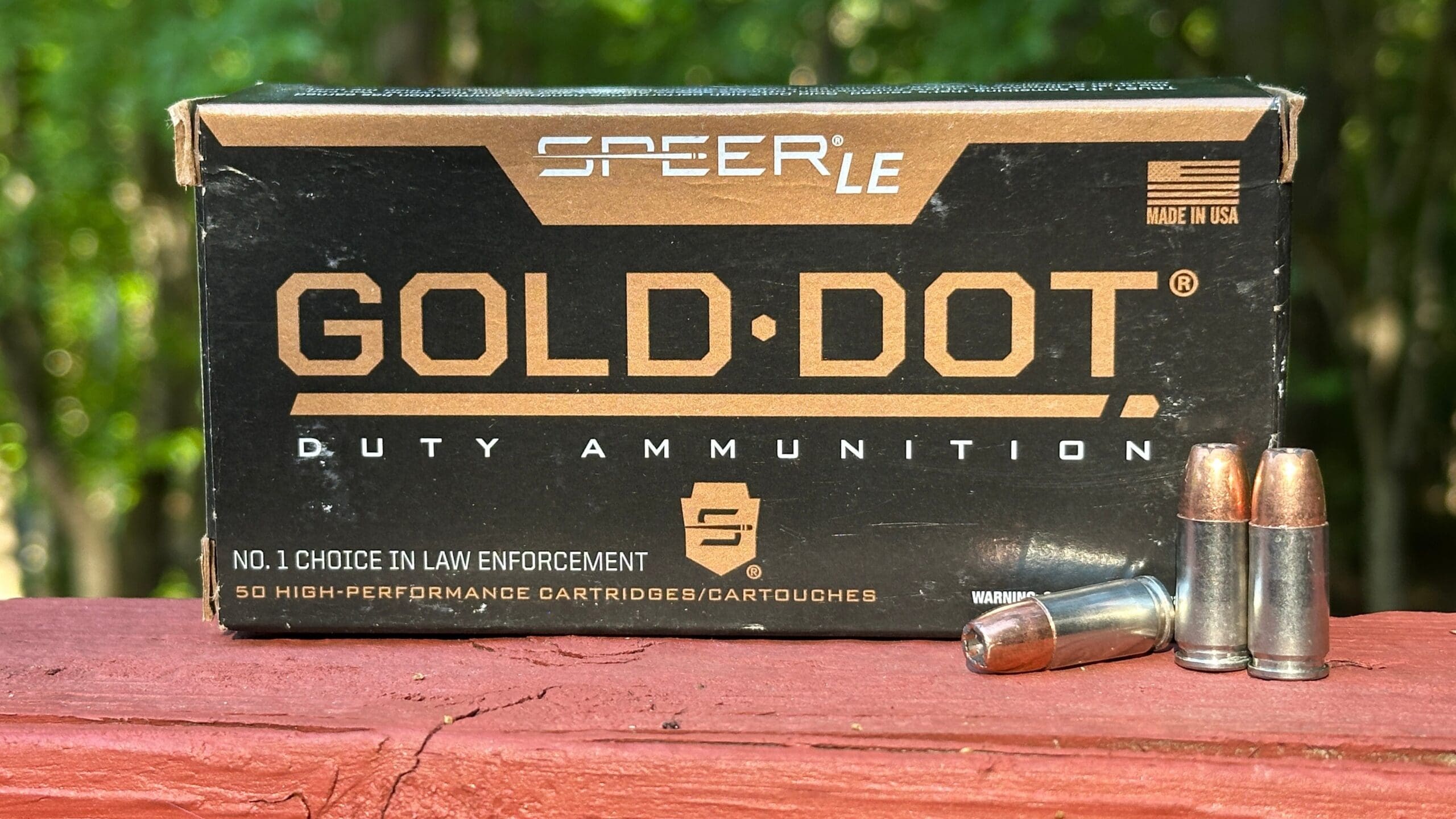
One of my favorites is the Spear Gold Dot JHP. They have been performing for years for law enforcement and make a great everyday carry around.
Self-Defense Ballistics
Everyday carry and self-defense take into consideration certain ballistics that are different from any other type of shooting.
You want your penetration depth to reach vital organs in a self-defense scenario.
In order to do this but not shoot a bystander that might be too close to your target, you’ll want your ammo to reach 12-18 inches of penetration depth. This goes for both FMJ and HP ammunition.
You also want to aim for a certain level of expansion when the bullet hits your target. For self-defense, 1.5 times the original diameter or more usually does the trick.
To put this in better context, a solid self-defense 9mm round will have about a half inch or more expansion when it hits a target.
As always, reliable feeding and firing is crucial.
Generally, I find that nickel plated brass casings are a solid choice, but sometimes this can be a trial and error time to find out what a particular gun likes the best.
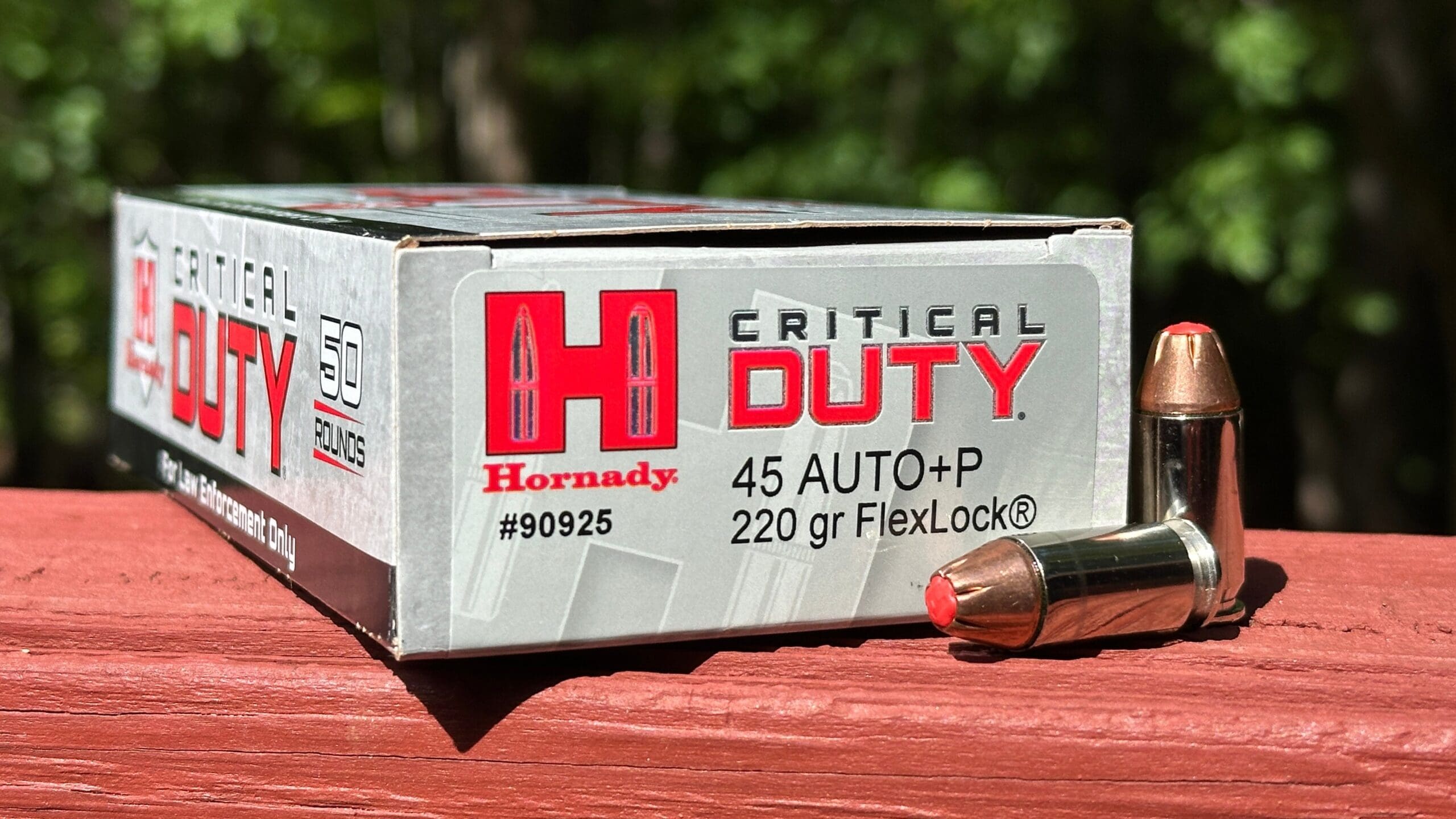
If you’re running a 45 ACP, Hornady has a great cartridge in the Hornady Critical Duty LE 220 Grain +P that is trusted by law enforcement and will do more than you need in a self-defense situation.
Self-Defense Caliber Choices
The most common self-defense calibers are 9mm, .38 special, and 45 ACP. I prefer 9mm for a daily carry weapon, primarily due to it being a lighter firearm that I can conceal more easily. You could, however, switch to carrying a 45 ACP in the colder winter months when I wear extra layers and imprinting isn’t as much of a concern.
9mm ammunition is generally an entry-level caliber for self-defense. It’s reliable, you can find it almost everywhere, and it’s relatively inexpensive compared to other calibers. I also prefer to practice with FMJ and reserve my HP ammunition for when I conceal carry, so I tend to buy FMJ 9mm in bulk.
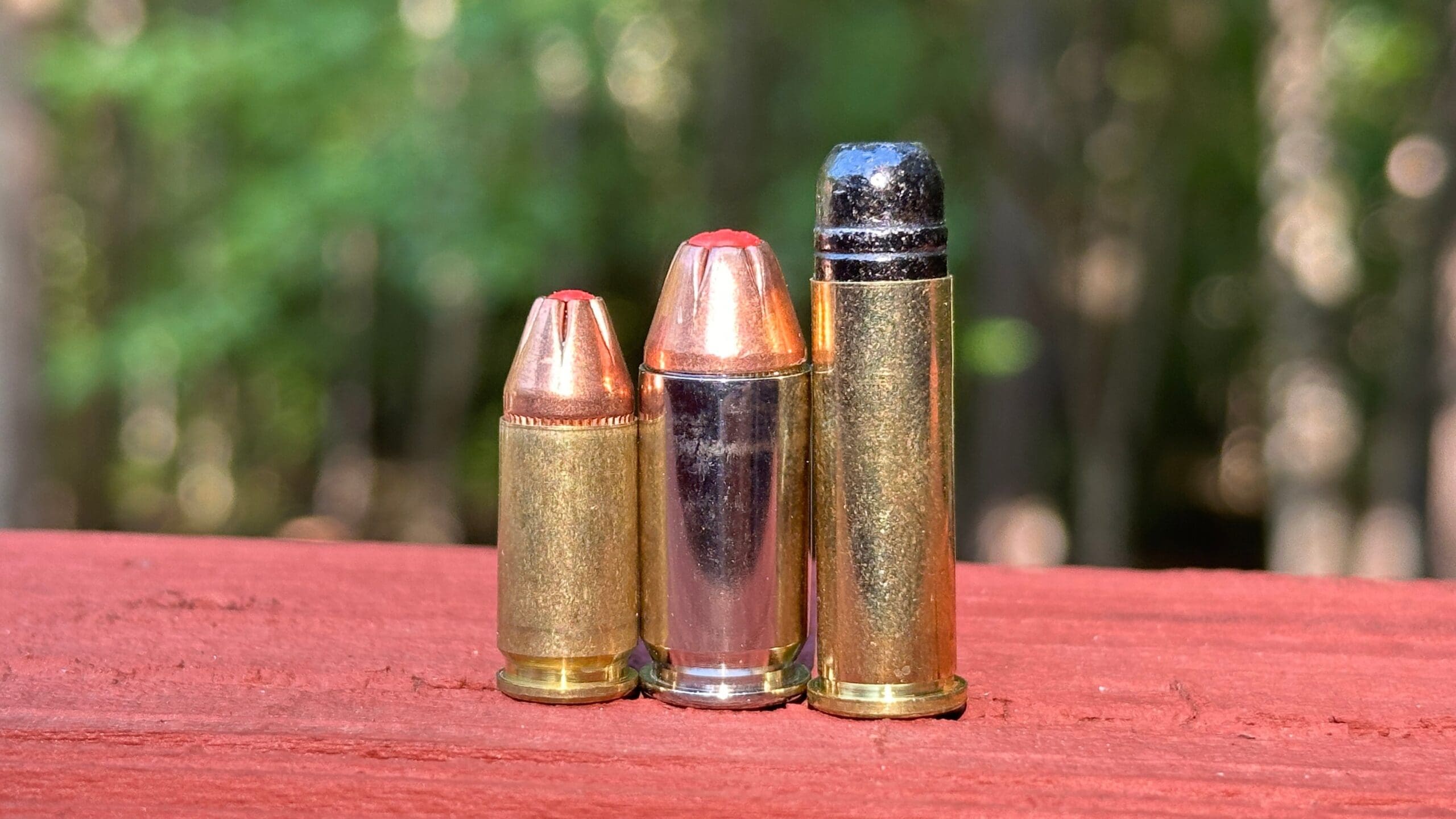
If you run 9mm too, you might want to check out our other article here: What is the Best 9mm Self Defense Cartridge for EDC?
.38 special will run you a higher price tag and can sometimes be harder to find than 9mm or 45 ACP, but it can get the job done. If you have a preference for carrying revolvers, this will be your favorite.
Something to keep in mind, however, is that revolvers generally have a lower muzzle velocity by design than a semi-automatic caliber. I find that a .38 +P hollow point cartridge helps add that extra “umph” that might otherwise be missing.
45 ACP is your classic, crime-stopping round. Designed for law enforcement and to engage targets behind things like car doors, it’s designed to hit something hard no matter what is in the way.
45 ACP is also prone to over-penetration with FMJs because of its size, even if it has less velocity than a 9mm.
The weight of a 45 ACP bullet, especially one that’s over-pressurized, has a higher risk of going through a target and damaging something on the other side.
An honorable mention for a self-defense handgun cartridge is the 10mm. This may be considered one of the more expensive rounds on the list, and harder to find than most.
The 10mm has more kick than a 9mm but is a little more manageable in size than the 45 ACP.
Standard, +P, and +P+ Loads
You’ll find that a lot of handgun ammunition has varying designations of pressure. There’s your standard pressurized cartridge, a +P cartridge, and a +P+ cartridge.
+P and +P+ ammunition is intentionally overpowered to increase the velocity of the round. The extra powder in +P still meets SAAMI pressure standards, and is meticulously measured for safety. Although +P+ goes beyond those standards, so you should know your specs well before you use them.
+P ammunition was originally designed to improve the performance of self-defense cartridges. The additional velocity adds to the bullet’s overall terminal ballistics without switching to a whole new caliber or firearm.
You should always check your firearm’s owners manual to see if your gun can handle the extra pressure of these cartridges before running a magazine or two through it, but depending on your preferences, these could help you personalize your carry setup even more.
If you’re thinking about running one of these loads in your EDC, you have to read this article first: Should You Everyday Carry +P or +P+ Ammo? [A Break Down]
It’s also important to remember that an over-pressurized load also means you’ll have more recoil. If you’re someone that prefers to minimize recoil without compromising power, it may be better to stick with a standard pressurized load.
Legal & Practical Implications
In most places, hollow point ammunition is legal and commonly recommended for self-defense. In fact, many law enforcement agencies issue hollow points specifically because they reduce the risk of unintended harm.
There is sometimes a misconception that hollow points are excessively dangerous. In reality, their design is intended to make defensive use safer, not more destructive.
As always, it’s important to be aware of local laws and regulations, but from a practical standpoint, hollow points are generally the standard for personal protection. Always check with your local laws before buying ammunition online.
If you want a little more guidance on the type of ammunition you are and are not allowed to have, you should read this article: Bullet Design Laws by State – What You Can and Cant Have
High Quality Ammunition Matters
The quality of your ammunition, regardless of FMJ or HP, will matter the most in high stress scenarios. Low quality ammunition typically leads to misfires and issues feeding, which wastes vital seconds when milliseconds make the difference.
High quality ammunition doesn’t necessarily mean it’s the most expensive on the market, either. Personally, I’m a fan of Hornady Critical Defense as a reliable hollow point round.
I typically carry their 9mm, but I’ve fired their 45 ACP rounds as well. Both load and fire smoothly.
Whatever you pick up off of the shelf, it’s extremely important that you shoot it at the range before trusting it with your life. As a rule of thumb, you shouldn’t carry a particular cartridge that you have not fired at least 100 times without a malfunction through your firearm.
Dead & Deader
I always have a preference for carrying hollow point ammunition for everyday carry. I feel better knowing that it’s designed to stop in a target rather than penetrate through one.
However, that’s not to say that I’ve never carried FMJ ammo. If FMJ is all you have or all you can find, it is just as deadly.
Some people may say that they go back and forth depending on the weather or other factors, but spending too much time splitting hairs on the design isn’t going to make a ton of difference.
Yes, the hollow point is designed to be more effective in a self-defense scenario and it’s probably the first cartridge I’ll reach for, but an FMJ will kill a bad guy just as easily. Really, we are trying to decide if we want the assailant to be dead or deader.
The biggest thing you can do to make a real difference in a self-defense scenario is to go to the range and practice putting shots on target.
FMJ vs Hollow Point Ammo FAQs
Should You Carry FMJ or Hollow Point Ammo for Self-Defense?
Hollow point ammunition is generally preferred for self-defense because it expands on impact, transfers more energy, and reduces the risk of over-penetration. FMJ can still be used, but it is more likely to pass through a target and pose additional risk.
Why Is FMJ Ammo Less Ideal for Personal Protection?
FMJ bullets are designed for deep penetration and often travel through a target rather than stopping inside it. This increases the chance of unintended injury beyond the threat, making it less suitable for close-quarters defensive situations.
How Do Hollow Point Bullets Perform Differently From FMJ?
Hollow point bullets expand upon impact, creating a wider wound channel and transferring energy more efficiently. FMJ rounds typically maintain their shape, resulting in deeper penetration but less immediate stopping effect compared to expanding hollow points.
Do Hollow Points Always Penetrate Enough to Stop a Threat?
Well-designed hollow points are engineered to balance expansion and penetration, typically reaching 12 to 18 inches in depth. However, lower-quality rounds may fail to expand properly, especially after passing through barriers like thick clothing.
When Might FMJ Ammo Be a Better Choice Than Hollow Points?
FMJ may be useful when additional penetration is needed, such as against barriers or heavy clothing in colder conditions. It is also commonly used for training due to lower cost, though it is not usually the first choice for daily carry.