Prefer audio over written content? Listen to the article here:
The Glock 19 is one of the most popular handguns in the world. It’s carried by civilians, police officers, and even the military.It’s used for home defense, daily carry for self-defense, law enforcement, and military training and combat.
One of the reasons the Glock 19 is so versatile and popular is its reliability.
The Glock 19 cycles and fires nearly any ammo it’s fed. For self-defense, select ammunition known for reliability that’s loaded with rapidly expanding bullets. Range ammunition should be affordable, and competition ammo should be loaded consistently and meet USPSA standards.
While the Glock 19 is extremely reliable and cycles most ammunition, some choices are better than others. Below, we discuss the different general types of ammunition, bullet weights, recoil, and which type of ammo you should use for different use cases.
General Types of Pistol Ammunition
There are a variety of ammunition options available for 9mm handguns. In fact, there are so many to choose from that it can be difficult to pick one out.
In general, there are two types of bullets commonly loaded in 9mm ammunition.
Different Bullets Types for a Glock 19
There are expanding and non-expanding bullets. Non-expanding bullets like the full metal jacket (FMJ) are commonly used for target practice, plinking, and competitions.
Additionally, there are expanding bullets commonly generalized as hollow points.
There are many different types of hollowpoints, with some being designed to mushroom to create a bigger wound channel and transfer energy to the target, while others are designed to fragment, creating many smaller wound channels.
Our article on The 5 Best +P 9MM Cartridges for Defense & EDC covers the difference between FMJs and hollow points in detail if you want to know more.
Generally, hollow points are designed for self-defense against people and thin-skinned predators like mountain lions or dogs.
There is one other type of bullet that is less common but is designed for deep penetration against thicker-skinned animals like bears. This bullet is called a hardcast.
Hardcast bullets often have a flat tip, are heavier than other bullets of the same caliber, and are non-frangible so that they hold together even when going through thick hide and bone.
Ammunition Pressure Types in a Glock 19
Most pistol ammo is loaded to SAAMI specifications. SAAMI is an acronym for Sporting Arms and Ammunition Manufacturing Institute.
This organization is in charge of maintaining and identifying safe limits for ammunition loading. Most, if not all, gun manufacturers recommend following SAAMI specifications.
That said, there are ammunition manufacturers that do not, and it’s important to know how to identify these.
There is standard pistol ammunition that won’t have additional markings on the box. Then there are +P and +P+ ammunition that will have additional labels on the box to notify buyers.
Some +P ammunition meets SAAMI specifications. The +P stands for plus pressure, meaning that it produces more pressure than standard rounds. Additionally, +P+ stands for plus pressure plus, meaning that it produces even more pressure than +P.
Our article here tells you everything you need to know about these +P and +P+ standards: Should You Everyday Carry +P or +P+ Ammo? [A Break Down]
It’s very important to know the limits of your gun. For example, Glock recommends shooting SAAMI spec ammunition in its guns, which means you can shoot SAAMI spec +P ammunition safely, but not +P+.
Many shooters report firing +P and +P+ ammunition, the latter of which is not recommended, through their Glock 19s without issue.
Ultimately, this is up to the shooter. Even if the gun can handle the increased recoil from +P+ ammo, the additional recoil from this ammo will wear parts on the gun faster than standard loads.
Common Bullet Weights for 9mm Ammunition
Choosing the correct bullet weight will have a big impact on how your gun recoils and the bullet’s ballistics. In 9mm, there are three common bullet weights. The most common bullet weights are 115 grains, 124 grains, and 147 grains.
The majority of self-defense ammunition for 9mm handguns is loaded with the heavier bullet weights. In 9mm, heavier bullets often produce subsonic loads that have a slower yet heavier recoil vs. 115-grain bullets that are often quite snappy.
The lighter-weight bullets are commonly loaded for range use, with 115-grain bullets being the most common and 124-grain bullets not too far behind. My favorite target ammunition is loaded with 124-grain FMJ.
The 124-grain bullets produce a less snappy recoil than the 115-grain bullets and are still cost-effective. They’re commonly available for the same cost as the 115-grain rounds.
Of course, a Glock 19 can handle any of these common grains. For those running a suppressed G19, use the heavier 147 grain.
See more about suppressed 9mm’s in this article: Best 9mm Subsonic Ammo: Top Picks & Uses
Mitigating Recoil: Differences Between Self-Defense and Practice Loads
Mitigating recoil when shooting handguns is an extremely important skill to learn. Luckily, in compact and full-size handguns, 9mm Luger ammunition doesn’t recoil very much, roughly around 5 ft lbs with standard ammunition.
That said, it’s still important to learn how to mitigate it so you can get back on target faster, which is best done through technique. I frequently see people holding handguns incorrectly, which can make even smaller caliber guns hard to control.
This video does a great job explaining the proper way to hold a handgun, which will reduce felt recoil:
Best 9mm Ammo by Use Case
Selecting the correct ammunition for use is very important. Frequently, target shooting with self-defense ammo can become expensive fast, and FMJ target bullets can overpenetrate and increase the risk of injuring bystanders.
Self Defense With a Glock 19
Self-defense ammunition can be broken down into two primary categories. First and most common are self-defense rounds designed for use against people. These bullets are designed to rapidly expand and not overpenetrate, reducing the risk of injuring innocent people behind the aggressor or on other sides of walls.
The second category is for use against animals. These bullets are designed for maximum penetration and dumping energy into the target.
For example, bears can be difficult to quickly stop, and a bullet will either have to go through a thick skull or penetrate through thick layers of fat and potentially bone before making it to the spine or vital organs.
Some self-defense rounds are rated +P or +P+, meaning that they produce more pressure than standard rounds. This article does a great job explaining what +P and +P+ ammo are and the pros and cons of carrying for self-defense.
Self-Defense with a Glock 19 Against People
There are a plethora of self-defense rounds designed for use against ill-willed people.
In general, you want ammunition loaded with hollow points or other rapidly expanding bullets that reduce penetration. Self-defense situations are rare, but when they do happen, there are typically other people around, and we want to reduce the chance of hurting someone that is not the target.
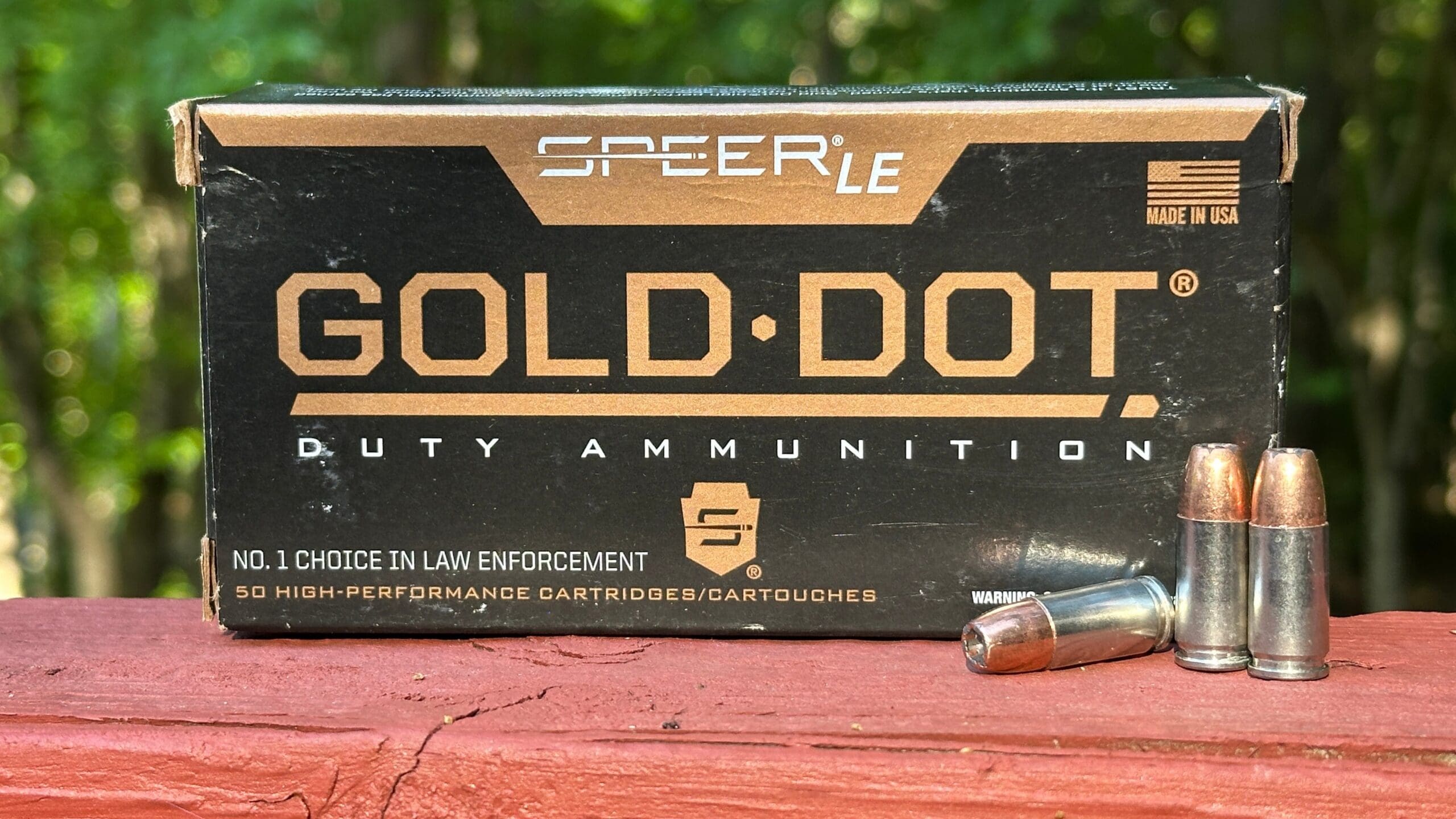
Self-defense rounds are designed to achieve sufficient penetration while also limiting overpenetration. The CorBon Urban Response ammunition is a great example of a self-defense bullet that shoots well in most pistols. The Speer Gold Dot 124 Grain JHP is another good example.
If you’re interested in self-defense, our article here tells you more than you need to know: What is the Best 9mm Self Defense Cartridge for EDC?
Self-Defense with a Glock 19 Against Animals
Self-defense ammunition loaded for use against animals is designed for nearly the opposite purpose as self-defense bullets against people. For animals, it’s best to have a hard-hitting, deep penetrating bullet, which is necessary to reach the central nervous system and vital organs.
For example, to stop a charging bear in its tracks, a shot to the spine or brain is a must.
Not all bullets will penetrate a bear skull, so it’s important to use bullets designed for maximum penetration. For defense against large animals, look for hard-cast bullets or ammunition loaded with Leigh Defense Xtreme Penetrators.
Ideal G19 Cartridges for the Range
Like self-defense ammo, range ammunition can also be split into two general categories: target practice and competition. Range ammunition, including both for target practice and competition are typically loaded with full metal jacket (FMJ) bullets.
These bullets have a lead core and a copper jacket. They are not designed to expand on impact and should not be used for hunting or self-defense situations against people.
That said, I have personally killed a wounded black bear with an FMJ bullet. They will penetrate a skull and work in a pinch, but I would still recommend carrying ammunition designed for self-defense when needed.
Glock 19 Cartridges for Target Practice
The best ammunition for target practice is often determined by your goals. If you are working on the basics or on accuracy, it may be best to use lower recoiling ammo that is easy to control.
As skill increases, it’s better to use standard loaded rounds similar to what you may be using for self-defense.
If you simply enjoy shooting, then you may want to focus more on ammunition that is clean and affordable.
Shooting is an expensive sport, and when shooting pistols, it’s pretty easy to go through a couple of hundred rounds in an hour.
If you know that you will be shooting regularly, it’s often cheapest to purchase ammunition in bulk. We discuss that in more detail below.
Glock 19 Cartridges for Competition Shooting
In some cases, competition ammunition might be the same ammunition used for target practice. CCI Blazer 124 GR. Full Metal Jacket ammunition meets competition standards and works well in a Glock 19. Ammunition designed for competition is often constructed to higher standards to limit recoil and increase accuracy.
Like practice ammunition, range ammunition is also typically loaded with FMJ bullets. This link will take you to a list of ammunition certified for use by the United States Practical Shooting Association (USPSA) and allowed for use in USPSA competitions.
Like target ammunition, competition ammunition is often cheapest when purchased in bulk. Competition shooters typically shoot a lot, too, so buying in bulk is often the best option.
Best Ammunition to Purchase in Bulk
Buying ammunition in bulk is often the cheapest option. It also reduces how often you have to purchase ammunition, and many companies that sell in bulk, like Velocity Ammunition Sales, offer free shipping after a certain dollar amount.
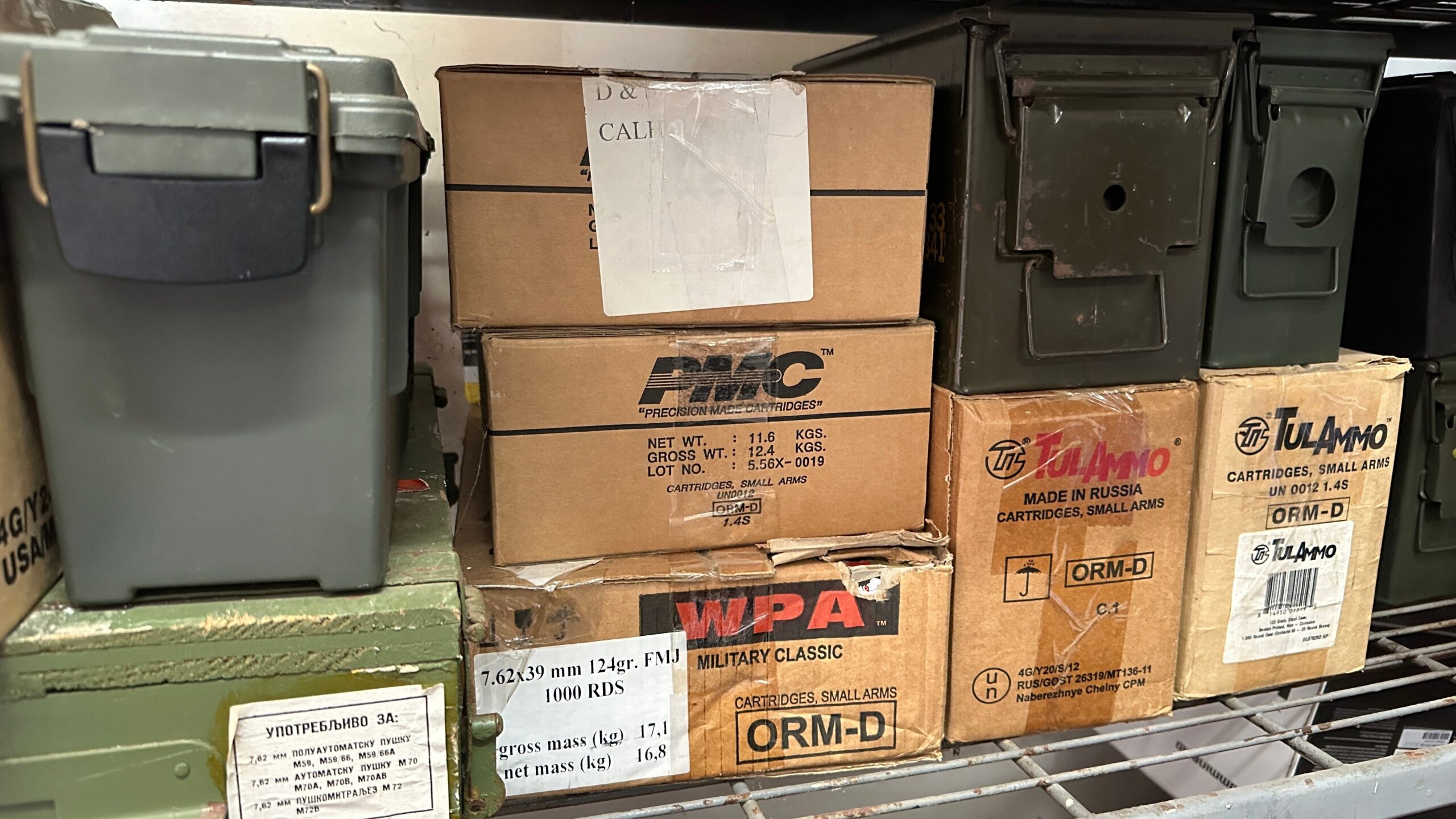
If you really want to dive into it, check out our guide here: Is Buying Ammo in Bulk Worth It? [the Cold Hard Facts]
Bulk ammo costs a lot upfront. but the lower cost per round is worth it if you shoot a lot.
For example, if you only save 1 cent per round by buying in bulk, it will save you about the cost of one box of 50 rounds of 9mm ammo per 1,000 rounds you purchase.
It’s easy to go through 200 or more rounds per hour. If you shoot twice a month, that’s 4,800 rounds per year. Buying in bulk can save you a minimum of $48 or the equivalent of nearly 4 boxes of 9mm ammo.
If you typically order ammo at lower volumes and pay for shipping, you can also add the shipping savings to the total.
The European Venom 115 Grain Full Metal Jacket is on sale in a 1,000 round package for less than what you would normally pay for a standard 500 round package.
Purchasing bulk ammunition for target shooting makes the most sense. It’s easy to go through thousands of rounds of ammunition a year with a Glock 19.
Additionally, Glock 19’s and nearly any stock Glock pistol will run most ammunition. It’s not a bad idea to purchase a single box or two first before buying in bulk, but I’ve personally never come across ammunition that my Glock pistols would not cycle and fire.
If you’re trying to save even more money, you should consider purchasing aluminum-cased ammunition.
Aluminum-cased ammunition is often one or two cents cheaper than brass-cased ammunition. If you’re not interested in reloading, the aluminum-cased ammunition often cycles fine in Glocks and can save you some money.
Additionally, popular brass-cased ammunition like Blazer is usually cheaper when purchased in bulk.
Loading up Your Glock 19
Glock 19 pistols are one of the most popular pistols ever produced and are commonly used by law enforcement, military, competition shooters, and for recreational shooting and self-defense.
The Glock 19 pistol has many attributes that helped it gain popularity, one of those being reliability.
The Glock 19 reliably cycles and cycles most ammunition well. It can also fire tens of thousands of rounds with minimal to no replacement parts necessary.
At most, the springs and a recoil assembly may need to be replaced every few thousand rounds, and after 50,000 rounds or more, possibly the barrel.
Needless to say, the Glock 19 is as reliable as they come, and for most shooters, it may take a decade to reach the point where more expensive parts like the barrel need to be replaced.
Even then, a Glock 19 barrel can be had for around the same cost as 1000 rounds of bulk 9mm ammunition.
That said, there’s no need to be concerned with wearing out your pistol anytime soon, and while shooting can be expensive, it’s easy to save some money by purchasing your ammunition in bulk.
9mm Ammo for Glock 19 FAQs
What Is the Best 9mm Ammo for Self-Defense in a Glock 19?
The most effective self-defense ammunition uses hollow point or other rapidly expanding bullets designed to limit overpenetration while delivering strong stopping power. Reliable options typically include well-known jacketed hollow point loads that cycle consistently and perform predictably in compact handguns.
What Bullet Type Should You Use for Range Shooting With a Glock 19?
Full metal jacket (FMJ) bullets are ideal for range use because they are affordable, widely available, and feed reliably. They are not designed to expand, making them better suited for practice, target shooting, and competition rather than defensive situations.
Is +P or +P+ Ammo Safe for a Glock 19?
Glock 19 pistols are generally rated for SAAMI-spec +P ammunition, but +P+ is not recommended due to increased pressure and wear. While some shooters use it, higher pressure rounds can accelerate component wear and produce noticeably stronger recoil.
What Bullet Weight Works Best in a Glock 19?
Common 9mm bullet weights include 115, 124, and 147 grains. Lighter 115-grain rounds tend to feel snappier, while 124-grain offers a balance of control and cost. Heavier 147-grain bullets typically produce smoother recoil and are often used in defensive loads.
Is Buying 9mm Ammo in Bulk Worth It for Glock 19 Owners?
Buying in bulk is often the most cost-effective option, especially for frequent shooters. Even small savings per round add up over time, and bulk purchases reduce shipping frequency. Testing a small quantity first helps ensure reliability before committing to larger quantities.