Prefer audio over written content? Listen to the article here:
One of the most important decisions you can make when preparing for a self-defense situation in your home is your ammo choice. This becomes even more important when you live in close quarters with others.
When only a single wall is between you and other occupants, like in an apartment, you must ensure that your ammo choice reduces the risk of overpenetration.
The best home defense ammo for apartments must rapidly expand or fragment to reduce the risk of bullets passing through the intruder or errant shots through walls. Further, the cartridge the firearm is chambered in should be matched with appropriate ammo.
Your ammo and cartridge choice are crucial for a self-defense gun in close living quarters, like a house with multiple occupants, apartments, or trailer parks.
Throughout this article, we will discuss what self-defense ammo is, why over-penetration is dangerous, the best cartridges for home defense, and how to select the best ammo.
If you want to know more about over-penetration in a generic house scenario, we have a different article for that here: How to Avoid Over-Penetration in Home Defense Scenarios.
Best Apartment-Safe Home Defense Ammo
Top picks that balance stopping power with reduced over-penetration risk
-
Best for Overall Apartment Defense
-
Best for 9mm Low-Penetration Performance
-
Best for Minimal Penetration (.380 ACP)
-
Best Lightweight .380 Alternative
-
Best for Heavy Clothing Scenarios
-
Best for Range Practice
What Is Home Defense Ammo?
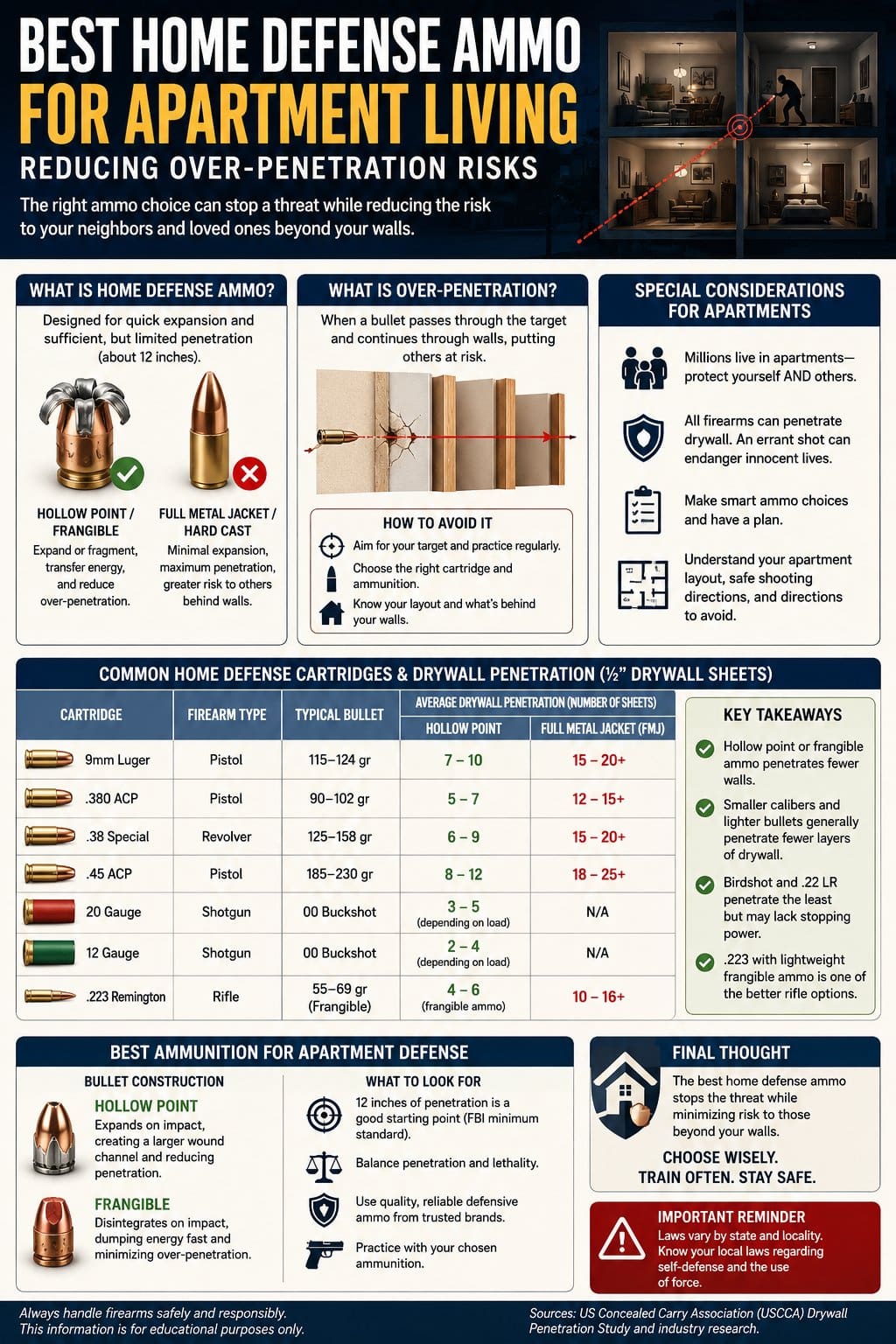
Simply put, home defense ammo is designed for quick expansion and sufficient, but limited penetration. Home defense ammo should penetrate around 12 inches, enough to incapacitate an intruder yet reduce pass-throughs. Home defense ammunition is often loaded with copper-plated hollow-point or frangible bullets.
These bullets limit penetration and transfer energy quickly to the target. In contrast, ammo loaded with full metal jacket (FMJ) or hard cast bullets does the opposite. FMJ bullets are designed for target practice and hard casts for self-defense against animals.
Both of these bullet designs offer minimum expansion and maximum penetration. They also do not effectively transfer energy to the target, and in a home defense scenario, can easily pass through multiple walls, endangering occupants on the other side.
Ammunition designed for home defense avoids these things and is optimized for close-quarters use and minimizing danger to innocent bystanders.
What Is Over-Penetration and How to Avoid It?
Misses are common in self-defense scenarios; add in confusion, adrenaline, and potential darkness, and they become very likely. One easy way to avoid overpenetration risks is by not missing your target.
However, that’s often easier said than done, and even if you hit your target, bullets can still pass through and pose a risk to others.
Therefore, the best way to reduce overpenetration risks is to select a proper cartridge and ammunition for the self-defense scenarios you may find yourself in and practice as much as possible.
Special Considerations for Self-Defense in Apartments
Somewhere around 50 million people live in apartment complexes in the United States. Living in apartments is extremely common, and if you are one of them and own a firearm that you intend to use in a self-defense situation, then you need to put some thought into the safety of others beyond your own walls.
All self-defense firearms are capable of penetrating multiple sheets of drywall, meaning that if you fire an errant shot at an intruder, your bullet may find an unintended victim.
To limit the chances of this happening, you need to make good cartridge and ammunition choices.
Additionally, you’ll need to have a plan and an understanding of your apartment’s layout, safe shooting directions, and directions to avoid at all costs.
Best Cartridges for Home Defense
If you don’t have a gun yet or are interested in purchasing another, before you decide on the brand or model, you should first determine which cartridge the gun should be chambered in.
There are a plethora of options. However, some are much better than others for apartment defense.
The most common cartridges for home defense are 9mm Luger, .380 ACP, .38 Special, .45 ACP, 20 gauge, 12 gauge, and .223 Winchester.
These cartridges are commonly chambered in pistols (9mm Luger, .380 ACP, .45 ACP), revolvers (.38 Special), and shotguns (20 gauge and 12 gauge).
There have been more than a few tests exploring how many sheets of ½ inch drywall various cartridges and bullets can go through. Here is one that I found useful by the US Concealed Carry Association.
What you’ll notice in these tests is that hollow point ammunition penetrates through fewer layers of drywall than FMJs. Additionally, smaller calibers with lighter-weight bullets penetrate fewer walls as well.
That said, if what you are most concerned about is reducing the chances of overpenetration, then selecting a smaller cartridge, like the .380 ACP or 9mm Luger, may be the best choice.
While birdshot and .22 LR ammo penetrated the least, you must also consider the ability of the weapon to incapacitate the intruder, and while both are capable of it, there are better choices.
If you want to use a rifle, the .223 is one of the better cartridges. However, ammunition choice is extremely important, and choosing lightweight frangible ammo is best.
This article, Top 5 Home Defense Cartridges in an AR-15 Platform does a great job of covering the different rifle cartridges and popular defensive ammo for them.
Best Apartment Defense Ammunition
For self-defense in apartments, it’s extremely important to select ammunition that will sufficiently penetrate the intended target but reduce the chances of a stray bullet going through multiple walls and hitting an unintended target in another room.
Light-for-caliber bullets do a good job of balancing penetration and lethality. FBI standards state that the minimum acceptable bullet penetration is 12 inches.
Now, it’s important to keep in mind that your needs and the FBI’s needs differ; however, it is a good starting point.
We mentioned light-caliber bullets, but what’s also important is the bullet’s construction. For self-defense, you should always use hollow-point or frangible bullets.
Hollow-point bullets are designed to rapidly expand on impact. Unlike hollow-point bullets, frangible and segmenting bullets are designed to break apart on impact, creating multiple wound channels.
Both bullet designs are effective. Next, we’ll break down the differences between these bullet types.
Hollow-point Bullets
Hollow-point bullets are one of the most popular bullet designs. Many hunting, self-defense, and even target bullets are designed with hollow points.
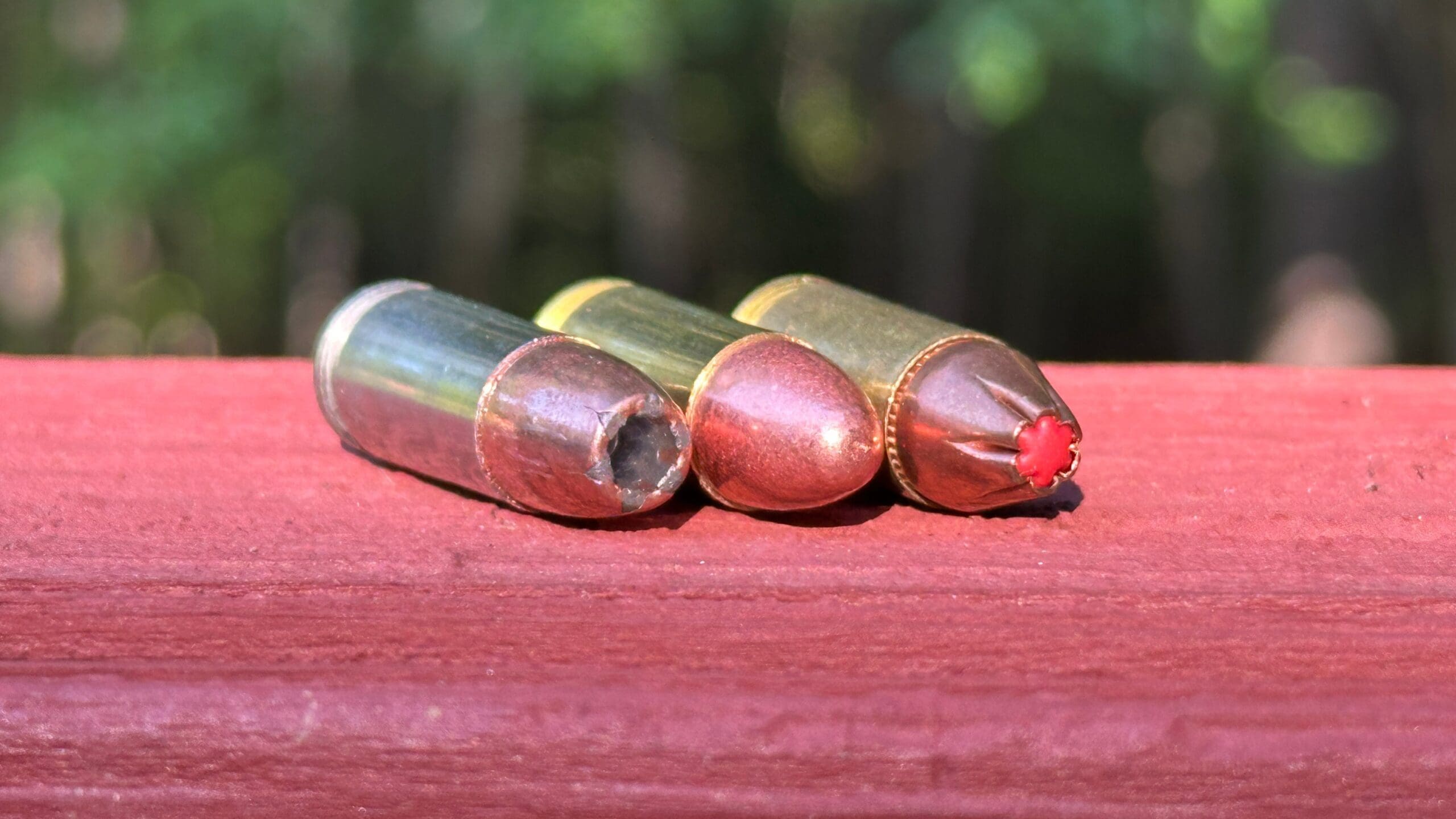
If you’ve never seen a hollow point, the tip of the bullet, rather than being rounded, flat, or pointed, is hollow.
In hunting and self-defense bullets, the hollow-point is designed to assist in the bullet’s opening on impact.
Hollow points also assist with precision by adjusting more of the weight to the back of the bullet rather than the front, which helps stabilize it in flight.
While hunting and self-defense bullets benefit from the additional stabilization, the metal is also designed to rapidly expand to increase the wound channel size and dump more energy into the target.
If you’d like to learn more about hollow-point bullets, check out our article, Do Hollow Points Actually Make a Difference in Self-Defense?.
Frangible Bullets
While on the surface level, frangible bullets and segmenting bullets seem similar because they both break apart on impact, their designs are very different. Frangible bullets are designed to “powder” or disintegrate on impact with material harder than themselves.
These bullets often penetrate deep enough to meet FBI standards. However, when they impact hard materials like steel, they break into tiny pieces.
Because of this, they help reduce ricochets. While fragmenting bullets help reduce ricochets and penetrate enough to be lethal, they still typically pass through multiple layers of drywall before stopping.
Segmenting Bullets
Segmenting bullets are unique. They typically have a hollow point design, but they don’t act like hollow point or frangible bullets. Segmenting bullets, like those chambered in 9mm Luger, breaks into three separate petals and a core.
The three petals break off the core and create individual wound paths while the core continues moving forward through the target. When the bullet breaks apart, it dumps its energy into the target, effectively limiting its penetration.
While the core may still travel 12-18 inches, the petals only penetrate around 6 inches.
Safety Slugs
Safety slugs are essentially a mix of frangible and segmenting bullets. The safety slug is pre-fragmented or essentially filled with tiny birdshot inside of a thin copper case.
The idea is that the copper case will break apart upon contact and release the birdshot. The birdshot will then act like a segmenting bullet, only penetrating up to 10 inches. However, this doesn’t seem to be what happens in reality.
Check out this YouTube video that compares the Glasser Safety Slug with Remington Golden Saber Bonded ammo. The Remington Golden Saber bonded ammo is a popular hollow-point slug, and the Glasser Safety Slug is well-known ammunition that has been used for decades.
Ammunition Choices for Two Popular Self-Defense Cartridges
Now, let’s focus on two of the most common cartridges selected for self-defense, the 9mm Luger and the .380 ACP.
We chose the 9mm Luger and the .380 ACP because they are two of the most common cartridges chambered in handguns designed for self-defense, both are also easily handled by most shooters, and there are many ammo options available for these cartridges.
The .380 ACP, all else held equal, will penetrate less than a 9mm Luger and may be a better choice for apartment self-defense if limiting penetration is a primary concern.
Now, let’s discuss some of the best ammo choices for these calibers for self-defense in apartments.
9mm Luger Ammunition Choices for Apartment Self-Defense
The 9mm Luger cartridge is likely the most popular cartridge for self-defense in handguns. Because of this, there are many ammo options available. One of the best ammo choices for self-defense in close quarters is the Liberty Defense 50-Grain +P Hollow Point.
This ammo is unique in that it weighs 75 grains less than typical practice FMJs and is 74 to 97 grains lighter than standard self-defense loads. The ammunition produces velocities over 2,000 fps, and the bullet is fragmenting.
There is another fantastic choice in 9mm Luger for apartment self-defense. In fact, this ammunition, like the Liberty Defense ammo we discussed above, was designed for close-quarters self-defense. The 9mm – CorBon 100 Grain +P Urban Response Hollow Point is designed to quickly release its energy, which limits penetration, such as through walls in apartments.
You can find out more about 9mm Self-Defense ammo by reading our article, What is the Best 9mm Self-Defense Cartridge for EDC?. This article dives into the nitty-gritty details about using 9mm handguns for self-defense and the best cartridges to use for everyday carry.
.380 ACP Ammunition Choices for Apartment Self-Defense
The .380 ACP produces much less energy than the 9mm. Therefore, while no ammunition or firearm, not even a .22LR, will eliminate overpenetration risk, the .380ACP is one of the better cartridges.
Typical self-defense hollow points in .380 ACP penetrate between 9 and 13 inches in ballistic gelatin.
This means that most self-defense ammo for a .380 ACP limits overpenetration risk more than most 9mm ammo.
The Liberty Civil Defense and Ultralight 50-grain hollowpoints do a great job of limiting penetration and are superior to standard hollow-point ammunition in close-quarter apartment living scenarios. However, testing has shown that they can struggle getting enough penetration through heavy winter clothing.
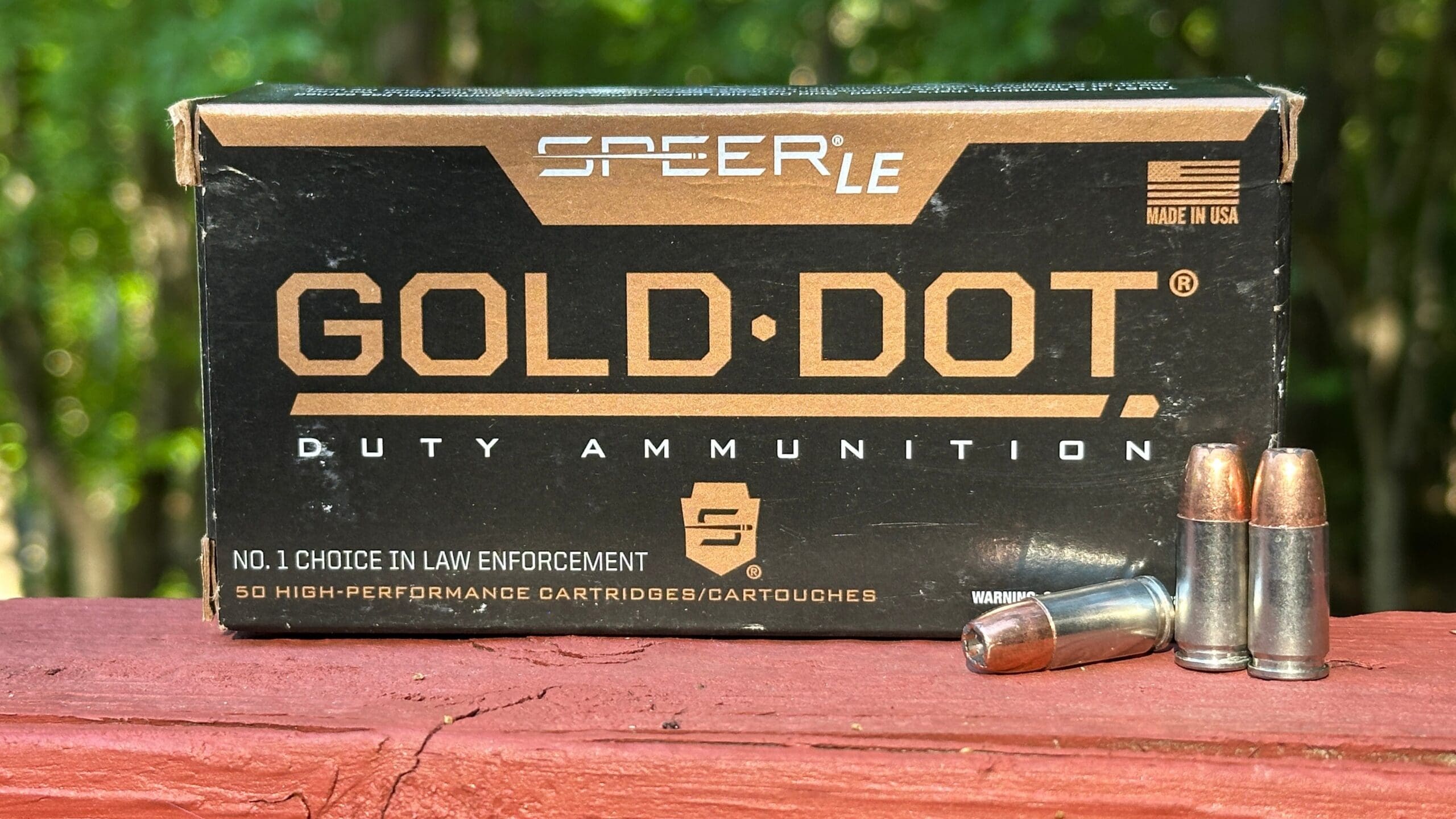
If you live in a place with cold winters where intruders may be wearing heavy winter coats, it may be best to switch out your ammunition to something like the Speer LE Gold Dot 90 Grain Jacketed Hollow Point, but keep in mind, any misses with this ammo are likely to penetrate through multiple walls.
Apartment Layout and Determining Relatively Safe Shooting Directions
Self-defense situations are typically very chaotic, and decisions often have to be made in a split second, which is why preparation is key. Having a gun, hopefully in a case or vault next to your bed, isn’t enough.
You need to prepare by selecting the correct cartridge and ammunition for your situation, and by planning for what your specific situation may be.
Imagine scenarios of intruders coming into your home. Where are they most likely to enter? Maybe it’s a window, front, or back door, or a garage entrance.
Now think about how you’d engage these targets, what’s behind them, and where errant shots are likely to go?
Thinking about this before it happens will help engrain it in your mind. It will also allow you to help mitigate risk.
Maybe you change which rooms are bedrooms or where you’ll actually engage a threat if you are unfortunate enough to ever have to deal with one in your own home.
Training Ammo for Home Defense
One of the absolute best ways to reduce over-penetration risks is by practicing so that you hit what you are aiming at. Like they say, practice makes perfect. The more you practice, the more confident you will be and the less risk there will be to occupants on the other side of the walls of your apartment.
Hits will dramatically slow the bullet down and may keep the bullet from passing through altogether. However, misses may go through 3, 4, or even 5 or more walls before coming to a rest.
For practice ammunition, I recommend purchasing ammo loaded with FMJ bullets. FMJ bullets are typically the cheapest and most reliable cycling bullets in most handguns. The 9mm 115-grain Fiocchi Range Dynamic Ammunition is a great example of good, affordable practice ammunition.
Limiting Over-Penetration in Apartments
I hope you learned a lot about how to select a cartridge and ammunition for self-defense in apartments.
Close-quarter self-defense takes a little more consideration than other types because of the high likelihood of bullets passing through walls and injuring innocent bystanders on the other side.
Throughout this article, we discussed tips and gave suggestions on how to select the best cartridges and ammunition for self-defense that will limit penetration and reduce the risk to people living on the other side of walls.
Remember that one of the best and most fun ways to reduce over-penetration risks is by practicing so that you hit what you are aiming at.
The other is to make a plan for when to engage so that any misses won’t pose a risk to others.
If you’d like more information on reducing over-penetration risks and additional firearm and cartridge suggestions, check out our other article, How to Avoid Over-Penetration in Home Defense Scenarios.
Apartment Defense Ammo FAQs
What Ammo Is Best for Apartment Home Defense?
For apartments, choose defensive ammunition that expands or fragments quickly while still penetrating enough to stop a threat. Quality hollow-point, frangible, or segmenting loads in manageable cartridges such as .380 ACP or 9mm are generally better choices than FMJ ammunition.
Why Is FMJ Ammo a Poor Choice for Apartment Defense?
Full metal jacket bullets are built for reliable feeding and inexpensive practice, not controlled expansion. In an apartment, they can pass through an attacker and several interior walls, increasing the chance of injuring someone in another room or neighboring unit.
Is .380 ACP or 9mm Better for Apartment Defense?
Both can work with the right defensive load. The .380 ACP usually produces less energy and may reduce penetration compared with 9mm, but 9mm offers more load choices and performance. Pick ammunition that is reliable in your firearm and suited to your environment.
Do Hollow Points Reduce Over-Penetration?
Hollow points are designed to open after impact, creating a larger wound channel and slowing the bullet faster than non-expanding designs. They do not eliminate wall penetration, especially on misses, but they are usually safer than FMJ for defensive use indoors.
How Can You Reduce Over-Penetration Risk in an Apartment?
Combine suitable ammunition with planning and practice. Know your apartment layout, identify safer shooting directions, avoid angles that point toward occupied units, and train regularly. Accurate hits slow bullets far more than missed shots that continue through drywall.