Prefer audio over written content? Listen to the article here:
When comparing the 12 gauge and the 20 gauge shotgun, it can really feel like trying to pick between two solid tools that both get the job done well, just in slightly different ways. One packs more punch and offers a ton of versatility while the other is lighter and offers less recoil.
Now, whether you are choosing a home-defense shotgun, planning a bird hunt, or just trying to stretch your ammo budget, the differences between the 12 gauge and the 20 gauge can matter more than you might think.
The 12 gauge delivers more power, denser shot patterns, and wider ammo selections at the cost of heavier recoil.
The 20 gauge offers lower kick, lighter guns, and solid performance for most hunting and defensive situations. Both work, but match your gauge to your size, experience, and its primary use.
Let’s take a deeper dive into the specifics for both the 12 gauge and the 20 gauge so that you can make the best choice for you.
12 Gauge Vs 20 Gauge at a Glance
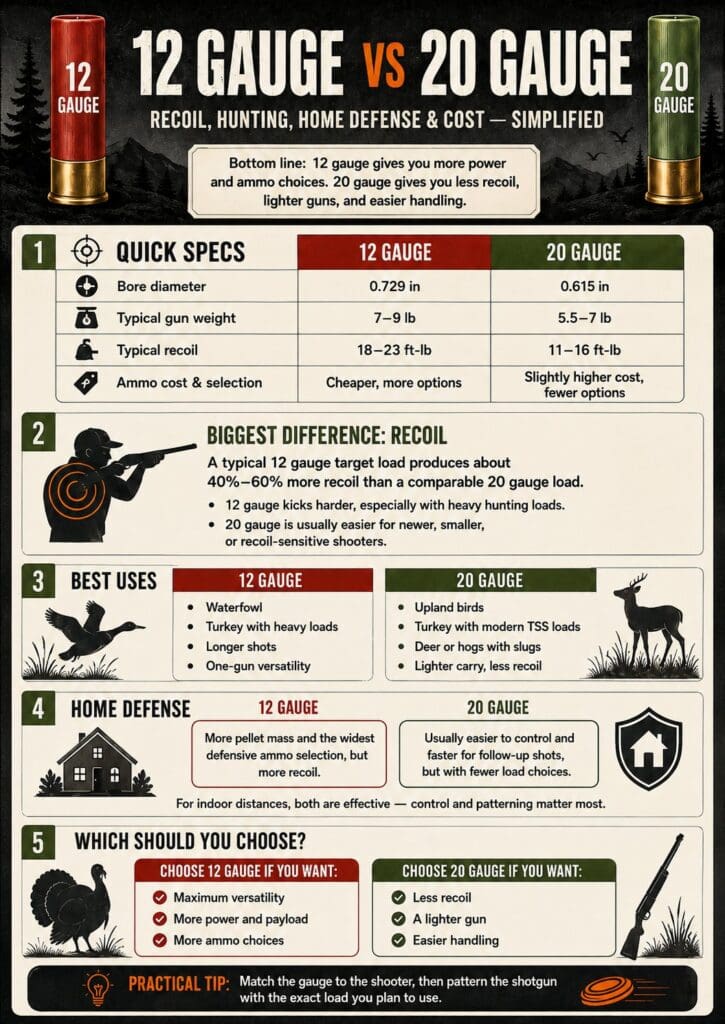
| Spec | 12 Gauge | 20 Gauge |
|---|---|---|
| Bore diameter | 0.729 in | 0.615 in |
| Common shell lengths | 2 ¾, 3, and 3 ½ in | 2 ¾ and 3 in |
| Typical gun weight | 7 to 9 lb | 5 ½ to 7 lb |
| Recoil, typical target load | 18 to 23 ft-lb | 11 to 16 ft-lb |
| Best at | Waterfowl, turkey from a blind, late-season pheasant, longer shots | Upland birds, TSS turkey inside 40 yards, deer with sabots, tight quarters |
| Ammo cost & selection | Cheapest per shell, widest selection | A few cents more, fewer options |
Understanding Gauge Basics
Understanding the basics about different gauge sizes can seem a bit confusing at first, but once you figure it out, it doesn’t seem so daunting.
The gauge is an old, somewhat outdated measurement system that simply tells you how many pure lead balls of the bore diameter equals one pound. That means that a 12 gauge bore is the size of a ball that weighs 1/12 of a pound.
A 20 gauge bore matches a ball weighing 1/20 of a pound. This means that the smaller the number of the gauge, the bigger the hole in the bore of the barrel.
In terms of measurements, a 12 gauge is roughly 0.729 inches in diameter and a 20 gauge is about 0.615 inches in diameter. This means that a 12 gauge bore can handle more shot or heavier slugs compared to a 20 gauge.
The shell lengths for both gauges usually overlap at 2 ¾ inches or 3 inches. The 12 gauge does offer a 3 ½ inch magnum option as well.
Most modern shotguns in either 12 or 20 gauge will cycle the shorter shells just fine, but always be sure to check your barrel markings to ensure that you are running the right sized shells.
Running a longer shell in a shorter chamber can cause you all kinds of issues that you just don’t want.
Recoil: The Biggest Difference
The biggest and most noticeable difference between the 12 gauge and the 20 gauge is going to be the amount of recoil when firing your shotgun.
A typical 12 gauge target load that is 1 ⅛ ounces is going to fire at 1,200 feet per second in a 7 ½ pound shotgun and create between 18 and 23 foot pounds of recoil.
Meanwhile, a comparable 20 gauge target load that is ⅞ ounces is going to shoot roughly the same speed in a 6 ½ pound shotgun and only create about 11 to 16 foot pounds of recoil.
That is roughly 40% to 60% more recoil in a 12 gauge compared to the 20 gauge.
Heavier loads in the 12 gauge for waterfowl or magnum loads can widen that recoil gap even more. For example, a 12 gauge 1 ¼ ounce steel load can push back over 30 foot pounds of recoil into your shoulder.
Similar loads for the 20 gauge stay softer compared to the heavier 12 gauge rounds.
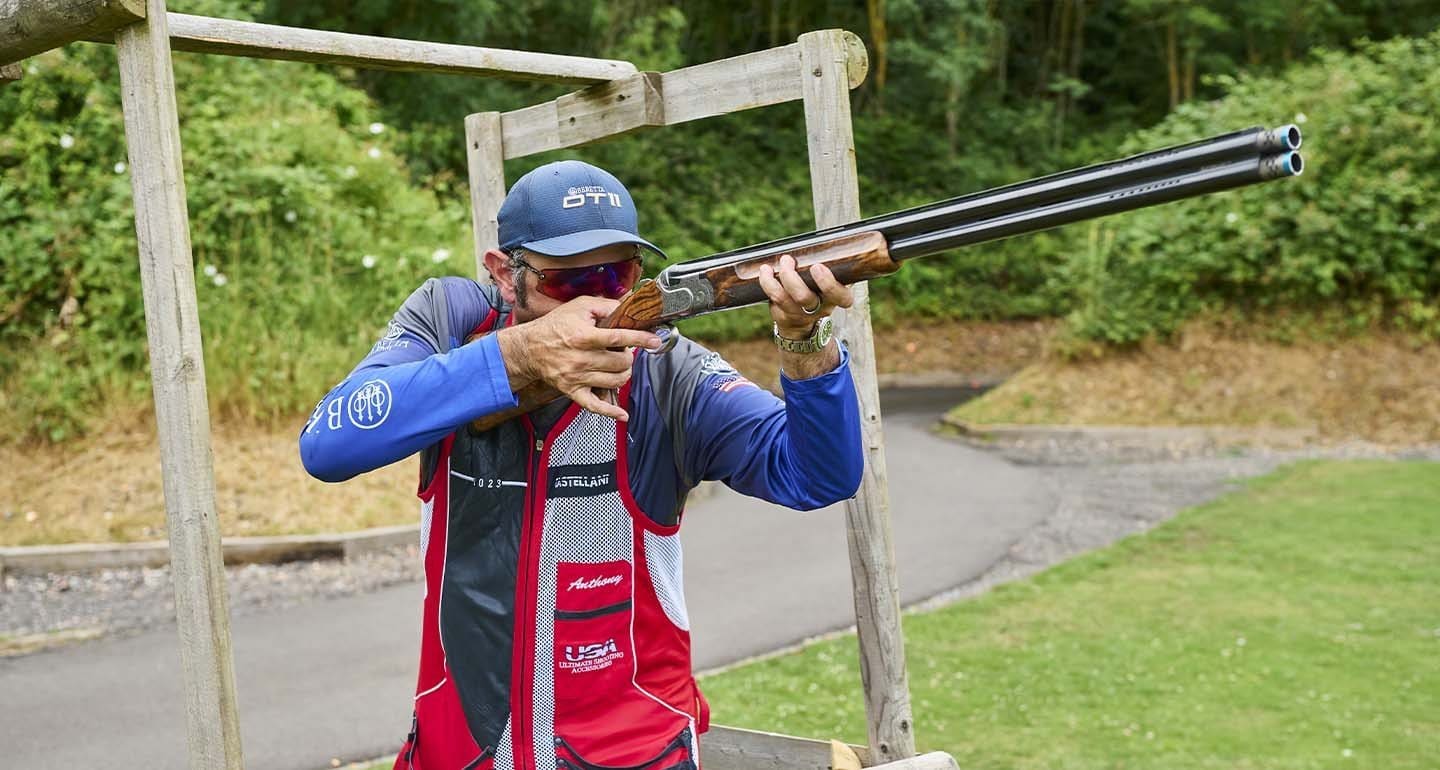
Felt recoil on the shoulder can also be determined by other factors than just the shell being fired in it.
Gun weight, stock size and fit, and if the action is a gas-operated semi-auto or simple pump action can all have effects on the felt recoil. This can sometimes throw people off on what they expect out of the recoil between 12 and 20 gauges.
A lot of 20 gauge shotguns, especially those for hunting, are made deliberately lighter so they are easier to carry.
So a lighter 20 gauge shotgun that weighs only 5 ½ pounds coupled with heavier hunting shells can have heavier recoil than a heavy 8 pound 12 gauge with lighter target loads. It is all in how you couple the type of shells and the setup of the shotgun you choose.
Adding a good recoil pad to your shotgun of choice is never a bad idea, especially if you plan to shoot a lot or use heavier loads. Also, shooting reduced recoil defensive loads or choosing a gas-operated semi-auto can shrink the recoil as well.
For new shooters and those of smaller stature, the 20 gauge usually wins the comfort test when it comes to felt recoil.
Hunting Performance: A Side-by-Side Comparison
Upland Birds
The 20 gauge is the go-to for hunting things like upland birds including quail, dove, and early-season pheasants. The lighter weight of the shotgun itself makes for an easier carry on long walks through tall grass and lightly brushed in areas.
This makes it easier to get shouldered for quick, reactive shots while also keeping you from fatiguing later in the day.
The standard 20 gauge loads for upland birds are either ⅞ ounce or a 1 ounce load of #7 ½ or #6 shot. Smaller pellets mean more of them in the same payload, so you get a denser pattern for small, fast birds. Spread itself comes from the choke, not the gauge.
These loads also do less damage to the bird to ensure you get the most meat out of them.
Late-season pheasants or other bigger birds sometimes benefit from the denser and heavier loads from a 12 gauge. You can still get the job done with a 20 gauge on these larger birds, but the 12 gauge often gives you more room for error and better reach for longer distances.
Waterfowl & Turkey
When it comes to waterfowl, the 12 gauge shines over the 20 gauge. The non-toxic loads like steel, bismuth, and tungsten, come in heavier loads and a variety of options for the 12 gauge.
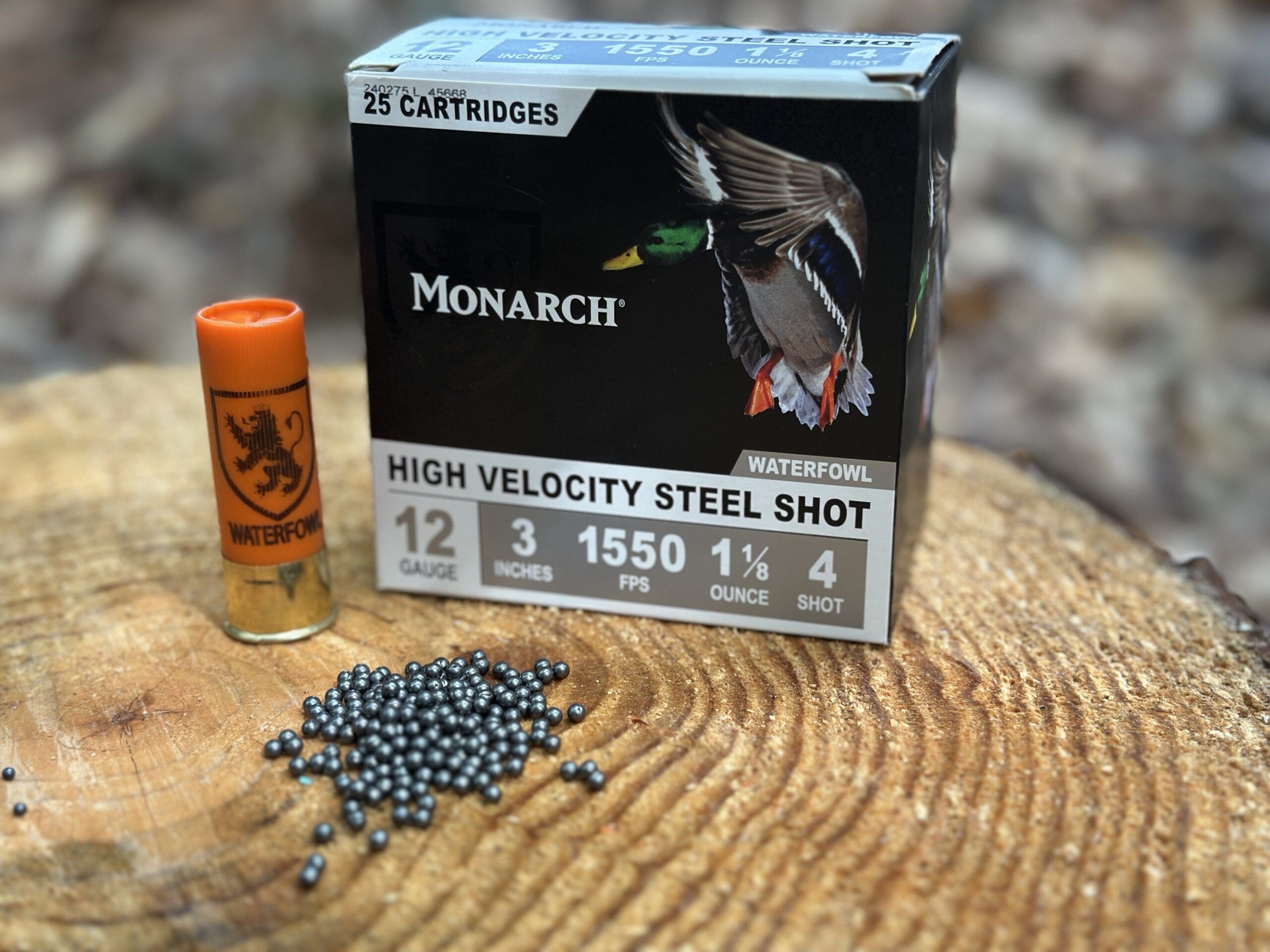
Both 3 inch and 3 ½ inch shells provide more shot at a higher velocity that is needed for bigger birds that require longer shooting distances to reach.
Winchester’s Blind Side 2 Hex Steel in 3 inch BB is a good example of what that looks like in a duck blind, and it comes in 250 round cases if you burn through steel every season.
Now, a good 20 gauge is still capable of killing ducks and geese, especially with some of the new modern 20 gauge loads, but better ammo selections and effective kill range heavily favor the 12 gauge for waterfowl.
Turkey hunting has really changed lately due to advances in turkey loads. Denser TSS loads have turned the 20 gauge shotguns into really effective turkey killers out to 40 yards.
Many turkey hunters are running 20 gauges successfully and they like the lighter carrying weight and less recoil for better follow-up shots.
The 12 gauge still offers the highest pellet counts and better reach with heavier loads, so it still isn’t a bad option, especially if you are hunting in a blind.
Winchester’s Long Beard XR Shot-Lok in 3 ½ inch #5 is the load a lot of our 12 gauge turkey hunters keep coming back to, and the resin buffering is what keeps those patterns together at distance.
If you want to see that difference measured instead of argued, The New Hunters Guide patterned and penetration-tested both gauges on the same duck loads.
Slugs for Big Game
For slug hunting animals like deer or hogs, both gauges tend to work well.
A 12 gauge, 1 ounce rifled slug packs a punch, but really a Foster slug out of a smoothbore is a 75 yard load in any gauge. It’s the rifling that gives you the extra yards. Modern 20 gauge sabot slugs out of a rifled barrel hold accuracy to 100 yards and past it, and plenty of hunters now prefer them for the lighter recoil and the easier carry out to the stand or for still hunting.
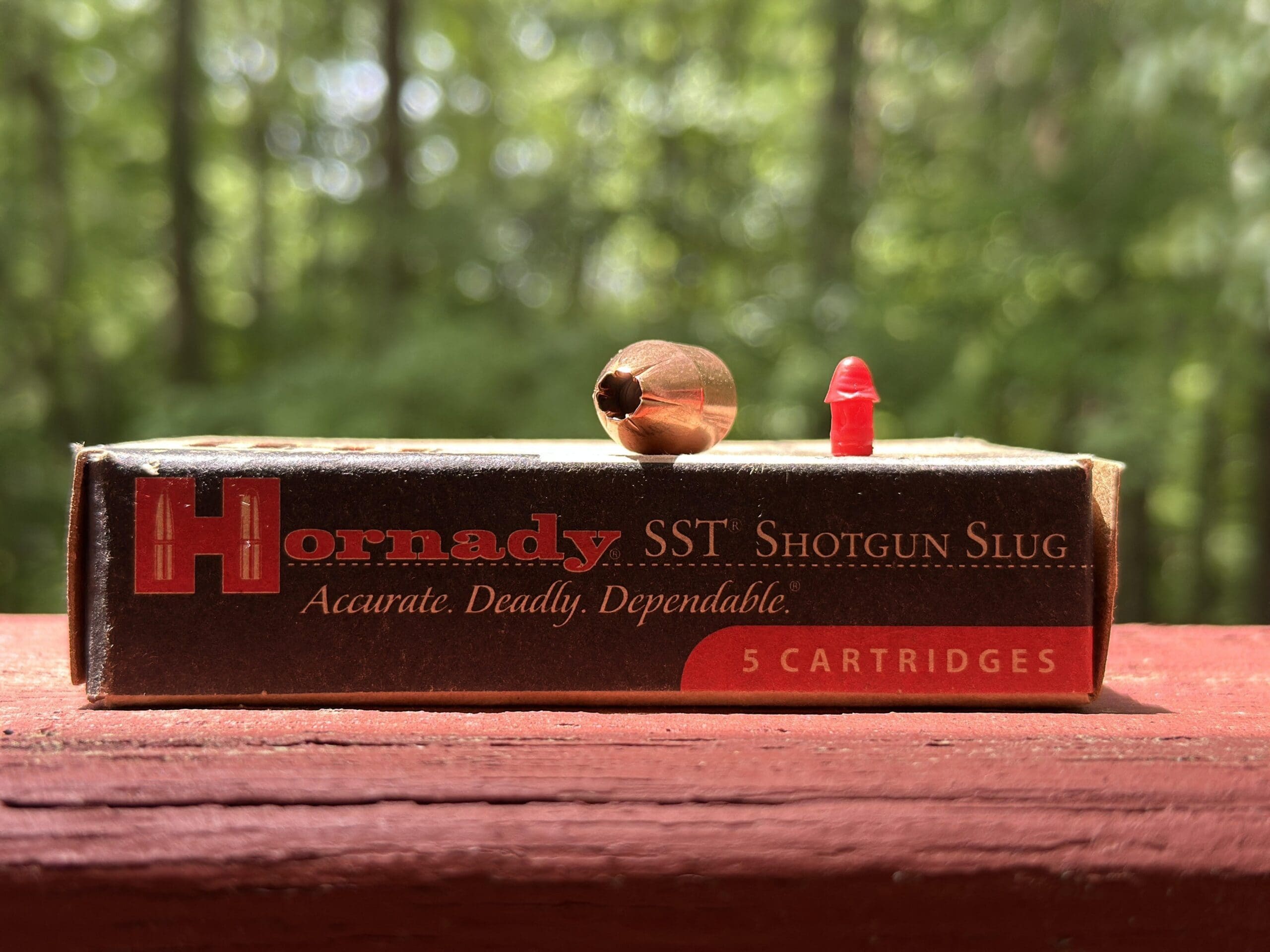
Hornady’s 300 grain SST is the 12 gauge version of that idea, though it is a sabot, so it needs a fully rifled barrel to shoot to its potential.
If you pattern your slug shotgun well and know its limits, you can make do with either the 12 gauge or the 20 gauge for hunting larger animals. If you want to look deeper into slug options, check out our Rifled Slug vs Sabot Slug [A Decisive Comparison] article.
If you are looking to get one shotgun that allows you to do it all, most still lean into the 12 gauge for its versatility across all hunting fields.
If you are hunting upland birds or game and closer range big animals, the 20 gauge does a capable job and with less recoil.
Home Defense: Power Vs. Control
In a home defense situation both the 12 gauge and 20 gauge are more than capable of stopping threats at a typical indoor distance.
The debate between the two is more about control and follow-up shots rather than the raw energy of the shot.
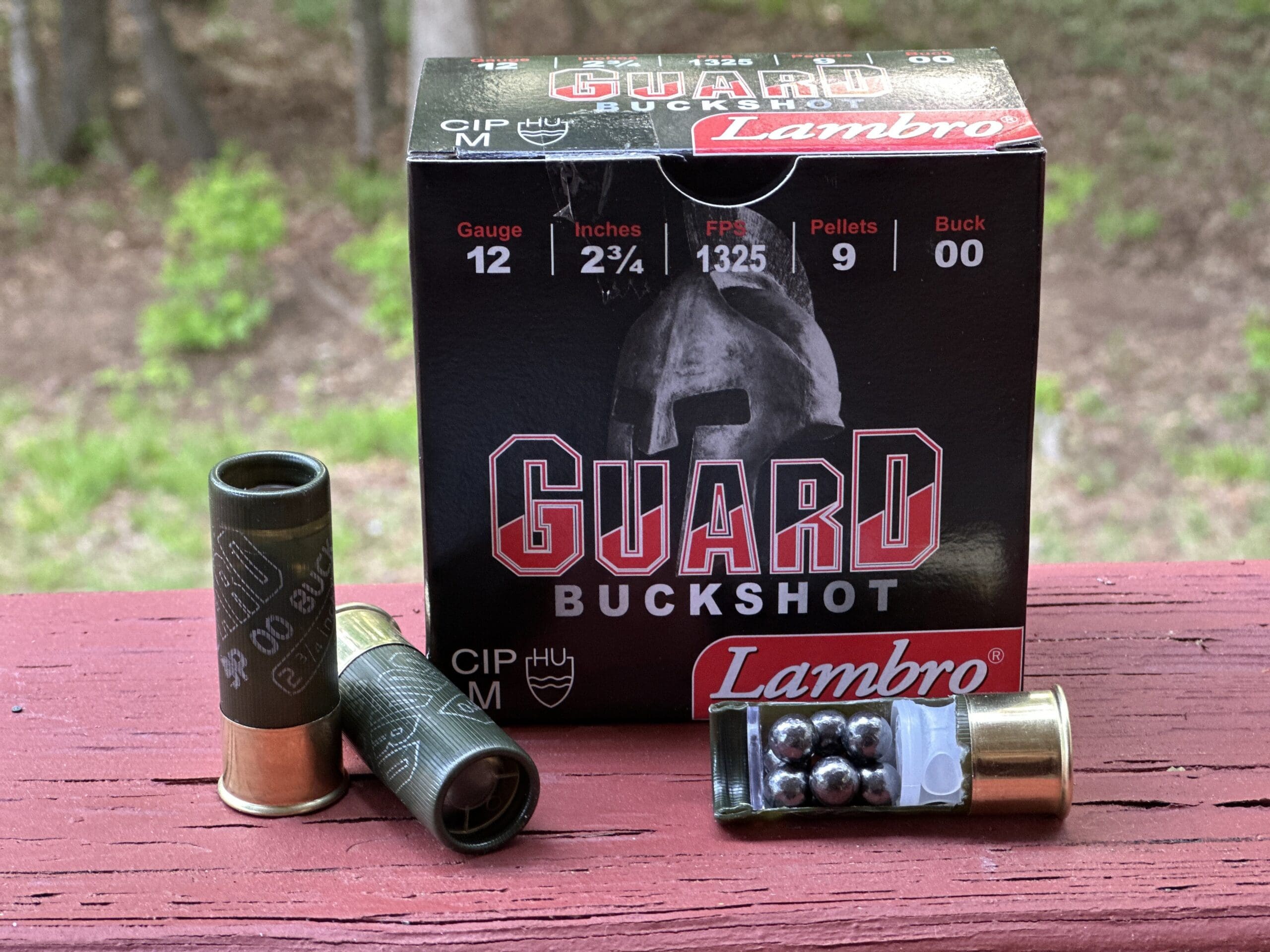
A standard 12 gauge 00 buck load will fire 8 or 9 larger pellets. More premium defense shells have flight control that keeps shot patterns tight.
If you just want a proven 9 pellet 00 buck load to practice and pattern with, the Fiocchi Defense Dynamics 00 Buckshot runs about $0.60 a shell and is one of our steadier sellers.
Penetration is rarely the shortfall with the 12 gauge 00 buck, which clears the FBI 12 inch minimum in ballistic gel and often runs past the 18 inch top of that window. That is an over-penetration concern, not a stopping-power one.
The 20 gauge defense rounds usually run #2 or #3 buckshot, with pellet counts up around 15 to 20.
Those smaller pellets give up some penetration, and how much varies a lot by load. Some 20 gauge #3 buck shells penetrate well past the FBI 12 inch minimum, while older ones have tested as shallow as 10 inches. Pick a load with published gel numbers rather than assuming.
If you want to stock up on the 20 gauge side, Aguila’s 2 ¾ inch #2 Buckshot comes in 250 round cases, and #2 buck gives you a bit more pellet mass than #3 to work with.
Recoil and gun weight play a huge role when deciding between the 12 gauge and the 20 gauge. A lighter 20 gauge pump action or semi-auto is easier to move through a house in tight quarters. It is also easier to recover from after each shot.
In stressful situations where multiple shots are usually needed, the ability to take quality follow-up shots quickly is a necessity. This is where the 20 gauge takes the lead in home defense.
Over-penetration is always a real concern when it comes to home defense. Both gauges come with power that can send pellets or slugs through walls, which can be a concern. Choosing the right load and shot pattern is vitally important in this matter. Knowing what is behind your target is much more important than the size gauge in this situation.
For more advice on this topic, check out our guide on How To Avoid Over-Penetration in Home Defense Scenarios.
Ammo availability definitely favors the 12 gauge for defensive rounds. You will find defense rounds that have reduced recoil and specialty shot patterns along with more availability at retailers.
The 20 gauge is improving in all of these aspects, but is still behind the 8 ball with selections and availability.
If you already own a 12 gauge and shoot it well, stick with it for home defense. If recoil is a bigger issue and you are looking for more control, the 20 gauge with quality buckshot can be highly effective for home defense.
Always be sure to practice with whatever you choose to go with and make sure you can maneuver well inside your home with it.
For a deeper dive into the best loads for home defense, check out our article on The Best Shotgun Loads for Self Defense.
Ammo Cost & Availability
Ammo cost and availability both vary widely by the type of ammo you want and its use.
The cost of those types of ammo will differ between 12 gauge and 20 gauge, but not as much as you might think when you start comparing them.
Target loads and birdshot loads in a 12 gauge will run a few cents cheaper per round than equivalent 20 gauge shells. Buckshot and specialty defense shells will vary more by brand and demand than by gauge.
Buying in bulk is going to bring you the most savings and get you the best prices.
Bulk 12 gauge target loads generally land somewhere around $0.30 to $0.40 per shell in case quantities as of August 2026, while 20 gauge runs a few cents higher on average because of lower demand, though both stay cheap enough to shoot often. Shotshell pricing moves, so check before you commit to a case.
Premium buckshot and slugs cost more in both gauges, but cost can be reduced by buying in bulk if you have the need for it and plan to shoot them enough.
The 12 gauge is simply more common on the market, so 12 gauge shells usually price a little cheaper than their 20 gauge counterparts. The 20 gauge is still widely available, just with fewer options and choices than the 12 gauge.
If you shoot a lot of clay targets, pattern your shotgun frequently, or do a lot of hunting, bulk cases make sense for these types of shotgun loads.
For more on bulk buying and stockpiling ammo, check out our article Is Buying Ammo in Bulk Worth It? [The Cold Hard Facts].
Gun Handling, Weight, & Capacity
Handling, weight, and shell capacity of the 12 gauge and 20 gauge are real issues that many shooters take into account, as they should.
Most 20 gauge shotguns tip the scales on the lighter side between 5 ½ and 7 pounds compared to the 7 to 9 pounds in most 12 gauge shotguns.
The lighter weight helps on longer hunting walks and in tight spaces for home defense, which favors the 20 gauge.

For shell capacity, what matters is the length of the shells you actually load, not the chamber. A magazine that swallows five 2 ¾ inch shells will hold fewer 3 inch shells.
Realistically, you are looking at a difference of 1 to 2 rounds of capacity, max.
Swing and pointability favor the 20 gauge for many shooters, since the smaller receiver and lighter barrel feel better in hand. A well-balanced 12 gauge still feels smooth, especially with longer barrels for waterfowl or clay shooting.
Who Should Choose Which Gauge?
Pick the 12 gauge if you want the most versatility, the most ammo choices, and the extra power for shots that need more distance, especially for hunting.
It is usually the go-to for more experienced shooters who know what to expect and can handle the recoil.
Pick the 20 gauge if you want a lower recoil, a lighter carrying weight, or if the person shooting it is smaller-framed or new to shooting.
Modern 20 gauge loads have helped close the performance gap with the 12 gauge for both hunting and home defense.
Plenty of shooters end up owning both, and that is never a bad call. Different shotguns for different jobs, if the budget allows.
Gun Talk’s Ryan Gresham walks through the same decision with a 12 and a 20 side by side, including a recoil comparison you can actually see.
Practical Tips for Getting the Most Out of Either Gauge
Be sure to pattern your shotgun for the distances that you plan to use it at. Your pattern for home defense versus hunting is probably going to be different because of the ammo and the distance.
Knowing what each does differently will give you a better understanding of how your chosen gauge of shotgun acts.
Treat each shotgun as a unique tool. A load that patterns tight in one shotgun can throw a wide, patchy pattern in a nearly identical gun.
It is best to know your shotgun’s capabilities with different ammo types at different distances.
It is highly recommended that you outfit your shotgun with a good recoil pad and a proper stock fit to help with recoil, regardless of the size gauge you choose.
Also take into consideration that gas-operated semi-auto shotguns can help reduce recoil as well if you are willing to spend a little more on them.
For defensive use, be sure to train with the same ammo that you keep loaded at home. Reduced recoil loads exist for both gauges and can make high volume training days more bearable.
High volume days add up fast, and our guide on How Much Ammo Should You Stockpile? [Practical Numbers for Real Shooters] gives you real numbers for how much shotgun ammo is worth keeping on hand.
Be sure that you understand the differences between birdshot, buckshot, and slugs. Each one does something different and the person pulling the trigger needs to fully understand what these shot patterns do and look like. For better understanding of how each of these shot patterns perform, check out our article on Shotgun Shells Explained: Birdshot vs. Buckshot vs. Slugs.
Match the Gauge to the Shooter, Then Pattern It
Neither the 12 gauge nor the 20 gauge is necessarily “better” than the other across the board. Each one will do the job, and each one does a few jobs better than the other.
The 12 gauge remains the more powerful, more versatile, and more popular option. The 20 gauge trades off a bit of power and ammo selection for less recoil and easier handling.
Your best option is to match the shotgun gauge to the shooter and the job. Buy quality ammo that patterns well for that specific shotgun and its uses.
Pattern it, understand it, practice with it, and stock up on ammo that performs the best.
12 Gauge Vs 20 Gauge FAQs
Does a 20 Gauge Kick Less Than a 12 Gauge?
In most comparable loads, a 20 gauge produces noticeably less recoil than a 12 gauge, often making it easier for newer or smaller shooters to control. Gun weight, stock fit, action type, and shell choice can still change felt recoil.
Which Gauge Is Better for Hunting?
The 12 gauge is usually better for waterfowl, late-season pheasants, and situations needing heavier payloads or longer reach. The 20 gauge excels for upland birds, lighter carry, and many turkey or deer setups when paired with modern loads.
Is 12 Gauge or 20 Gauge Better for Home Defense?
Both gauges can be effective at typical indoor distances with quality buckshot. A 12 gauge offers more load choices and power, while a 20 gauge may allow faster recovery and better control for shooters who struggle with recoil.
Is 20 Gauge Ammo Cheaper Than 12 Gauge Ammo?
Usually, 12 gauge target and birdshot loads are slightly cheaper because they are more common and produced in larger volume. The price gap is often small, and premium buckshot, slugs, or specialty loads depend more on brand and availability.
How Should You Choose Between 12 Gauge and 20 Gauge?
Choose based on the shooter and the job. Pick 12 gauge for maximum versatility, ammo selection, and power. Pick 20 gauge for lighter weight, softer recoil, and easier handling, then pattern your chosen loads before hunting or relying on it defensively.